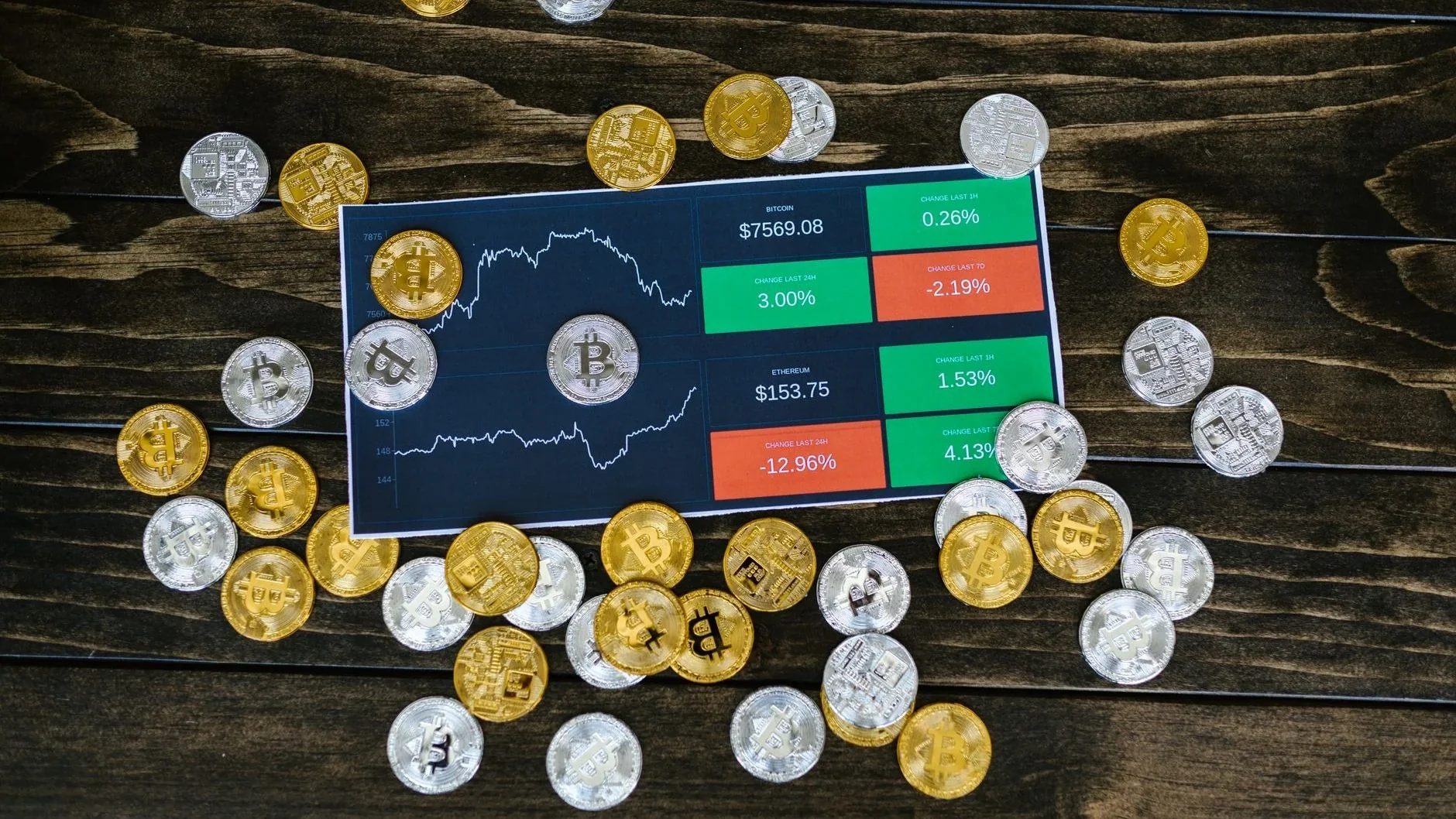
Kraken’s Canadian-dollar Bitcoin market printed a low of C$24,250 on November 21, 2026, roughly 71% below the exchange’s own BTC/USD price. Cointelegraph reported the drop and Kraken’s decision to let the executed trades stand. Converted at the Bank of Canada reference rate of C$1.4325 per US dollar, the low works out to about US$16,900. Bitcoin itself did not fall to that level anywhere else.
That gap is the whole story. A single pair on a single exchange traded at a price no other major market came close to matching, and a set of buyers got filled at roughly 29 cents on the dollar. Traders who followed the Binance hack and frozen-funds saga will recognize the pattern: a venue-specific failure that looks dramatic on a chart but says little about Bitcoin’s global value.
This analysis sorts what is confirmed from what is not, walks through the numbers, and explains why the Kraken BTC/CAD episode matters to the people who build trading software, checkout systems and market-data pipelines. It also covers the market impact, how exchange policies on erroneous trades differ, and five predictions for what follows.
Don't miss new tech stories on Google
Add Shattered once in the Google app and our stories show up in your news suggestions.
What Happened on Kraken’s BTC/CAD Market
Kraken’s BTC/CAD order book hit a confirmed low of C$24,250 during the 15-minute interval that began at 08:00 UTC on November 21, 2026. In the same period, Kraken’s BTC/USD price sat near US$57,650. Reports describe the selling as concentrated in Kraken’s Canadian-dollar markets, not as a comparable move across global Bitcoin venues.
The headline figure circulating on social media is $17K, and that shorthand needs a footnote. Available reports give approximately US$16,900, not exactly US$17,000. The number also is not a US-dollar trade. It is a Canadian-dollar price translated into US dollars after the fact, so the exact dollar figure moves slightly with whichever exchange-rate source a writer picks.
Several outlets labeled the event a glitch. That label describes how the chart looks, not a confirmed cause. As of this writing, nothing in the verified record identifies a software bug, a faulty market maker or any other specific technical trigger. We treat “glitch” as a headline word, not a finding.
What is confirmed is narrow but solid: the pair, the low, the time window, the comparison price, and Kraken’s decision to honor the executed trades. Everything beyond that, including who sold, who bought and why the order book was so thin, remains unreported or unverified.
The Numbers: C$24,250, US$16,900 and a 71% Gap
The table below collects every figure the verified record supports, plus one line of our own arithmetic that shows what BTC/CAD should have cost if it had tracked the dollar price. Outlets such as Guavy carried the same core numbers within hours of the event.
The arithmetic holds together. Dividing C$24,250 by 1.4325 gives roughly US$16,928, which rounds to the reported US$16,900. Comparing that with US$57,650 yields a discount of about 70.7%, which rounds to the reported 71%. Put differently, a buyer filled at the low paid about 29.4% of the dollar-implied price.
One caution on the 71% figure: it compares a CAD price converted to USD against a USD price on the same exchange. It is a cross-pair gap, not a drawdown in Bitcoin’s price history. Anyone writing that Bitcoin fell 71% without that qualifier is misdescribing the event.
Why This Was Not a Global Bitcoin Crash
Bitcoin’s global price sat well above the Kraken CAD print the entire time. The comparison price on Kraken’s own USD market was about US$57,650, and the Bitcoin price snapshot from November 20 had the asset above US$61,000, so the broader market was already drifting lower into the weekend. That drift is a normal market move. It has nothing to do with a drop to US$16,900.
Reports from outlets including Cointribune frame the event as an extreme price dislocation in one trading pair, and that framing fits the data. A dislocation means one venue or pair detaches from the price discovered everywhere else. Arbitrageurs normally close such gaps within seconds, which is why a 71% gap lasting a full 15-minute interval is unusual enough to draw attention.
For traders holding Bitcoin elsewhere, nothing changed. Spot ETFs, other exchanges and self-custody wallets reference the global price, and none of them repriced to Kraken’s CAD low. The practical exposure sat with people who had resting orders, margin positions or automated strategies tied to Kraken’s Canadian-dollar book specifically.
Local price versus global price
Crypto trades on hundreds of venues with no single official price. Aggregators compute a global figure from many order books, usually weighting by volume. When one thin book disagrees sharply with the rest, a well-built aggregator discards the outlier. A naive feed that simply reads one exchange’s last trade will not, and that difference is where software bugs in downstream products come from.
Kraken’s Decision to Honor Executed Trades
Kraken said it would honor the trades that executed during the dislocation. TradingView’s syndicated Crypto Briefing report carried the same headline conclusion: the exchange upheld the trades. In plain terms, buyers who got filled near C$24,250 keep their Bitcoin, and sellers who sold there keep the proceeds.
Outlets including Invezz relayed wording they attributed to Kraken’s support channel. In paraphrase, the exchange said its platform processed every order correctly, that its security teams found no sign of a breach or compromised accounts, and that heavy selling pressure pushed CAD-pair prices well below other markets. We could not tie that wording to a directly verifiable official Kraken source in the supplied record, so we present it as relayed, not as confirmed. The decision to honor the trades itself is the part that multiple outlets agree on.
Honoring the trades is the simplest policy and the one with the cleanest precedent in how order books work. A matching engine pairs a willing buyer with a willing seller at a stated price. If the engine did what it was built to do, reversing fills afterward means the exchange picks winners and losers by hand. That creates legal exposure, invites disputes and undermines the premise that posted prices are binding.
The cost falls on whoever sold at the low. Some of those sellers were presumably market participants who intended to sell at far higher prices. The record does not say who they were, and Kraken has not published a count of affected accounts or a breakdown of volume at the low. Until it does, the size of the transfer of value from sellers to buyers is unknown.
What Caused It? The Parts Nobody Has Confirmed
The cause is the open question, and it is worth being blunt about how little is known. The verified record contains no confirmed technical cause. Claims that a bug triggered the event are unconfirmed. So is the idea that a market maker pulled liquidity, that a large seller dumped into a thin book, or that a risk system misfired.
Some commentary points to thin liquidity and an order-book imbalance in the Canadian-dollar market, which fits the shape of the chart. A shape is not a diagnosis, though. A single huge market sell order, a cascade of forced liquidations and a faulty quote feed can all leave the same footprint. Without Kraken’s post-mortem, any of them is a guess.
Three things would settle the question if Kraken published them: the sequence of large orders at the low, the state of resting liquidity on both sides of the book beforehand, and whether any automated risk control was supposed to pause matching and did not. Engineering teams at other exchanges will read any such write-up closely, because every venue runs some version of the same machinery.
How a Single-Pair Dislocation Can Happen in General
The following explains common mechanics across electronic markets. It does not claim that any of these caused the Kraken event, because the cause is unconfirmed.
Thin books amplify large orders
A fiat pair like BTC/CAD attracts far less liquidity than BTC/USD. When a large market sell order arrives, the matching engine walks down the book, filling against each successively lower bid until the order is done. If the bids thin out quickly, the final fills land at prices far from the last quote. The lower the depth, the further one order can travel.
Arbitrage needs capital in the right place
Arbitrage is the force that normally pins a local price to the global one. A trader buys the cheap pair and sells the expensive one until the gap closes. That works only if the trader holds Canadian dollars on the exchange, can move funds fast and trusts the venue to settle. Any friction, from withdrawal limits to bank-rail delays, widens the gap that can persist before someone steps in.
Automated strategies can feed the move
Stop-loss orders, liquidation engines and trend-following bots all turn a falling price into more selling. In a deep market, the extra selling meets plenty of bids and fades. In a shallow one, each forced sale pushes the price to the next trigger. Whether that happened on Kraken is unreported, but it is the standard mechanism behind flash events on any venue.
Cross-Market Sanity Checks Developers Should Build
For anyone who writes software that reads crypto prices, this is the useful part. A pricing feed, trading bot, portfolio tracker or merchant checkout that trusts one venue’s last trade would have shown a Bitcoin price near US$16,900 for at least one 15-minute window. The fix is a plausibility check against an independent reference.
The snippet below compares a local price with the dollar price multiplied by the exchange rate, then flags any gap beyond a set tolerance. It uses Python’s Decimal type to avoid floating-point surprises in money math.
With the November 21 figures, the check reports a deviation of about minus 70.6% and returns True, so the feed would stop trusting the CAD price. The 5% tolerance is an illustration. Real systems tune it per pair, widen it during fast markets and combine it with checks on order-book depth and update freshness.
Two refinements matter in production. First, source the exchange rate and the reference price independently of the venue you are checking, otherwise one bad feed corrupts both sides of the comparison. Second, decide in advance what the system does on a failed check. Pausing quotes, freezing order submission and alerting a human are all defensible. Silently continuing is not.
Lessons for Trading Bot and API Builders
The episode is a free case study in defensive design. Teams that ship exchange integrations can pull a short checklist from it, and developers working through the software tools coverage will find the same principles apply to any system that consumes external data.
- Never trust a single price source. Cross-check every quote against at least one independent reference and a currency-converted sibling pair.
- Set price collars on your own orders. A limit order far from the reference price should require confirmation or be rejected outright.
- Treat stale or extreme data as a halt condition. Failing closed costs a few missed trades. Failing open can cost an account.
- Log raw ticks, not only candles. A 15-minute candle hides what happened inside the window, and post-incident analysis needs the underlying trades.
- Test with replayed incidents. Feed the November 21 numbers into a staging environment and confirm your system halts instead of buying or selling at the low.
- Pin and audit your dependencies. A feed handler is only as safe as the libraries beneath it, so automated update tooling like the setup in our Dependabot security updates guide belongs in the pipeline.
There is also a human-factors lesson. Users who saw a US$16,900 Bitcoin price on a screenshot and rushed to buy may have been lucky or unlucky depending on whether their order filled. Product teams should assume customers act on what the interface shows, and build warnings for prices that look implausible.
Historical Context: Venue-Specific Flash Events
Exchange-specific flash events are not new. Electronic markets for equities, futures and crypto have all produced moments where one venue or product detached from the rest, then snapped back. The details differ, but the pattern repeats: thin liquidity, automated order flow and an absence of effective price limits combine to let a few orders move a market far beyond its fair value.
Regulated stock exchanges responded over the years with circuit breakers, limit-up and limit-down bands, and published rules for busting clearly erroneous trades. Crypto venues operate under a patchwork of approaches, and many retain wide discretion. That discretion is the real subject of the Kraken decision, because it shows which approach one major exchange chose when the pressure came.
Crypto has also learned that venue-level failures are not limited to pricing. The Chainflip vault drain showed how a single weak point in infrastructure can cost millions, while a BTC/CAD dislocation shows how a market-structure weak point can distort prices without any theft at all. Different failures, same lesson about concentrated risk.
Market Impact: Who Gained, Who Lost
The market-wide impact on Bitcoin was negligible, since global prices never repriced to the Kraken CAD low. The impact on specific participants was large. The table sorts the groups by what they likely experienced, with the caveat that Kraken has not published account-level data.
The most interesting row is the first. Buyers who filled at the low hold an immediate paper gain that dwarfs any normal trading day, and the exchange has said it will not claw it back. Whether that sets off a wave of copycat attempts to hunt thin books on other pairs is a fair worry, though the opportunity depends on rare conditions.
For the wider industry, the bigger effect is on trust. Retail customers judge an exchange partly by whether its prices are believable. Institutions judge it by whether it can show that its engine, risk controls and surveillance work during stress. A single-pair dislocation tests all three, even if no customer funds were reported at risk.
Competitive Comparison: How Exchanges Handle Erroneous Trades
Exchanges generally choose among three broad policies when a market produces prices that look wrong. We describe the approaches in general terms and do not attribute specific policies to named competitors, since none are in the verified record. Kraken’s reported choice falls into the first row.
Rule-based cancellation is the policy that regulators in traditional markets tend to prefer, because it removes judgment from the moment of crisis. The catch for crypto is that bands must be published before an event, not invented after one. An exchange that cancels trades without a prior rule risks looking like it protects favored customers.
Custody practices form a separate axis of competition. Exchanges also differentiate on how they hold customer assets, a point the Coinbase cold-storage disclosure highlights. A dislocation like this one touches pricing integrity, not custody, but sophisticated customers weigh both when picking where to trade.
Tax and Record-Keeping for Traders Who Hit the Low
Anyone who bought or sold at the dislocated price should keep clean records. The trade is real, the exchange honored it, and tax authorities will treat it as an ordinary fill at the executed price. That makes cost-basis tracking important, because a coin bought at C$24,250 and later sold near market value produces a large gain.
Which lot you sell first can change the reported gain dramatically. Our explainer on exchange default tax-lot methods shows how a first-in, first-out default can produce a very different bill than choosing specific lots. We cannot give tax advice for any particular jurisdiction, and Canadian residents should check Canada Revenue Agency guidance or consult a qualified accountant.
Sellers face the opposite problem. A sale at the low realized a loss relative to the broader market, though whether that loss is deductible depends on their own cost basis and local rules. Export trade histories from the exchange now, before any later account changes or data cleanup, and store timestamps in UTC so they match the 08:00 UTC window.
Five Predictions for What Comes Next
These are our forecasts based on how similar episodes have played out, not reported facts. We label them as judgment calls.
- Kraken publishes a post-mortem within weeks. Public pressure and institutional customers usually force an exchange to explain a market-integrity incident. The cause may turn out to be liquidity-related and not a software defect.
- More exchanges adopt or publish price collars on fiat pairs. Thin local-currency books are an obvious weak spot, and competitors will want to say they closed it.
- Data vendors tighten outlier filters. Aggregators and portfolio apps that showed the bad price will add cross-pair plausibility checks like the one above.
- Regulators ask questions, especially in Canada. A dislocation in a Canadian-dollar market on a major exchange is the kind of event securities and crypto regulators monitor, though no inquiry has been reported.
- Copycat attempts to hunt thin books will appear and mostly fail. Market makers and exchanges now have a fresh template to defend against, and the conditions behind the event were unusual.
The least certain of these is the first. Exchanges sometimes stay quiet once the headlines fade, and Kraken has so far provided only a brief explanation as relayed by outlets. Watch for a formal incident report or a statement from a named executive.
What to Watch Next
Four signals will show where this goes. First, whether Kraken names a cause or releases data on affected accounts and traded volume. Second, whether other exchanges announce changes to price bands or market-maker obligations. Third, whether any regulator confirms a review. Fourth, whether BTC/CAD liquidity on Kraken returns to normal depth or stays thin, which is a clue about market-maker confidence.
For individual traders, the immediate advice is conservative. Use limit orders, not market orders, on thin pairs. Keep funds in the venue where you actually need to trade. Verify any dramatic price you see on social media against at least two independent sources before acting on it.
For developers, the takeaway is to replay this event in your own test environment. If your system would have bought, sold or displayed Bitcoin at US$16,900, you have a bug worth fixing before the next dislocation arrives. If you secure keys and recovery material for trading infrastructure, our seed phrase safety checklist covers the custody side of the same risk picture.
FAQ
Did Bitcoin really fall to $17,000?
No. Kraken’s BTC/CAD pair reached a low of C$24,250 on November 21, 2026, which converts to about US$16,900 at the Bank of Canada rate of C$1.4325 per US dollar. Global Bitcoin prices stayed far higher, and Kraken’s own BTC/USD price was near US$57,650 in the same period.
Will Kraken reverse the trades?
Kraken said it would honor executed trades, so reversals are not expected. Buyers filled at the low keep their coins and sellers keep the proceeds.
What caused the Kraken BTC/CAD drop?
No specific technical cause is confirmed. Some outlets used the word glitch, but a software bug is unverified. Commentary points to heavy selling in thin Canadian-dollar markets, and that explanation also lacks confirmation from a full official post-mortem.
Was the 71% figure a drop in Bitcoin’s price?
No. The 71% compares the BTC/CAD low, converted to US dollars, against Kraken’s BTC/USD price in the same period. It measures a gap between two pairs on one exchange, not a fall in Bitcoin’s global value.
Was this a hack or a security breach?
Outlets relayed Kraken’s statement that its security teams found no sign of a breach or compromised accounts. Because that wording is not tied to a directly verifiable official source in our record, treat it as reported, not independently confirmed.
How can developers protect software from a bad price feed?
Cross-check every venue price against an independent reference and a currency-converted sibling pair. Set deviation limits, halt on failed checks, log raw ticks and replay incidents like this one in testing.
Should I buy Bitcoin because of this event?
The event does not signal a buying opportunity. The discounted price existed only briefly on one thin pair, and ordinary buyers could not count on getting filled. Treat this as a market-structure story, not a trading signal, and do your own research before acting.
Priya Anand writes about privacy and data protection: how personal information leaks, how breaches unfold, and what individuals and teams can realistically do about it.


