Share
Meta’s infrastructure chief, Santosh Janardhan, will step down in 2027. Dave Brown, a recent hire who spent nearly 19 years at Amazon Web Services, is set to take his place.
That would be routine corporate housekeeping at most companies. At Meta, the infrastructure job now comes with a capital budget expected to land between $125 billion and $145 billion in 2026, so the handoff matters a great deal.
Who is leaving, who is arriving
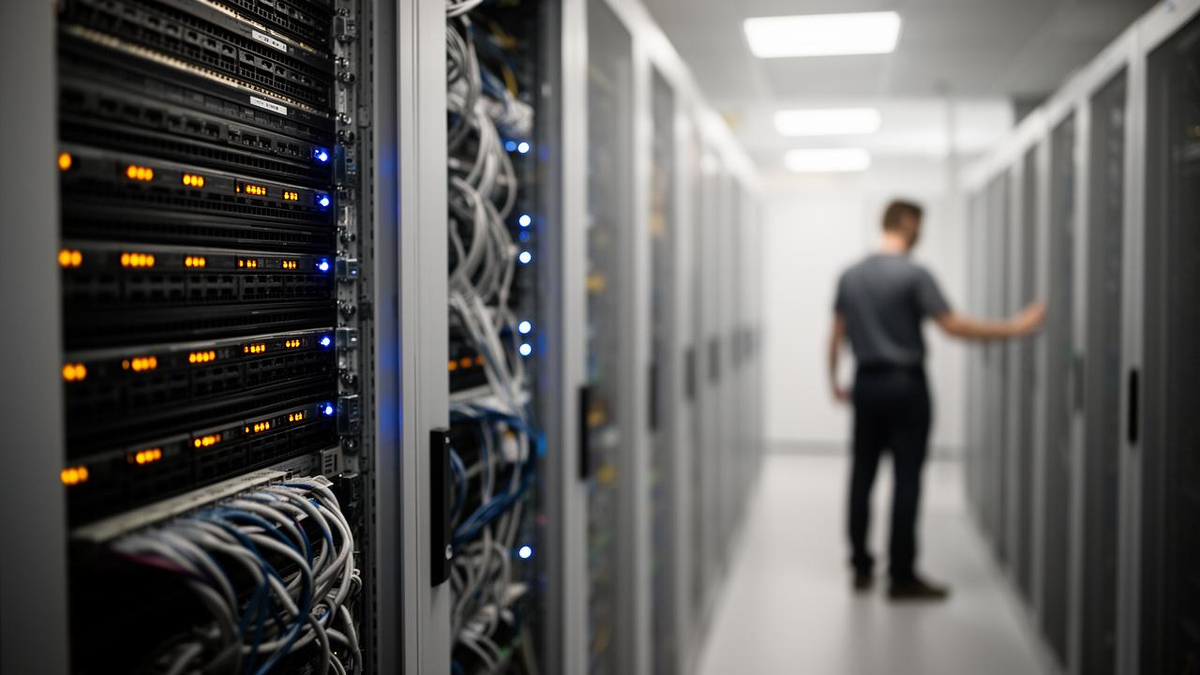
Janardhan is a long-tenured Meta insider. His time at the company dates back to 2009, and he has overseen Meta’s global infrastructure, including its data centers and networks, since at least 2022.
Brown is the newcomer. He joined Meta in July 2026 after nearly 19 years at AWS, where his focus was compute and machine learning services.
He currently reports directly to Janardhan. His portfolio covers data center expansion and Meta Compute, the company’s large-scale push to build AI capacity.
The scale of the job Brown is inheriting
Meta Compute launched in January 2026. Its stated target is tens of gigawatts of AI-driven compute capacity by the end of the decade.
The initiative is co-led by Janardhan and Daniel Gross. With Janardhan heading for the exit in 2027, one of the two people steering Meta’s flagship compute program will change.
AI, tech, and the markets they move—in one daily briefing.
Daily. Free. Join 34,000+ readers across crypto, finance, and policy.
We respect your privacy. Unsubscribe anytime.
Then there is the Louisiana Hyperion project. Meta aims to expand that site to 5 gigawatts of computational capacity, with more than $50 billion in investment attached to it.
The research also points to Meta’s broader plans potentially including external cloud services.
Why an AWS veteran makes sense here
Hiring someone with nearly two decades at AWS is a pointed choice. AWS is the company most associated with turning internal infrastructure into a business that sells compute to everyone else.
Brown’s background in compute and machine learning services lines up neatly with both halves of Meta’s current agenda. There is the internal need to feed ever-larger AI models, and there is the possible future of renting capacity to outside customers.
Historically, Meta has built data centers to serve its own apps. Facebook, Instagram and WhatsApp were the customers, and the infrastructure team was a cost center optimizing for scale.
What this means for Meta and the AI infrastructure race
Meta appears to be managing transition risk by signaling the change well in advance. Announcing a 2027 departure while the successor already reports to the departing chief gives the company a long runway to transfer institutional knowledge.
The other thing to watch is spending discipline. Capex guidance of $125 billion to $145 billion is a wide band, and the gap between the low and high ends is itself $20 billion.
If Meta does move toward offering cloud services externally, it would no longer be just a buyer in that market. It would become a direct rival to the hyperscalers, including the one Brown just left.