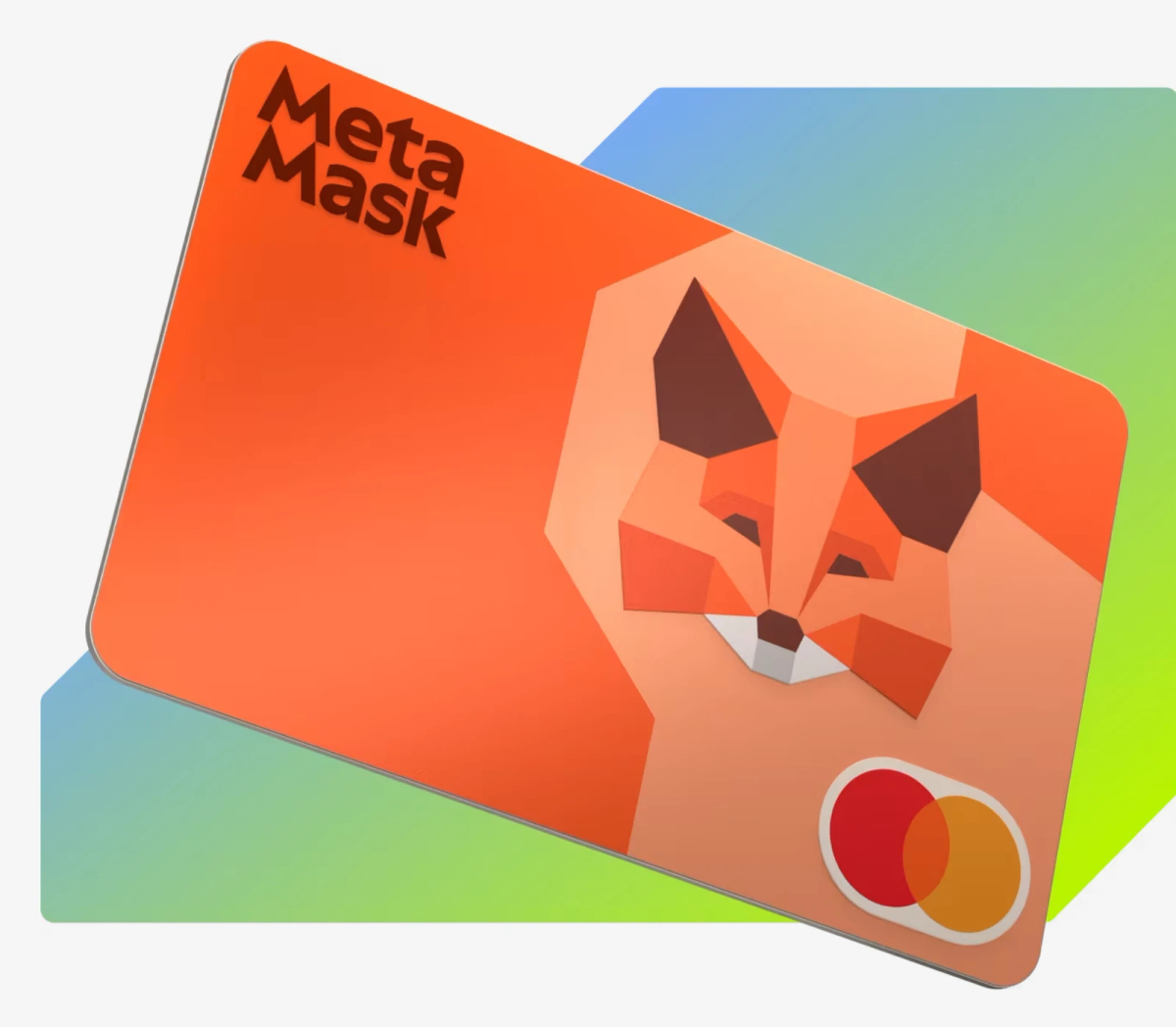
MetaMask, a major crypto asset wallet provider, announced on November 25 that it has begun offering its "MetaMask Card," a debit card that uses U.S. dollar-denominated stablecoins for payments, to users in Japan. The service also launched in Thailand and Vietnam the same day, marking a simultaneous push into Asian markets.
The product available to Japan residents is a virtual card with no annual fee, applied for through the smartphone app (version 8.21 or later) and issued after identity verification and proof of residence. Payments are funded with MetaMask's proprietary stablecoin "MetaMask USD (mUSD)," designed so that one token is pegged to $1. Users link the mUSD balance in their self-custodial "MetaMask Money" account within the app to the card, and when they pay at Mastercard merchants, the required amount of mUSD is converted into a fiat currency such as yen at the time of payment.
For online shopping, users can enter the card number to pay, and by registering the card with Apple Pay or Google Pay, they can also use tap-to-pay at physical stores. Payments made with mUSD at domestic merchants incur no fees. The usage limits are $10,000 per transaction and $15,000 per day, and ATM cash withdrawals are not covered.
Note: Conversions at 159 yen to the dollar. ATM withdrawals not supported.
The card is issued by payments firm Immersve Limited, which issues it under a Mastercard license. Immersve is listed on New Zealand's register of financial service providers.
However, several points remain to be confirmed on the Japanese regulatory front. Under Japan's Payment Services Act, conducting the sale, exchange, intermediation, or management on behalf of others of "electronic payment instruments" such as stablecoins as a business in Japan in principle requires registration as an Electronic Payment Instruments Transaction Business. The registry published by Japan's Financial Services Agency (as of August 27) lists only two companies—SBI VC Trade and Coincheck—and neither handles mUSD. Immersve's name does not appear on that registry, nor on those for funds transfer service providers or crypto asset exchange service providers, nor on the card-related registry published by Japan's Ministry of Economy, Trade and Industry.
Public materials do not make it possible to determine which entity serves as the counterparty for mUSD conversion transactions when the Japan-facing card is used, or whether a domestically registered operator is involved in those transactions. MetaMask disclosed the card's launch on its official X account but has not published a detailed explanation of the conversion process or its compliance with Japanese regulations.
On the domestic stablecoin payments front, the "Slash Card," which supports the U.S. dollar-denominated stablecoin "USDC," began issuance on April 20. Under that arrangement, Aikitas issues the card, Slash Vision develops and operates it, and Orient Corporation (Orico) handles the connection with Visa. In a joint announcement at launch, the three companies said they comply with Japanese laws and regulations including the Installment Sales Act and the Act on Prevention of Transfer of Criminal Proceeds, and conduct identity verification and transaction monitoring.
Whereas the Slash Card uses a deferred-payment model in which Aikitas advances fiat currency to merchants against USDC as collateral, the MetaMask Card differs in that it converts held mUSD at the time of payment and applies it immediately. Both cards connect to the existing merchant networks of Mastercard and Visa, in an attempt to open up everyday shopping as a new use case for crypto wallet users.
Some market participants take the view that whether stablecoin payments become widespread will depend on whether operators compliant with Japan's funds settlement laws can be involved at each stage of conversion and settlement. MetaMask's entry into Japan is seen as part of a broader move by wallet providers to vertically integrate issuance, payment, and conversion functions, and how roles are divided among registered operators will be a focus going forward.
For Japanese crypto asset users, cards offered by overseas-origin wallets expand the options for everyday payments, but users need to check the conversion counterparty, fees, and regulatory compliance status when using them. MetaMask has also begun offering the service in Thailand and Vietnam at the same time, and competition in stablecoin payments in Asia looks set to intensify further.
Once added, BigGo Finance appears first in Google Search Top Stories, so you get the broadest, most up-to-the-minute, and most comprehensive global financial news first.