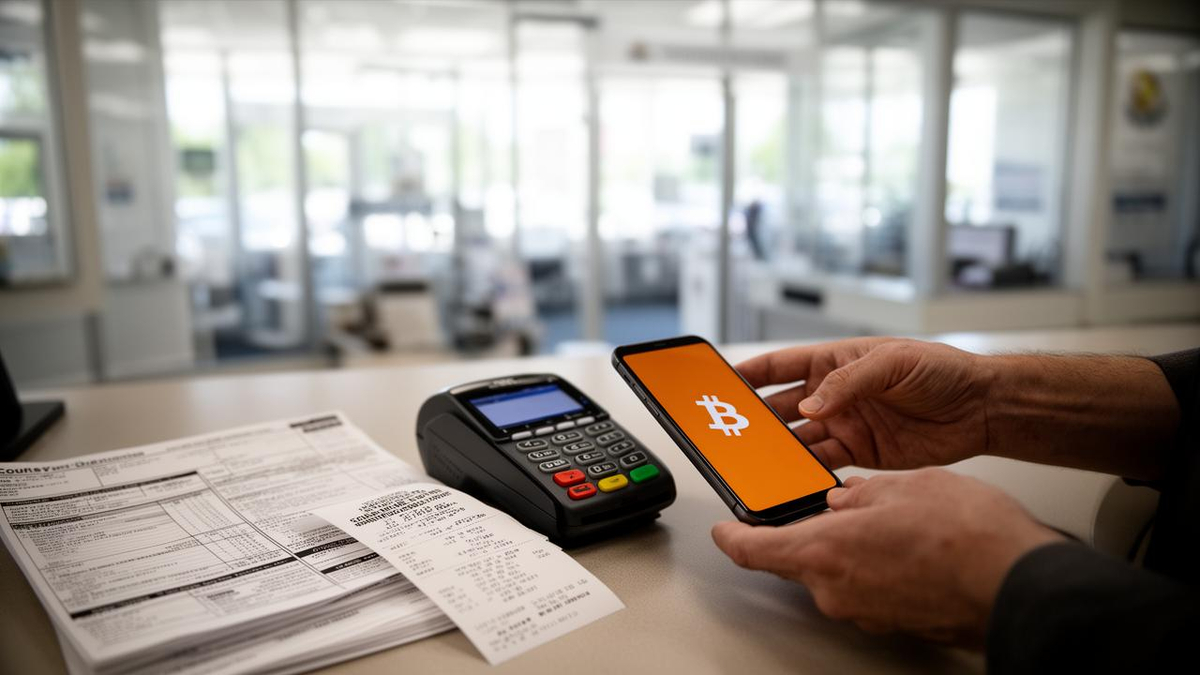
Property owners in Miami-Dade County can now settle their tax bills in Bitcoin, with the Florida county converting each payment to dollars the moment it is made so that public funds never sit in the cryptocurrency.
The county's Tax Collector's Office said the option went live on Nov. 9 and is available both through the online payment portal and at all 13 office locations plus the county's T-Connect mobile units. Cash, check and card payments remain in place; Bitcoin is an add-on, not a replacement.
"Government must keep up with the times and the needs of the people we serve," Tax Collector Dariel Fernandez said in the announcement. He added in a second statement that the county is "embracing new technology without compromising our responsibility to protect taxpayer dollars."
At the center of the design is an undisclosed third-party processor that sells the Bitcoin immediately and remits U.S. dollars to the county. Because Miami-Dade never holds the asset, its tax collections carry no exposure to the price swings that have repeatedly rattled crypto markets. The county has not published the processor's name or the convenience fee attached to Bitcoin payments; card and mobile wallet payments already carry a 2.5% fee with a $2.50 minimum, and it is not yet confirmed whether the crypto route is priced similarly.
Note: Details as announced by the Miami-Dade Tax Collector's Office.
The launch caps a five-year policy arc. A 2021 resolution by Miami-Dade Commissioner Cohen Higgins laid the groundwork for bringing cryptocurrency into county operations, and Fernandez served on the county's Cryptocurrency Task Force before winning the tax collector's race in November 2024. The county had earlier cut business ties with FTX after that exchange collapsed, making its return to crypto-adjacent territory a deliberately cautious one.
Miami-Dade is not the first U.S. jurisdiction to accept Bitcoin for taxes. Colorado began doing so in 2022, and Utah and Detroit followed, with Detroit's program starting in 2025. The move fits Miami's broader positioning as a crypto-friendly city, a reputation Mayor Francis Suarez began cultivating in 2021 when he explored paying municipal workers in Bitcoin.
The timing lands inside a useful window for taxpayers. The county issued its 2026 property tax bills on Oct. 30, and owners who pay in November receive a 4% early-payment discount. The discount steps down to 3% in December, 2% in January and 1% in February, with the full amount due in March. The same schedule applies to every payment method, so Bitcoin users gain no special advantage beyond the general discount.
Note: Schedule applies to all accepted payment methods.
The announcement arrived during a sour stretch for the cryptocurrency. Bitcoin traded near $73,333 on Nov. 9, down 1.72% over 24 hours and 5.39% over the prior week, and roughly 42% below its all-time high of $126,080 set in October 2025, according to CoinGecko data cited in coverage of the launch. The Crypto Fear & Greed Index stood at 32 out of 100, in "fear" territory.
That contrast is the point. Accepting Bitcoin as a payment rail is a different proposition from holding it as a reserve asset or granting it legal-tender status. Miami-Dade is treating the coin as one more way to move money, closer in risk profile to accepting PayPal than to building a treasury position. That design is what makes it politically and legally copyable by other counties and cities.
Washington has weighed a bigger step. Former U.S. Representative Matt Gaetz introduced legislation in 2024, H.R. 8822, that would have let Americans pay certain federal income taxes in Bitcoin; it was referred to the House Ways and Means Committee and died when the 118th Congress ended. Former White House cryptocurrency adviser Patrick Witt said earlier in the week that the Trump administration remains interested in ways to expand the Strategic Reserve's Bitcoin holdings, noting that open-market purchases face legal uncertainty while collecting coin through taxes or government payments could be considered.
For the county, the next milestone is volume. Fernandez has not set a threshold or timeline for judging whether the program continues or expands to other cryptocurrencies. Transaction data after the November-to-March payment window closes, along with any disclosure of the processor and its fee schedule, will show whether the model travels beyond South Florida.