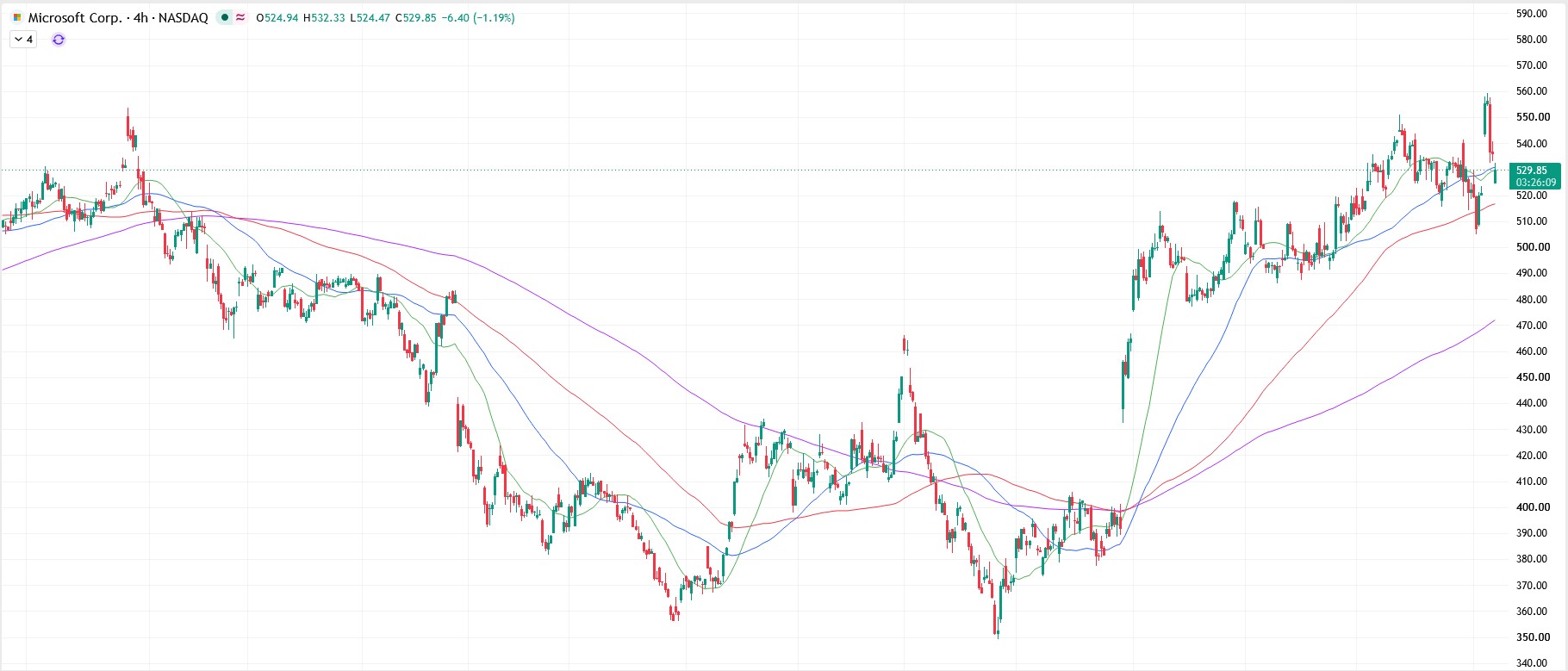
MSFT is down approximately 1.2% on November 6, trading around $529.85 and extending its correction after a sharp reversal from all-time highs near $559–560. On the 4H chart, Microsoft shares have lost almost all the momentum gained on November 4, when the stock rose around 6.7% amid an initially positive investor reaction to the U.S. midterm congressional election results.
Wall Street selloff challenges technology sector valuations
However, the situation changed dramatically on November 5: Microsoft closed near $535.93, losing 3.58%, while the Nasdaq Composite plunged 5.5%, the S&P 500 declined by 4.4%, and the Dow Jones lost 1,833 points. The main catalyst for the selloff was a reassessment of the outlook for the U.S. AI industry following the Democratic victory, as investors began to consider the possibility of tighter regulation of data center construction, energy consumption, and financing for new infrastructure projects.
Semiconductor manufacturers faced particularly intense pressure: the Philadelphia Semiconductor Index lost more than 12%, while Nvidia and AMD recorded significantly steeper declines than major software developers. Microsoft's relative resilience can be explained by its diversified business structure and established Azure customer base, although even these advantages cannot fully shield the company from widespread position reductions across the technology sector. The technical outlook has also deteriorated: the price has fallen back below resistance at $540–545 and is now testing the moving averages around $525–530, where the next short-term direction will be determined.
Data center restrictions raise questions about Azure expansion
One of the most interesting developments over the past two sessions has been the reassessment of the potential consequences of tighter AI infrastructure regulation for Microsoft itself. Immediately after the elections, investors viewed restrictions on new data center construction as a potential advantage for major cloud operators with substantial existing computing capacity.
However, the subsequent decline in shares showed that the market had begun to consider the other side of this scenario. Restrictions on connecting new facilities to power grids, stricter environmental requirements, and slower permit approvals could not only hinder the expansion of smaller competitors but also limit Azure's own growth potential.
The availability of electricity remains a particularly sensitive issue, as expanding computing capacity for artificial intelligence requires long-term contracts, infrastructure upgrades, and substantial upfront investment. At the same time, investors have become increasingly concerned about the financial risks facing smaller cloud providers, which have actively raised debt capital to build data centers and purchase Nvidia accelerators.
Deteriorating financing conditions for these companies could create additional instability in the technology sector and lead to a reduction in new infrastructure orders. For Microsoft, the situation remains mixed: reduced competition could improve pricing in the cloud business, but restrictions on the overall pace of market expansion could also limit expected revenue growth. Therefore, the current selloff primarily reflects a reassessment of future cash flows and infrastructure investment costs rather than a sudden deterioration in the company's current operating performance.
Support at $525 becomes a key test for bulls
The bulls' failure to break through resistance near $560 triggered profit-taking on long positions, pushing MSFT down toward $525. This decline should not yet be viewed as a trend reversal, as bulls may still attempt to challenge the highs from current levels. However, a break below the current support, as I warned in Microsoft breaks above $550 as election results fuel a powerful rally, would lead to a decline toward $520–510, where buying opportunities may emerge.
Editor's Picks for You
Latest Microsoft News
-
 Afghanistan
-
 Albania
-
 Algeria
-
 Angola
-
 Argentina
-
 Armenia
-
 Australia
-
 Austria
-
 Azerbaijan
-
 Bahamas
-
 Bahrain
-
 Bangladesh
-
 Belarus
-
 Belgium
-
 Bolivia
-
 Botswana
-
 Brazil
-
 Brunei
-
 Bulgaria
-
 Cambodia
-
 Cameroon
-
 Canada
-
 Chile
-
 China
-
 Colombia
-
 Congo
-
 Costa Rica
-
 Cote d'Ivoire
-
 Croatia
-
 Cuba
-
 Cyprus
-
 Czechia
-
 DR Congo
-
 Denmark
-
 Dominican Republic
-
 Ecuador
-
 Egypt
-
 El Salvador
-
 Estonia
-
 Eswatini
-
 Ethiopia
-
 Finland
-
 France
-
 Georgia
-
 Germany
-
 Ghana
-
 Greece
-
 Haiti
-
 Hong Kong
-
 Hungary
-
 India
-
 Indonesia
-
 Iran, Islamic republic
-
 Iraq
-
 Ireland
-
 Israel
-
 Italy
-
 Jamaica
-
 Japan
-
 Jordan
-
 Kazakhstan
-
 Kenya
-
 Korea
-
 Kuwait
-
 Kyrgyzstan
-
 Laos
-
 Latvia
-
 Lebanon
-
 Lesotho
-
 Libya
-
 Lithuania
-
 Luxembourg
-
 Madagascar
-
 Malaysia
-
 Malta
-
 Mauritius
-
 Mexico
-
 Moldova
-
 Mongolia
-
 Montenegro
-
 Morocco
-
 Mozambique
-
 Myanmar
-
 Namibia
-
 Nepal
-
 Netherlands
-
 New Zealand
-
 Nigeria
-
 North Macedonia
-
 Norway
-
 Oman
-
 Pakistan
-
 Palestine
-
 Panama
-
 Papua New Guinea
-
 Paraguay
-
 Peru
-
 Philippines
-
 Poland
-
 Portugal
-
 Puerto Rico
-
 Qatar
-
 Reunion
-
 Romania
-
 Rwanda
-
 Saudi Arabia
-
 Serbia
-
 Singapore
-
 Slovakia
-
 Slovenia
-
 Somalia
-
 South Africa
-
 Spain
-
 Sri Lanka
-
 Sweden
-
 Switzerland
-
 Syria
-
 Taiwan
-
 Tajikistan
-
 Tanzania
-
 Thailand
-
 Trinidad and Tobago
-
 Tunisia
-
 Turkey
-
 UAE
-
 Uganda
-
 Ukraine
-
 United Kingdom
-
 United States
-
 Uruguay
-
 Uzbekistan
-
 Venezuela
-
 Vietnam
-
 Yemen
-
 Zambia
-
 Zimbabwe
- Forex
- Crypto
 TU score: 9.4/10
Your capital is at risk.
 TU score: 9.2/10
Your capital is at risk.
 TU score: 9.1/10
Your capital is at risk.
 TU score: 8.9/10
Your capital is at risk.
 TU score: 8.7/10
Your capital is at risk.
 TU score: 9.4/10
Your capital is at risk.
 TU score: 9.2/10
Your capital is at risk.
 TU score: 9.1/10
Your capital is at risk.
 TU score: 8.9/10
Your capital is at risk.
 TU score: 8.7/10
Your capital is at risk.