[News Culture] Korean music and webtoons reach paying audiences around the world in seconds, but the revenue can take far longer to reach the creators and production companies behind them. International royalty payments still depend on banks, intermediaries and currency conversions, even as digital platforms make content available across borders almost instantly. Having invested heavily in faster production and distribution through artificial intelligence, the Korean entertainment industry is now confronting another potential source of inefficiency: the systems that move its money.
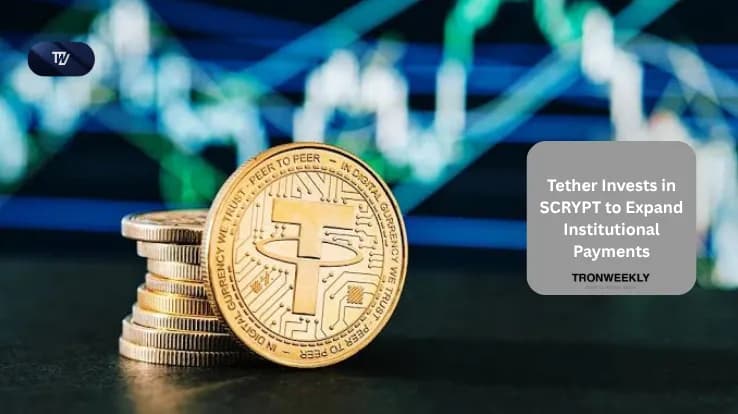
Stablecoins, digital tokens designed to maintain a fixed value against conventional currencies, could offer an alternative for certain cross-border payments. Combined with automated settlement systems, they may reduce transaction costs and shorten payment cycles for businesses handling international licensing, royalties and fan-platform sales. Yet faster transfers alone will not guarantee better returns for creators. Much will depend on how the new infrastructure is regulated, who controls it and whether smaller companies can afford to participate.
South Korea's content exports reached $14.08 billion in 2024, according to the Ministry of Culture, Sports and Tourism and the Korea Creative Content Agency's (KOCCA) 2025 Content Industry Survey. Despite that international reach, overseas licensing fees, music royalties and platform revenues often pass through several financial institutions and intermediaries before reaching rights holders. Each stage can introduce additional costs, currency conversion requirements and processing delays.
The regulatory environment is also changing. The U.S. Guiding and Establishing National Innovation for U.S. Stablecoins (GENIUS) Act, signed into law in July 2025, is scheduled to take effect on January 18, 2027. In October 2026, the Office of the Comptroller of the Currency finalized key implementing regulations covering payment stablecoin issuers and certain custodial activities under its supervision. The legislation provides a clearer framework for regulated stablecoin businesses in the United States, although Korean content companies must still comply with their own domestic financial and foreign exchange requirements.
Global Consumption Is Instant. Royalty Settlement Is Not.
Content revenue is unusually complicated to distribute because a single work can involve numerous rights holders across several countries. A Korean webtoon published on a North American platform may generate payments for its original creator, writer, translator, local publisher and distributor. Music royalties can involve composers, lyricists, performers, record labels, publishers and collecting societies, all working under separate contracts. Before anyone gets paid, revenue must be reported, attributed and divided according to those agreements. International bank transfers and foreign exchange procedures then add another layer of cost and delay.
Stablecoins could simplify the final payment stage. Businesses may be able to transfer funds internationally without relying on every intermediary in a conventional correspondent banking arrangement, while smart contracts could automatically execute payments once agreed conditions are met. This would be particularly useful for companies distributing relatively small amounts to numerous rights holders in different markets. The potential savings would depend on transaction volume, conversion fees, custody arrangements and the cost of maintaining the system.
The technology does not, however, resolve the underlying complexity of royalty accounting. A blockchain can record a transfer, but it cannot independently determine whether a streaming platform has reported the correct number of plays or whether a copyright holder is entitled to a particular share. Those calculations still require accurate rights data, contractual records and reliable reporting. Stablecoins could shorten the time between an approved settlement and the arrival of funds, rather than eliminate the work needed to establish what is owed.
South Korean financial companies are already testing how digital assets could be used in transactions involving music rights. In January 2026, NH Nonghyup Bank, Musicow and financial technology company ATON completed a proof of concept involving stablecoin-based settlement for security token offerings backed by K-pop music copyright-related assets. The project examined digital subscriptions, payment processing, settlement and rights administration, including a scenario in which overseas investors could participate using a Korean won-denominated stablecoin.
The experiment demonstrated a possible technical framework for connecting music-related investment products with digital payments, not a fully operational international royalty settlement service. Its importance lies in testing whether payments and rights administration can be handled within a coordinated digital system. Similar infrastructure could eventually support licensing fees or other content transactions, provided it can be integrated with existing accounting systems and meet regulatory requirements.
Korean Banks, Tech Platforms and Entertainment Firms Explore Digital Payments
Interest in stablecoins is spreading across South Korea's financial technology sector, although companies are pursuing different strategies and remain at different stages of development.
Naver Financial and Dunamu, the operator of cryptocurrency exchange Upbit, are pursuing a business combination through a comprehensive share exchange. The proposed transaction is undergoing review by the Korea Fair Trade Commission and has drawn attention to the potential convergence of digital payments, financial platforms and virtual asset services. The companies are positioning themselves for opportunities in digital finance, but the transaction remains subject to regulatory approval, and any specific stablecoin services would require separate commercial and legal arrangements.
Kakao is approaching the market through payment infrastructure and digital wallets. Kakao Pay announced in September that it had completed a proof of concept for digital asset wallet technology, while the wider Kakao group has been exploring potential applications involving won-denominated stablecoins. Its focus includes the systems needed to store, transfer and settle digital assets rather than token issuance alone. Together, these initiatives suggest that Korean technology companies are examining how stablecoins might fit into existing financial and consumer platforms, although technical testing does not establish that commercially viable services are ready for deployment.
For entertainment companies, the potential attraction is straightforward. Global fan platforms already process payments for digital content, merchandise, memberships and online events, often involving customers and commercial partners in different currencies. A well-integrated settlement service could reduce administrative work and improve cash-flow management, particularly where companies make frequent payments to international rights holders or business partners. The financial advantage would need to be demonstrated against existing payment providers, which may already offer competitive pricing and relatively fast settlement.
Entertainment groups are also reviewing their exposure to digital asset businesses. In October, HYBE disclosed plans to transfer its Dunamu stake to its wholly owned U.S. subsidiary, HYBE Americas, as part of a restructuring of investment asset management. The move coincided with changes in the U.S. regulatory environment and HYBE's international expansion, prompting speculation about possible future digital finance activities. HYBE, however, described the transaction as an investment management decision and did not announce a stablecoin payment service.
The distinction between confirmed operations and potential applications is important. Musicow's initiative was a technical experiment, the Naver Financial–Dunamu transaction is a proposed corporate combination, Kakao's work involves wallet and payment technology, and HYBE's announcement concerns the ownership of an investment asset. They are not components of a single coordinated stablecoin network.
Nevertheless, the commercial emphasis is different from the entertainment industry's earlier interest in non-fungible tokens (NFTs). During the NFT boom of 2021, companies explored digital collectibles and new ways to monetize entertainment IP. Current payment-related initiatives are concerned more directly with the infrastructure supporting transactions, rights administration and settlement. Their value will depend on whether they improve established business processes rather than create another speculative product category.
Lower Payment Costs Could Come With Greater Platform Dependence
Stablecoins could make international payments more efficient, but the financial and regulatory costs of adopting them may vary considerably across the industry. Korean companies receiving overseas licensing fees or royalties must consider how stablecoin transactions are treated under foreign exchange rules, accounting standards and tax regulations. Corporate wallet arrangements, conversion into Korean won and the procedures for holding or transferring digital assets also require clear legal and operational safeguards.
Security is an equally important consideration. Compromised wallets, stolen credentials, exchange breaches and smart contract vulnerabilities can expose businesses to substantial losses. Entertainment companies handling payments to creators and rights holders would need dependable custody services, transaction monitoring and internal controls, along with procedures for investigating errors or unauthorized transfers. Stablecoin stability also depends on the issuer's reserve management and redemption arrangements, meaning that the quality of the financial institution behind a token matters as much as the speed of the network.
Large entertainment groups and technology platforms are better equipped to absorb these requirements. They may already operate overseas subsidiaries, maintain specialist legal and finance teams, and negotiate payment services directly with banks or technology suppliers. Smaller studios, independent labels and individual creators generally have fewer resources to manage digital wallets, foreign exchange compliance and new accounting processes. Even when transfer fees fall, the cost of meeting those requirements could offset some of the savings.
There is also a question of bargaining power. If major platforms develop their own settlement networks and require smaller partners to use them, those partners may have limited influence over fees, exchange rates, transaction data or payment conditions. A company could receive revenue more quickly while becoming more dependent on the platform responsible for calculating and distributing it. The commercial benefits would then depend not just on the efficiency of the technology, but on the contracts determining how those savings are shared.
The distinction matters for creators in particular. Faster settlement does not automatically mean a larger royalty payment, a better licensing agreement or greater control over intellectual property. A platform that retains substantial control over revenue reporting and audience data may preserve that advantage even when payments move through a blockchain. Stablecoins could improve cash flow, but more equitable compensation would still require transparent accounting and enforceable contractual rights.
K-Content's Next Challenge Is Building a Better Revenue Pipeline
The Korean entertainment industry has repeatedly adapted to technologies that changed how content is produced and consumed. The internet expanded global distribution, smartphones transformed audience behavior, and AI is now reshaping production, translation and localization. Stablecoins present a different opportunity: improving the financial processes connecting international sales with the companies and individuals entitled to the revenue.
The GENIUS Act's scheduled implementation in January 2027 may encourage further experimentation among financial institutions and digital platforms, but it will not, by itself, establish a workable system for Korean entertainment businesses. Domestic rules on foreign exchange, taxation, custody and corporate transactions will remain central to adoption decisions. Companies will also need evidence that stablecoin settlement offers a financial advantage over established banking and payment services.
The first commercial tests should focus on transactions where stablecoins might demonstrably reduce costs or delays. International licensing payments, fan-platform purchases, merchandise sales and copyright royalty distributions are possible candidates, but each has different settlement requirements. Comparing transaction fees, currency conversion costs, processing times, security expenses and reconciliation accuracy would provide a clearer assessment than the technology's theoretical speed alone.
For smaller producers, access to regulated payment providers may be more practical than developing proprietary blockchain systems. Banks and specialist financial technology companies could provide the custody, compliance and conversion services needed to make digital settlement usable without requiring every studio to maintain its own technical infrastructure. The terms of those services would still matter, particularly where payment providers control transaction data or determine how quickly and at what cost funds can be converted.
Regulators, meanwhile, will need to consider the commercial realities of industries that receive numerous cross-border payments involving multiple rights holders. Clear treatment of corporate transactions, foreign exchange conversion, financial reporting and custody could help companies evaluate stablecoin services without assuming unnecessary legal or operational risks. The objective should be to enable secure and commercially useful payment arrangements, rather than encourage adoption simply because a new technology has become available.
For K-content businesses, the financial significance would be greater if faster settlement also improved their ability to reinvest. Shorter payment cycles could reduce pressure on working capital, particularly for smaller production companies that must finance new projects while waiting for overseas revenue. Lower administrative costs could free resources for development and production, although those benefits would depend on the actual savings achieved and the share retained by each participant.
Korean entertainment has established a global market for its music, webtoons, television and other intellectual property. The financial systems supporting that market now face pressure to become more efficient, transparent and accessible. Stablecoins may form part of that transition, but their usefulness will be determined by practical costs, regulatory safeguards and the terms under which businesses and creators receive their money.
Faster payments would be a meaningful improvement. The larger opportunity is a settlement system that allows more of K-content's international revenue to reach its producers and creators efficiently—and gives them greater capacity to finance the next work.
Reported by News Culture [email protected]
* This article was manually prepared as a translated piece and later proofread and reviewed with the assistance of AI.