Summary
- An unusual divergence emerged as Nvidia shares fell 4.3% while the S&P 500 rose 2.3%.
- Nvidia makes up about 6.7% of the S&P 500, and while the stock and the index had often weakened together in the past, they moved in opposite directions this time.
- Even with company-specific bad news for Nvidia, the broader U.S. stock market rose, showing that a drop in a single megacap technology stock did not lead to weakness across the whole market.
Forecast Trend Report by Period
An unusual divergence emerged in U.S. equities, with the S&P 500 posting a sharp gain even as Nvidia shares slid steeply.
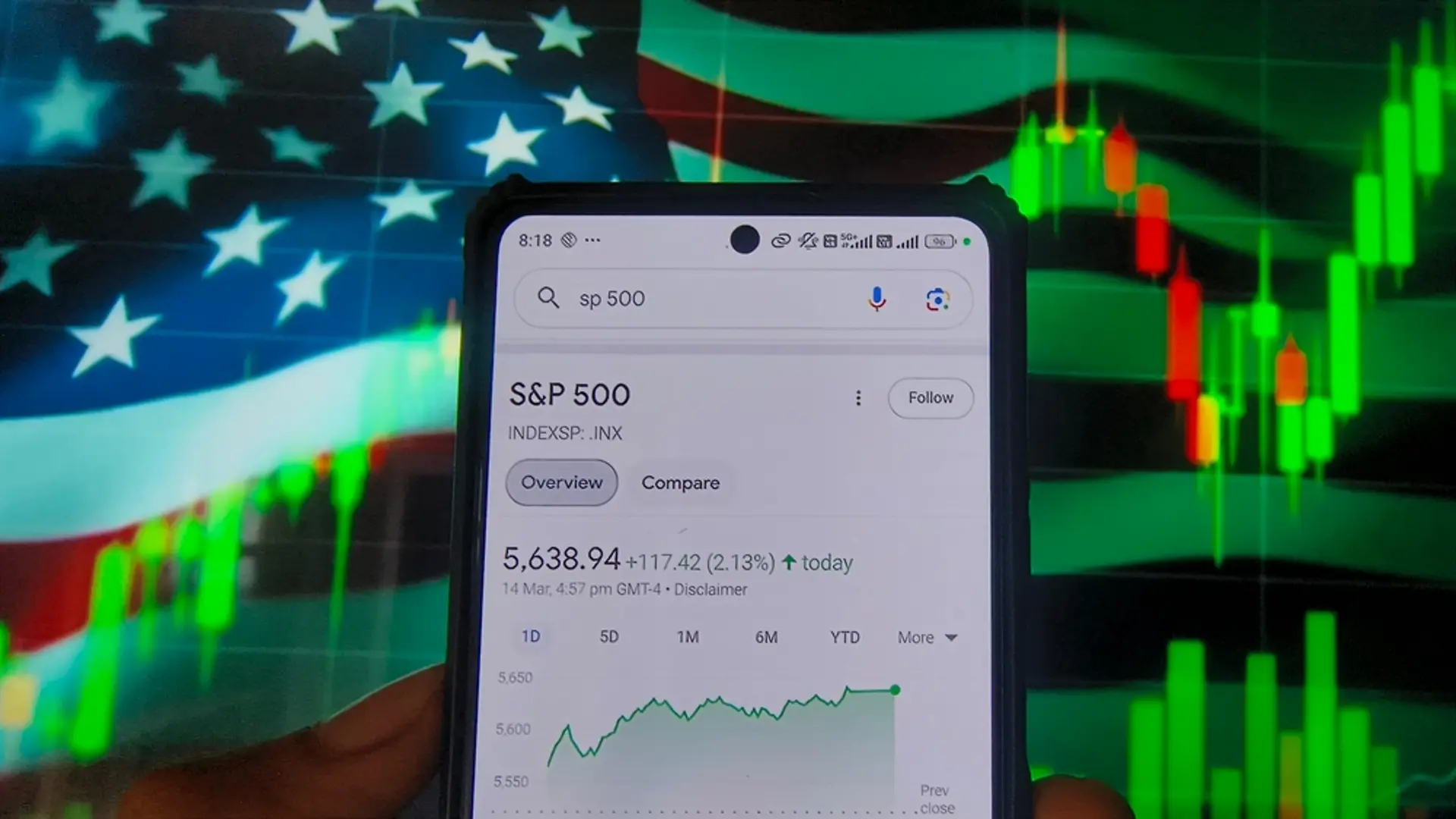
Bloomberg reported that Nvidia fell 4.3% on November 9, while the S&P 500 rose 2.3% for its biggest one-day advance since April. News that Nvidia Chief Executive Officer Jensen Huang had acknowledged an extramarital affair and that the board had opened an investigation weighed on the stock.
Nvidia accounts for about 6.7% of the S&P 500, making it one of the index's most influential components. In the past, sharp declines in Nvidia shares often pulled the benchmark lower as well. This time, the two moved in opposite directions.
Bloomberg data show this was only the third time since Nvidia joined the S&P 500 in 2001 that the stock fell more than 4% while the index gained more than 2%. The most recent previous instance was in May 2009, meaning the same pattern had not appeared in about 17 years.
Nvidia's market capitalization was about $5 billion at the time. It now stands at about $4.3 trillion. With the company's influence on U.S. equities expanding alongside growth in the AI semiconductor market, the divergence was all the more unusual.
Data also show that when Nvidia drops more than 4% in a single session, the S&P 500 falls by more than 1.6% on average. As Nvidia grew into one of the world's largest listed companies, the correlation between the stock and the broader index strengthened.
Recent trading had followed that pattern. When Nvidia plunged 9.3% on November 5, the S&P 500 fell about 4.4%. Earlier, on June 5, Nvidia slid more than 6% and the S&P 500 lost 2.6%.
This time, however, the broader U.S. market advanced despite company-specific bad news for Nvidia, showing that a decline in a single megacap technology stock does not necessarily lead to weakness across the entire market.
Suehyeon Lee