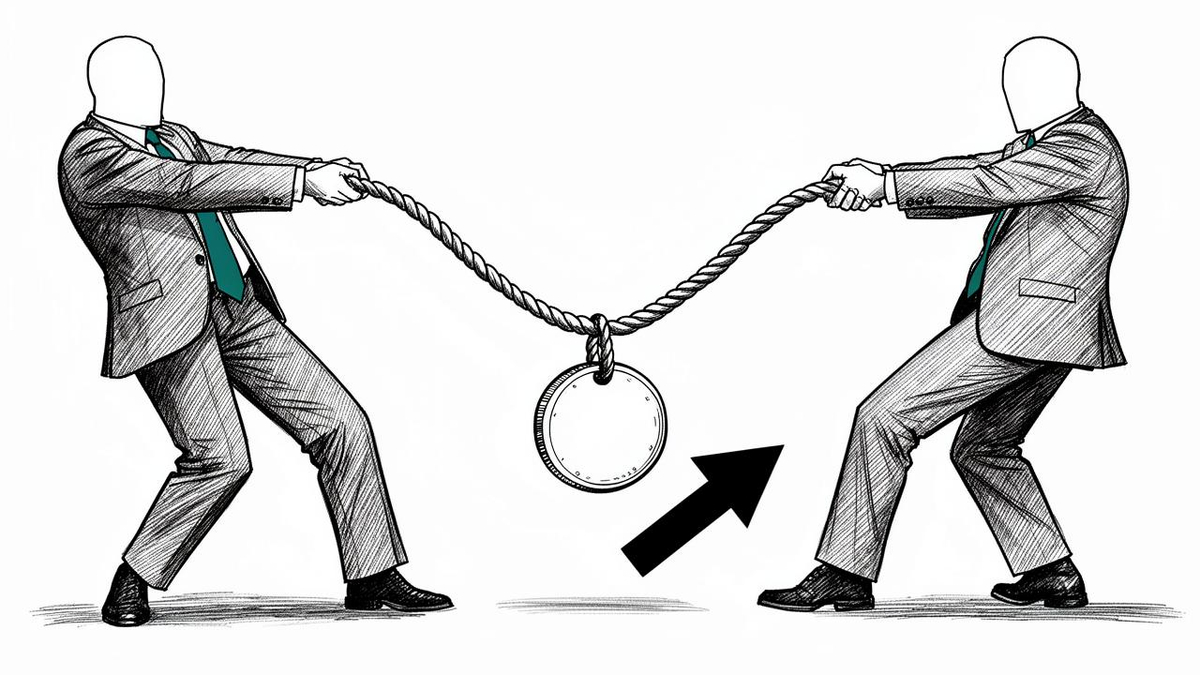
OKX (OKB) Chief Executive Star Xu has publicly blamed Binance (BNB) for the October cryptocurrency selloffs of both 2025 and 2026, reviving a dispute between two of the industry's largest exchange operators. In a post on X, Xu said the broader market has spent two years absorbing the consequences of those episodes, and he questioned how anyone could "lies to the public more shamelessly" after causing crashes and then urging customers to take a long-term view.
Xu was responding to remarks from Binance co-founder Changpeng Zhao, who said his exchange did not sell digital assets during the recent downturn. Zhao wrote that he had been buying steadily, describing his approach as "I only bought, DCA every day," a reference to dollar-cost averaging. He also listed a series of alternative explanations for the decline, including capital flowing toward Anthropic's initial public offering, roughly $1.9 billion of net outflows from U.S. spot Bitcoin ETFs across seven trading sessions, inflation readings and the possibility of Federal Reserve rate increases.
Xu did not name Zhao or Binance directly in the post, but the target of his criticism was clear from context. He also argued that complaints from users and community members are routinely dismissed as attacks coordinated by rival platforms, OKX among them, leaving the underlying issues unaddressed. Zhao has not replied to Xu directly.
The dispute traces back to the October 10, 2025 crash. Xu argued at the time that Binance's promotional incentives around USDe, a yield-bearing dollar token issued by Ethena (ENA), encouraged users to borrow against the asset and add leverage, which then unwound violently when volatility struck. Binance had offered a 12% yield on the token and accepted it as collateral on the same footing as USDT and USDC. The European Securities and Markets Authority reported that the selloff accelerated after the United States announced tariffs on China, producing about $19 billion in liquidations across crypto derivatives. Binance said it paid more than $328 million to eligible users affected by disruptions on its platform, and Zhao attributed that episode to tariff-related macroeconomic news rather than any system failure at his company.
The latest flashpoint came after Binance disclosed a security incident in late October 2026. The exchange put the total impact at roughly $6.3 billion and said it had made customers whole through its Secure Asset Fund for Users, or SAFU. The U.S. Department of Justice attributed the attack to the North Korea-linked TraderTraitor group, and Binance later confirmed that compensation for affected assets had been completed. The disclosure was followed by a slide in Bitcoin to a six-week low of $77,300.
The exchange fight is unfolding against a fragile market backdrop. Bitcoin traded near $64,900, down about 4% over the prior 24 hours, after touching an intraday low around $62,000 over the weekend, its weakest level since mid-July. Short positions accounted for $266 million of the $387 million liquidated in that period, according to CoinGlass data. BNB changed hands at about $593, roughly flat over 24 hours.
Note: Price and flow figures reflect the most recent trading session described in the source material.
For investors, the public escalation between two major venues adds a reputational dimension to an already defensive market. Leverage and collateral practices at large exchanges are likely to draw closer scrutiny from users and European regulators, particularly given the earlier attention on yield-bearing tokens used as margin. How quickly Binance and OKX move from accusations to specifics, including data on liquidation cascades and collateral rules, may shape confidence in exchange risk controls as Bitcoin trades well below its recent highs.
Once added, BigGo Finance appears first in Google Search Top Stories, so you get the broadest, most up-to-the-minute, and most comprehensive global financial news first.