Paraguay's state-owned power utility ANDE has decided to terminate the special discounted power supply contracts applied to Bitcoin (BTC) mining operators as of December 31, 2027. Operators engaged in cryptocurrency mining in the South American country may see their power procurement terms change significantly from 2028 onward.
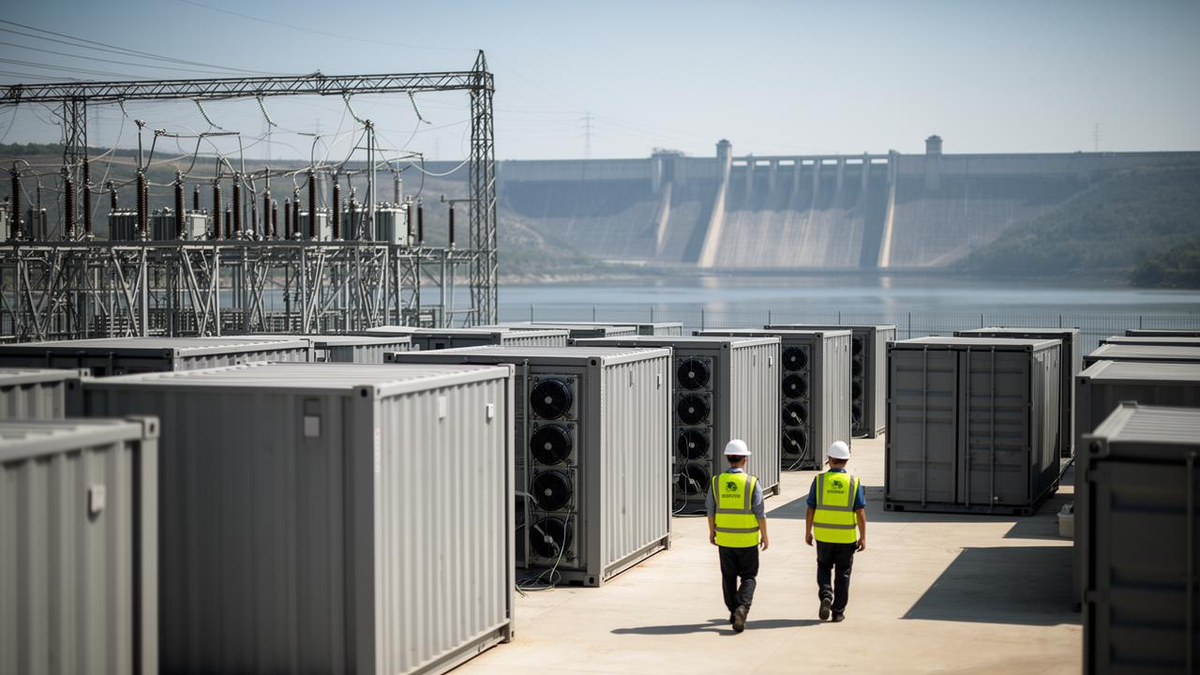
Backed by abundant hydroelectric power from the Itaipu Dam on the border with Brazil, Paraguay has grown into a mining hub with the world's fourth-largest computing capacity (hashrate) used for Bitcoin mining. ANDE has sold surplus electricity that cannot be consumed domestically to miners at discounted rates, building a mutually beneficial relationship — helping miners keep electricity costs down while providing the utility with a new revenue source.
The power rate under the special contracts is set at $44 per megawatt-hour (MWh), which works out to below 5 cents per kilowatt-hour (kWh). According to data compiled by industry group Hashrate Index, Paraguay accounted for roughly 4% of global Bitcoin mining computing power as of the second quarter of 2026.
Behind the contract termination is a shift in the country's domestic power supply-demand structure. The Itaipu Dam covered about 88% of Paraguay's electricity consumption last year. ANDE expects nationwide power demand to grow at an annual rate of about 8% over the next year and about 5% thereafter. In addition, data centers in the artificial intelligence (AI) sector are now seeking the same hydroelectric power, and the room to keep supplying surplus electricity cheaply is being lost.
ANDE has already signed long-term supply contracts with AI data centers that use power from the same dam that attracted miners. The utility's engineers' association has proposed capping the amount of power sold to miners and AI operators and selecting supply recipients through competitive bidding. If adopted, miners would find themselves competing with AI operators for limited power. The minimum price in the bidding proposal is set nearly 30% above the current power rate used as a comparison benchmark by the engineers' association, and some operators may find it difficult to secure the same amount of power as before.
Note: Amounts converted at 160 yen per dollar. Contracted power and revenue figures are as of the time of reporting.
Electricity costs are the largest expense item in Bitcoin mining and determine the profitability of mining operations. For overseas operators that expanded into Paraguay even at the cost of bearing cooling expenses due to the subtropical climate, the end of cheap power supply will force them to review their business plans. Miners will now face competition with AI operators to re-secure power, and a shift to a bidding system would inevitably raise procurement costs. Some of the global mining network may relocate to higher-cost regions, which is expected to affect miners' profitability and their decisions on capital investment.
ANDE has indicated it will not change the deadline for the special contracts, and the details of power supply rules from 2028 onward will depend on the design of the future bidding system.
Once added, BigGo Finance appears first in Google Search Top Stories, so you get the broadest, most up-to-the-minute, and most comprehensive global financial news first.