- live LIVE: Wall Street crashes and rebounds after Democrats snatch US House and Senate in historic midterms election November 4, 2026 Live Updates
- PBOC says it stopped Solana’s Shanghai event over crypto promotion 36 seconds ago News
- Cryptopolitan Report: A Pill To Help Dogs Live Longer Is Near. Half Our Readers Are Ready To Sign Up 22 minutes ago News
- Unitree’s PetroChina venture hands Washington hawks fresh ammunition 2 hours ago Tech
- Cryptopolitan Report: A Pill To Help Dogs Live Longer Is Near. Half Our Readers Are Ready To Sign Up 22 minutes ago News
- Unitree’s PetroChina venture hands Washington hawks fresh ammunition 2 hours ago Tech
- Binance-owned Gopax halts all trading a week after Binance’s $6.3 billion hack 2 hours ago News
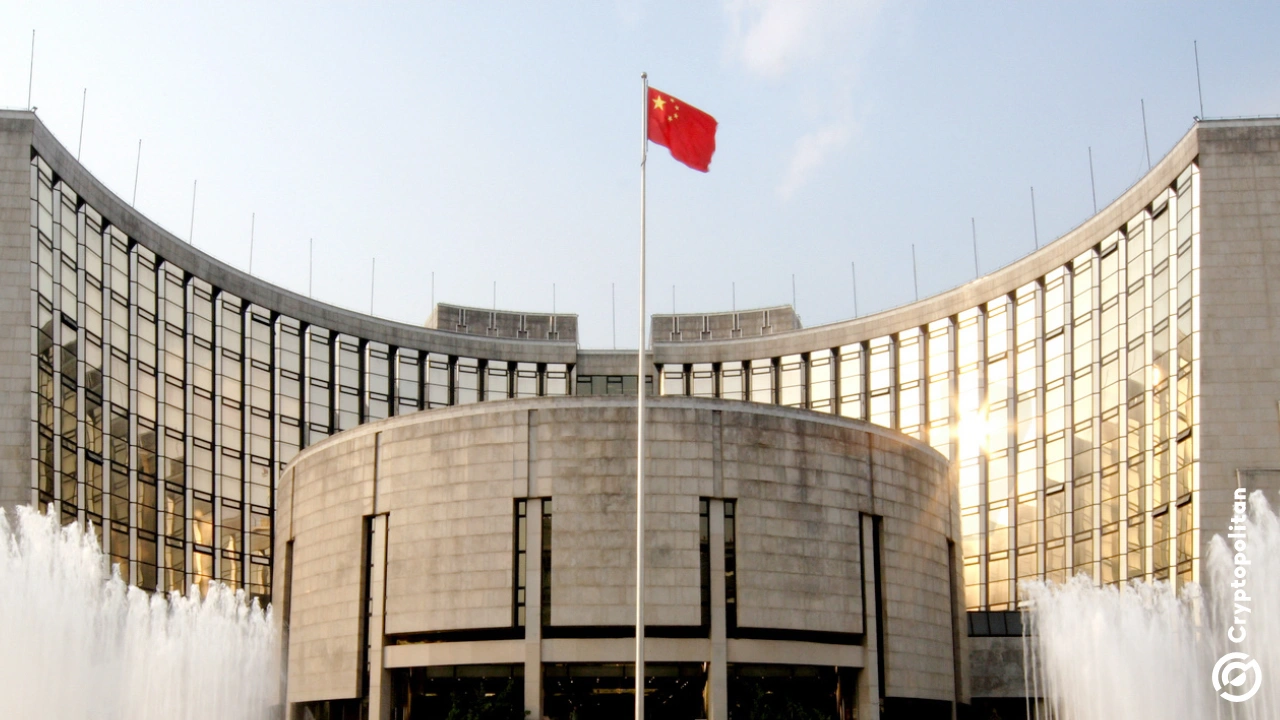
- China’s central bank says it joined police and market regulators to stop Solana’s Shanghai Accelerate event last month.
- It said the network’s advertising was illegal virtual currency promotion and opened an investigation into the domestic firms that placed the ads.
- The PBOC says SOL and Solana’s support for USDT both fall under February 2026 rules that make crypto business illegal in China.
The People’s Bank of China (PBOC) has responded that it disrupted Solana’s mid-October event in Shanghai because of the illegal virtual currency marketing red flags raised by the event’s promoters.
The PBOC official, quoted by Financial News (Jinrong Shibao), a news outlet run by the central bank, also noted that the firms and individuals behind the promotion are now under investigation.
China’s central bank responds to Solana event cancellation
The official cited in the Friday report said that Solana became a priority watch for the PBOC as it went around promoting its brand and buying high-profile advertising using its domestic partners.
The regulator explained the double rationale behind the disruption:
- Solana’s SOL token is a virtual currency
- The Solana network supports issuing and trading tokens such as Tether’s USDT.
The official explained that, based on those interpretations, marketing Solana violates Chinese law and constitutes illegal financial activity.
The PBOC official also cited deficiencies in customer identification and anti-money-laundering rules in the crypto sector, as well as the speculative trading risks the asset category invites.
The official noted that the central bank was not acting alone when it halted the Solana event in Shanghai, noting that it was joined by local financial regulators, public security, and market supervision authorities.
PBOC tells a different story from Solana’s explanation
The report by the PBOC-linked news outlet differs from the account given by Solana officials at the time of the Shanghai event’s cancellation.
Shanghai was supposed to be the first stop in the four-city Accelerate China developer tour. Hangzhou, Shenzhen and Beijing were the other Chinese cities the tour planned to visit.
As Cryptopolitan reported at the time, attendees received an email from the organizers on the morning of the event, October 16, informing them of a postponement over “logistical considerations at the venue.”
Solana Foundation President Lily Liu intimated that the cancellation was due to turnout, writing on X, “Due to the publicity, event registrations quadrupled overnight, far exceeding the event cap.”
While Liu did not mention the threat of enforcement in her post, attendees who were already at the Shangri-La hotel venue noticed law enforcement presence on-site.
The central bank’s report noted that Solana came onto its radar after an aggressive campaign in which Solana branding appeared across the Shanghai skyline. The Foundation also touted its Pudong office in the world’s tallest commercially available office.
This year’s cancellation was the second Solana event to be disrupted in mainland China, following a late October 2025 Solana Accelerate event in Shenzhen that was cut short by local police. Organizers cited overcrowding at the time too.
The February rulebook behind the crackdown
China has treated crypto business as off-limits for years. The PBOC and four other departments warned on Bitcoin risks in 2013, and a 2021 notice spelled out that Bitcoin, Ether and stablecoins like Tether hold no status as legal tender.
The current rulebook dates to February 2026, when the PBOC and seven other agencies issued a notice that restated the ban and added fresh ones, including a block on unauthorized yuan-pegged stablecoins, per the official text published by the China Securities Regulatory Commission.
The directive also made Chinese firms and individuals liable for knowingly assisting offshore operators that provide crypto services inside the country, even when the project runs abroad.
The PBOC said it would keep targeting domestic crypto traders and the local affiliates of offshore issuance and trading platforms, working with other agencies and local governments.
If you're reading this, you’re already ahead. Stay there with our newsletter.
FAQs
Why did China's central bank say it stopped Solana's Shanghai event?
The PBOC told China's Financial News that Solana used domestic partners to buy prominent advertising promoting its brand, which the regulator treats as illegal virtual currency marketing under rules issued in February 2026.
How does this differ from Solana's own explanation?
Solana Foundation President Lily Liu said on X that registrations quadrupled overnight and overran the event cap, framing the October 16 postponement as a turnout and venue issue rather than an enforcement action, according to Cryptopolitan.
What are the February 2026 crypto rules in China?
The PBOC and seven other agencies issued a notice reaffirming that crypto-related business is illegal financial activity, banning unauthorized yuan-pegged stablecoins and holding domestic firms and individuals liable for knowingly helping offshore operators serve Chinese users, per the filing published by the CSRC.
Disclaimer. The information provided is not trading advice. Cryptopolitan.com holds no liability for any investments made based on the information provided on this page. We strongly recommend independent research and/or consultation with a qualified professional before making any investment decisions.
Hannah Collymore
Hannah is a writer and editor with nearly a decade of blog writing and event reporting experience in the crypto space. At Cryptopolitan, Hannah contributes to the news page, reporting and analyzing the latest developments in DeFi, RWA, crypto regulation, AI and frontier tech industries. She graduated from Arcadia university with a degree in Business Administration.
5 Ingenious Applications of ChatGPT And What You Should Do About Them
93% Business Leaders Favor AI-Powered Solutions for Brand Sustainability Management, Reuters
Here’s How Macron Supports France’s Vibrant and Productive AI Ecosystem
Bloomberg Estimates the Generative AI Market to Reach $1.3 Trillion by 2032
- Bitcoin ETF vs. Ethereum ETF: What’s the Difference? November 5, 2025 Learn Crypto: Beginner Guides
- What Is Base? The Ethereum Layer-2 Network Launched by Coinbase October 21, 2025 Learn Crypto: Beginner Guides
- Dogecoin vs. Bitcoin: Key Technical Differences October 20, 2025 Learn Crypto: Beginner Guides
- What Is TVL (Total Value Locked) in Crypto? October 14, 2025 Learn Crypto: Beginner Guides
- How to Read a Crypto Whitepaper? October 13, 2025 Learn Crypto: Beginner Guides
- Ripple vs. XRP vs. XRP Ledger: What’s the Difference? October 13, 2025 Learn Crypto: Beginner Guides

