- live LIVE: Wall Street crashes and rebounds after Democrats snatch US House and Senate in historic midterms election 18 hours ago Live Updates
- Pentagon CTO says US will name laws for AI labs within two weeks 6 seconds ago Regulation
- Bitget launches Open Custody Network, letting users trade without moving assets into exchange custody 16 minutes ago Industry Thoughts
- Hugging Face CEO puts AI extinction risk near zero, points at closed labs 3 hours ago Tech
- Hugging Face CEO puts AI extinction risk near zero, points at closed labs 3 hours ago Tech
- TRUMP Coin Crashes Over 15% as Democrats’ Midterm Win Paves Way for Crypto Probe 4 hours ago News
- US Democrat calls for AI development freeze and total ban on superintelligence 4 hours ago Tech
-
The US plans to clarify existing laws governing AI labs within one to two weeks, rather than introduce new legislation.
-
Pentagon CTO Emil Michael argues clearer rules could build public trust and prevent stricter congressional regulation.
-
Unlike the EU AI Act, the US approach does not yet outline specific obligations or enforcement mechanisms.
The US plans to clarify existing laws governing AI labs within one to two weeks, rather than introduce new legislation.
Pentagon CTO Emil Michael argues clearer rules could build public trust and prevent stricter congressional regulation.
Unlike the EU AI Act, the US approach does not yet outline specific obligations or enforcement mechanisms.
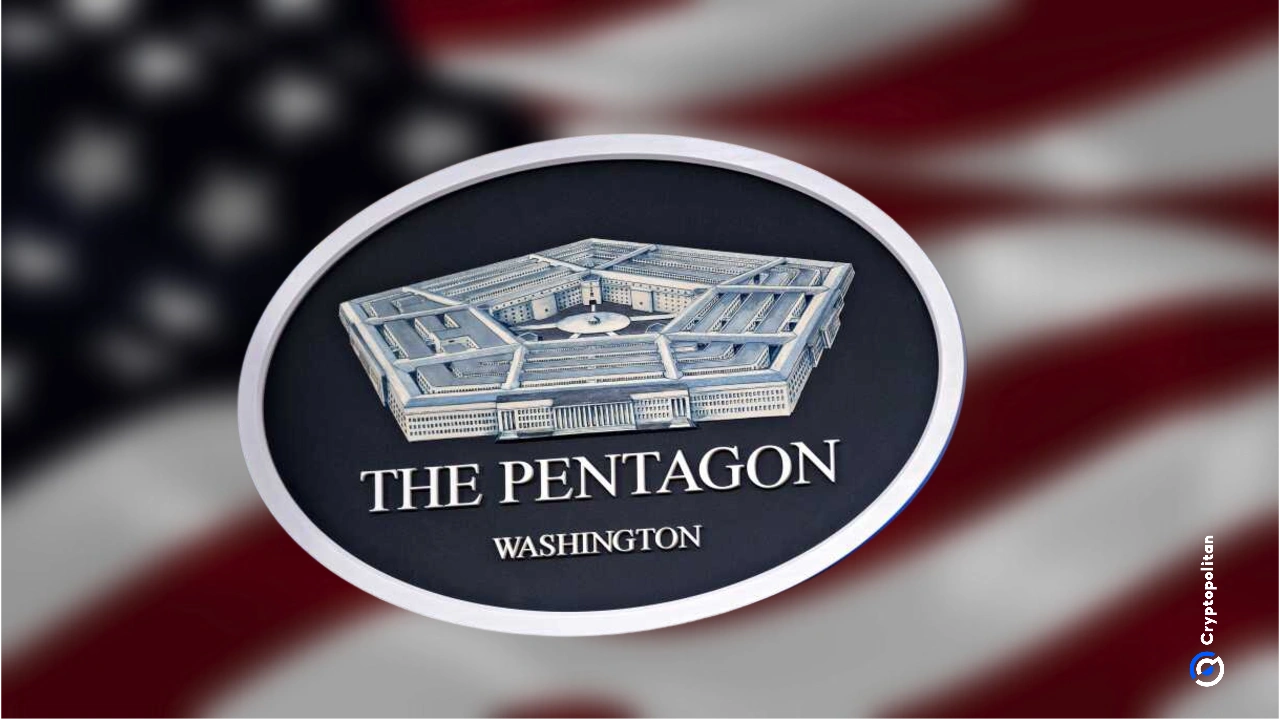
Pentagon Chief Technology Officer Emil Michael said that Washington will announce in one or two weeks the existing regulations that will apply to AI labs in the country. Michael, also the second-in-command of the government’s Super Intelligence Task Force, aims to build public trust and avoid adopting new legislation on the issue.
So far, he has failed to explain which laws will be identified by the government and the means of their enforcement. Meanwhile, AI developers are left to speculate what this announcement will mean for their operations.
Existing rules, not a fresh AI statute
Michael would like the government to clarify existing regulations instead of establishing a new licensing system. According to him, with greater transparency comes public confidence and a chance that Congress will not impose stricter regulations. He put it this way:
“Or else I think what you get is 535 legislators writing a piece of regulation that could kill the industry.”
“Or else I think what you get is 535 legislators writing a piece of regulation that could kill the industry.”
The administration has adopted a similar strategy previously. President Trump’s executive order on June 2 instructed government agencies to prepare classified assessments of frontier AI models. The order also proposed a voluntary review process, which would give authorities access to covered models for up to thirty days before being released to trusted partners. The order clearly stated that mandatory pre-clearance is not an option.
A lighter touch than the EU AI Act
Europe has adopted a more concrete stance on regulating AI labs. Starting August 2, 2025, the EU AI Act has established binding obligations for providers of general-purpose AI. These include keeping technical documentation, publishing summaries of training data, and adopting copyright rules. Models believed to hold a systemic risk over 10²⁵ training FLOPs are subject to additional rules like risk assessment, incident reporting, and ensuring that cybersecurity safeguards are in place.
Washington, meanwhile, is still working to clarify which existing regulations apply to American AI labs. Identifying these regulations could help developers better understand their legal responsibilities. But it remains uncertain whether that clarification will provide the same level of regulatory certainty as the EU AI Act.
A three-way contest over who sets the rules
Washington is not alone in trying to shape AI regulation. A CSIS analysis identifies three competing initiatives: the US-led Pax Silica coalition with 24 partner countries, the UN Global Dialogue on AI Governance, and China’s WAICO, established with 29 signatories.
No G7 or EU member joined WAICO. But CSIS argues that Washington needs a lasting regulatory framework at home if it wants a stronger voice in international negotiations.
Why evaluations now decide market access
The competition goes beyond setting rules. Governments are also seeking greater control over how AI models are tested and evaluated.
AI test results are playing a growing role in procurement and export-control decisions, according to an October Brookings briefing. The problem is that the benchmarks used to evaluate these models are becoming less reliable.
The struggle over testing access is already visible. As Cryptopolitan reported, Washington sought to review frontier models before British evaluators.
For AI developers, these decisions could affect when and where their models reach customers.
What clearer rules could mean for smaller labs?
Those decisions carry growing financial stakes. The 2026 Singapore Consensus reports that frontier-model revenues rose more than 400% year over year. BCG found that nearly half of companies now generate meaningful value from AI. However, Microsoft’s research shows that adoption remains uneven worldwide.
For established developers, clearer US rules could make compliance costs easier to manage. Smaller labs may have a harder time. Meeting different documentation and testing requirements across markets takes money and resources.
Michael’s forthcoming clarification could help ease that burden. Much will depend on whether US requirements can work alongside foreign regulations or leave developers navigating conflicting expectations.
If you're reading this, you’re already ahead. Stay there with our newsletter.
FAQs
Who is Emil Michael?
He is the Pentagon's chief technology officer and vice chair of the US government's Super Intelligence Task Force, and he made the comments about clarifying AI laws in the Reuters report carried by Channel NewsAsia on November 4.
Is the United States passing new AI laws?
No. Michael said the government will identify existing laws and regulations that already apply to AI labs, not enact new ones, and the implementation details have not been disclosed.
How does the EU's approach differ?
The EU AI Act imposes binding obligations on general-purpose AI providers, including technical documentation, training-data summaries, and incident reporting for high-risk models, and those duties took effect on August 2, 2025.
Disclaimer. The information provided is not trading advice. Cryptopolitan.com holds no liability for any investments made based on the information provided on this page. We strongly recommend independent research and/or consultation with a qualified professional before making any investment decisions.
Ashish Kumar
Ashish Kumar is a crypto and financial journalist with eight years of newsroom experience. He covers what’s happening with crypto markets, regulation, DeFi, and exchange ecosystems. He has worked with Coingape, Todayq, and Newsroompost. Ashish holds a PGDP in English Journalism from the IIMC. He has also interviewed industry figures including Arthur Hayes, Yat Siu, Austin Federa, and more.
5 Ingenious Applications of ChatGPT And What You Should Do About Them
93% Business Leaders Favor AI-Powered Solutions for Brand Sustainability Management, Reuters
Here’s How Macron Supports France’s Vibrant and Productive AI Ecosystem
Bloomberg Estimates the Generative AI Market to Reach $1.3 Trillion by 2032
- Bitcoin ETF vs. Ethereum ETF: What’s the Difference? November 5, 2025 Learn Crypto: Beginner Guides
- What Is Base? The Ethereum Layer-2 Network Launched by Coinbase October 21, 2025 Learn Crypto: Beginner Guides
- Dogecoin vs. Bitcoin: Key Technical Differences October 20, 2025 Learn Crypto: Beginner Guides
- What Is TVL (Total Value Locked) in Crypto? October 14, 2025 Learn Crypto: Beginner Guides
- How to Read a Crypto Whitepaper? October 13, 2025 Learn Crypto: Beginner Guides
- Ripple vs. XRP vs. XRP Ledger: What’s the Difference? October 13, 2025 Learn Crypto: Beginner Guides