Summary
- Rep. Park Su-min said South Korea should scrap the 'one exchange, one bank' system and allow access to exchanges through all banks to build trust in the virtual-asset market.
- He said virtual-asset investment should be fully opened to corporations and institutions as quickly as possible so professional capital can flow in and support institutional development.
- He said South Korea should use won-based stablecoins to protect the value of the won and pursue a 'US Plus' strategy to improve investor convenience and strengthen global competitiveness.
Forecast Trend Report by Period
Park Su-min, a lawmaker from the ruling People Power Party, called for South Korea to overhaul its “one exchange, one bank” system, under which cryptocurrency exchanges effectively partner with only one bank for real-name accounts.
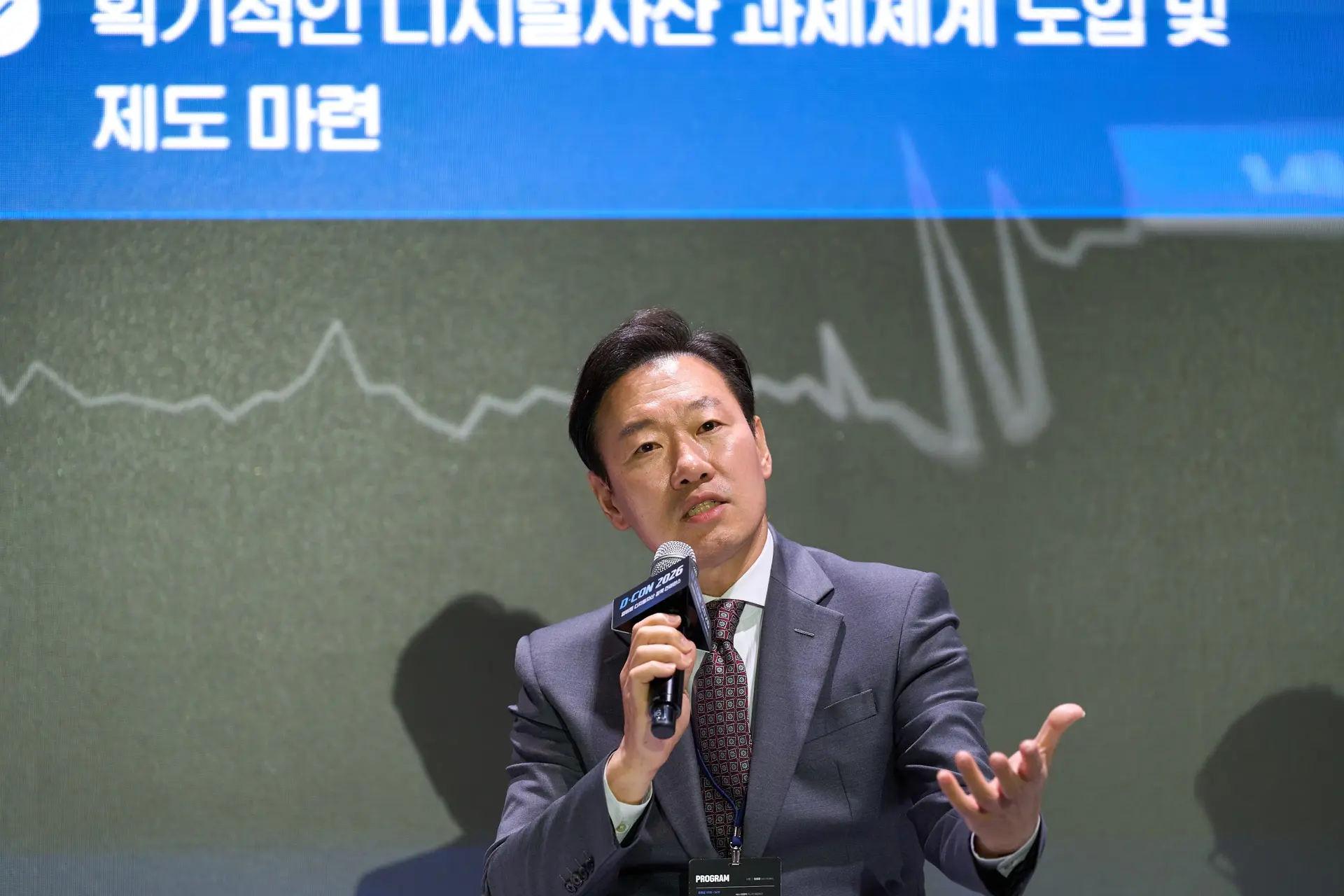
At a special dialogue during D-CON 2026 on Nov. 10 at Fairmont Ambassador Seoul in Yeouido, Park also emphasized the need to broaden participation by corporations and institutions to boost the competitiveness of the domestic industry.
"Broader Bank Choice Needed to Build Market Trust"
Park said the government and the National Assembly must demonstrate their commitment to fostering the virtual-asset industry through concrete policies. Just as the US has declared its intent to become a digital-asset hub and begun overhauling its system, South Korea should also present a clear direction and follow-up steps.
“We need a basic declaration that opens the era of digital-asset leadership, along with measures to carry it out,” he said. “The first thing to do is abolish the ‘one exchange, one bank’ system.”
He argued that requiring users to access an exchange only through accounts at a designated bank signals that virtual assets are being treated differently from other financial products. If exchanges could be used through all banks, that would be a starting point for building trust in the market.
Park also called for fully opening virtual-asset investment to corporations and institutions. He said the entry of corporate and institutional money would spur broader research and analysis and help point the way for institutional development. Investment channels should be opened quickly so professional capital can participate.
"Leave Room for Innovation Instead of Writing an Overly Detailed Law"
Park said financial authorities can reduce business uncertainty even before a basic digital-asset law is enacted. New initiatives should not be stifled simply because legislation is not yet in place.
“Businesses become hesitant because they think they could be punished later if there is no law,” he said. “Even administrative guidance from the Financial Services Commission and the Financial Supervisory Service could ease that concern.”
He said authorities should provide standards so businesses that comply with core principles such as anti-money laundering rules and the Travel Rule can operate in a predictable environment.
Park also expressed concern that a basic law could end up regulating a fast-changing industry too tightly. “The market keeps evolving from Bitcoin to altcoins, stablecoins and AI agents,” he said. “I worry the law could block that evolution. It would be better to move quickly, but keep the framework somewhat loose.”
"Protect the Won’s Value and Pursue a ‘US Plus’ Strategy"
Park said won-denominated stablecoins should be seen not only as a new business opportunity, but also as a tool for preserving the currency’s competitiveness. South Korea needs to respond quickly as the use of dollar stablecoins spreads.
“Before thinking about what we can gain from won stablecoins, we urgently need to protect the value of the won,” he said. “When change arrives, we should preserve the won’s value while also pursuing its internationalization.”
He added that South Korea could also consider ways to tap its global customer base built through K-content and smartphones.
To improve the competitiveness of domestic services, Park proposed a “US Plus” approach. What is allowed in the US should also be allowed in South Korea, with better services added on top, he said. Moving quickly on the measures needed, with investor convenience at the center, would help build global competitiveness.
He also said politicians need to take a more active role. “Civil servants inevitably choose the safest option,” he said. “Rather than asking only the financial authorities for answers, the ruling and opposition parties should make bold decisions and reach agreement to give the global market confidence.”
Doohyun Hwang