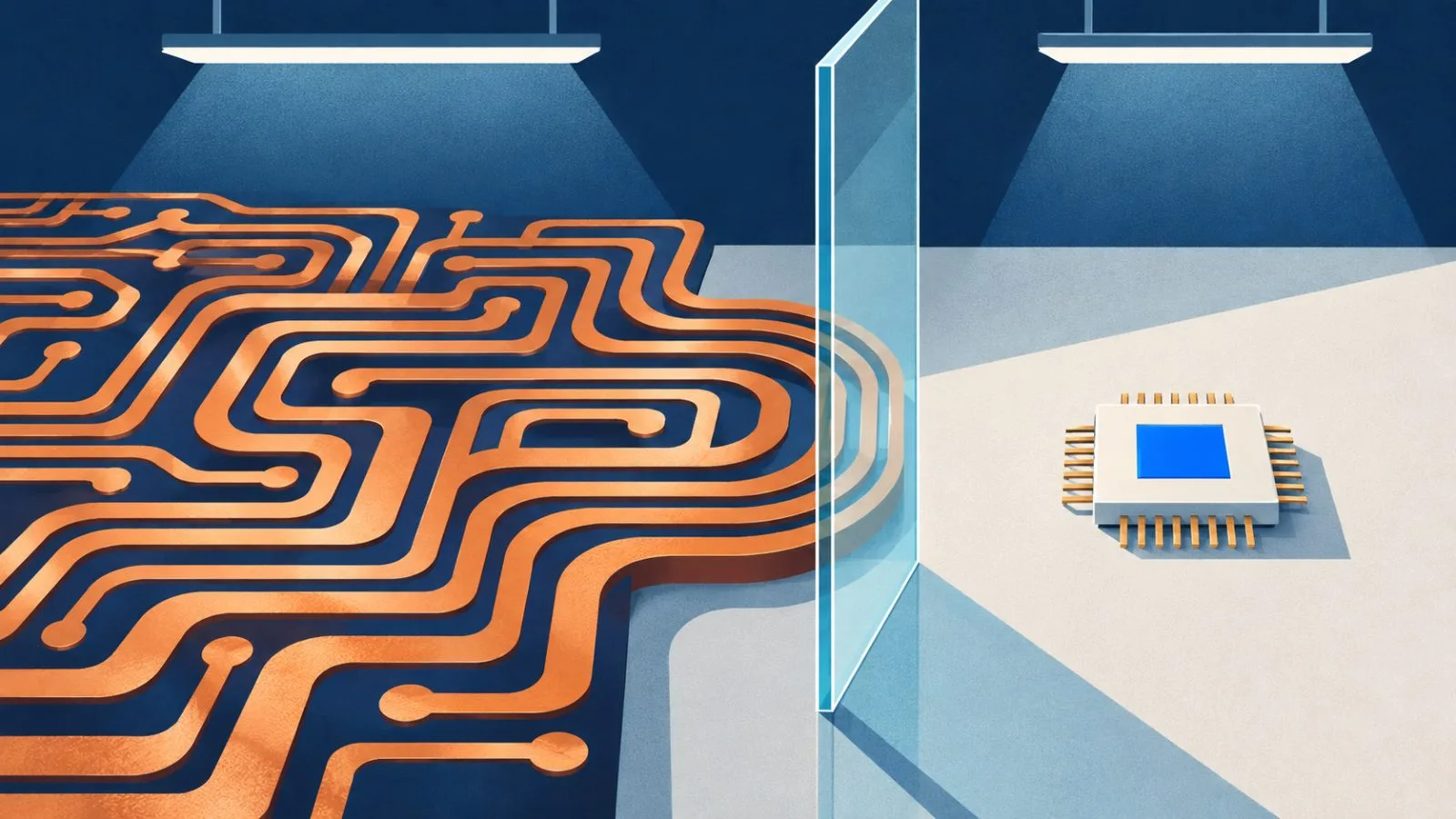
A public quantum-computing benchmark estimates that future machines could forge some elliptic-curve SNARK proofs in under eight hours, while attacks against hash-based STARKs would require about 15 million years under the board’s assumptions.
The figures highlight the different cryptographic foundations used by two major types of zero-knowledge proof systems. SNARKs and STARKs allow one party to prove that a computation was completed correctly without repeating the entire computation.
Pairing-based SNARKs use elliptic-curve cryptography. STARKs rely on hash functions, which do not have the same structural weakness against Shor’s algorithm, the quantum algorithm associated with attacks on certain mathematical problems.
The estimates are theoretical resource calculations. They depend on assumptions about future quantum hardware, error correction and circuit design, and do not show that the required hardware exists today.
The public board uses a leaderboard format modeled on ECDSA.fail, tracking proposed quantum circuits and their estimated gate counts. Lower gate counts suggest that an attack is theoretically cheaper, but gate counts remain estimates rather than definitive measures of the cost of a real-world attack.
Those estimates can change as researchers improve circuit designs. Work on ECDSA.fail reduced an earlier estimate for a quantum attack on secp256k1 point addition from about 2.99 billion gates to about 0.886 billion gates. More than 100 participants contributed to that effort.
StarkWare published a post-quantum roadmap in June 2026 with a target of full post-quantum security for Starknet by 2027. The roadmap includes replacing remaining Pedersen hashing dependencies with BLAKE2s. BLAKE2s hashing reached Starknet mainnet as of July 2026 in version v0.14.3.
The plans also relate to Starknet’s earlier discussion of a possible independent Layer 1. A nonbinding governance poll in October 2026 showed 93.52% support for researching the idea. The proposal would allow Starknet to manage its upgrade cycles separately from Ethereum, but the poll supported research rather than a decision to launch a new chain.
TokenPost previously examined Starknet’s 2027 quantum-security goal as part of its Layer 1 discussion.
Simon Yoon
Simon Yoon reports on blockchain technology for TokenPost. Send corrections or tips to [email protected].