PiCK
Summary
- Samsung Electronics and SK Hynix extended their declines into premarket trading after a broad drop in US semiconductor stocks and mounting uncertainty ahead of Nvidia's earnings release.
- Sharp declines in Nvidia, Micron, and AMD, along with a 5.3% plunge in the Philadelphia Semiconductor Index, were driven by uncertainty over Nvidia's management and tighter US AI semiconductor curbs on China.
- The market sees Nvidia's earnings due early on Nov. 18 Korea time and confirmation of continuity in its AI investment strategy as factors that could reverse recent positioning, while any reduction in financial support or changes to investment plans could lead to greater volatility in AI infrastructure-related stocks.
Forecast Trend Report by Period
Selling Extends in Premarket Trading
Nvidia Earnings Sap Risk Appetite
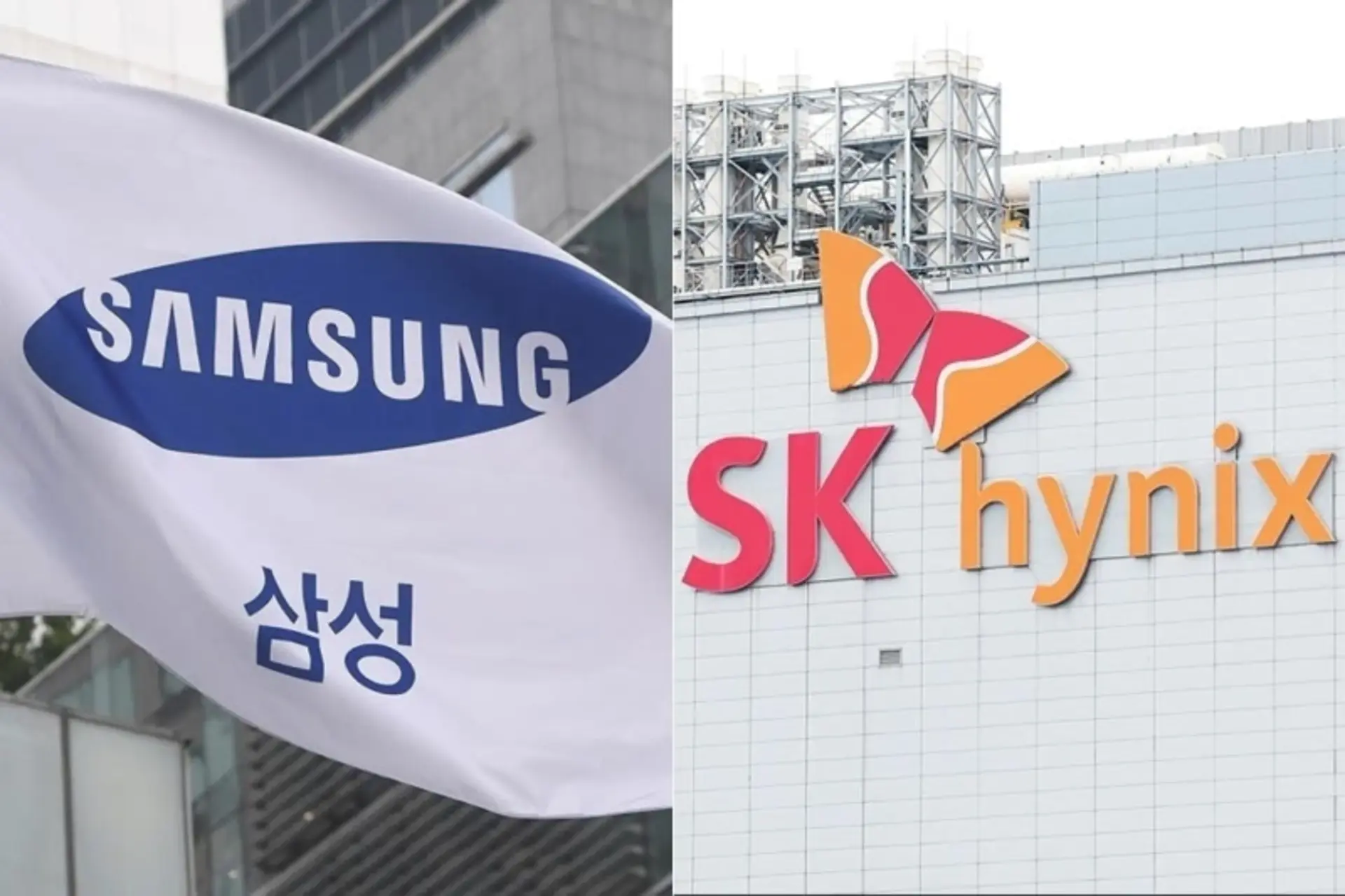
Samsung Electronics and SK Hynix fell in premarket trading on Nov. 17 after both stocks tumbled in the regular session a day earlier. Investor sentiment has yet to recover after a broad overnight selloff in US semiconductor shares. Uncertainty over AI spending and chip demand ahead of Nvidia’s earnings release is adding to the pressure.
As of 8:40 a.m. on Nov. 17, Samsung Electronics was trading at 190,500 won ($137) on Nextrade, or NXT, premarket, down 6,300 won, or 3.20%, from the previous regular-session close. SK Hynix was at 1.092 million won ($786) as of 8:49 a.m., down 28,000 won, or 2.50%.
Both stocks had already posted steep losses in the previous session. Samsung Electronics closed at 196,800 won ($142) on Nov. 16, down 9,200 won, or 4.47%, from the prior trading day, falling below the 200,000 won level. SK Hynix finished at 1.12 million won ($806), down 96,000 won, or 7.89%.
Selling in semiconductor shares continued in the US after the Korean market closed, deepening pressure for further declines. Nvidia fell 4.12% in New York trading on Nov. 16. Memory-chip maker Micron Technology slid 7.62%, while AMD dropped 5.58%. The Philadelphia Semiconductor Index also tumbled 5.3%.
The weakness across the chip sector was driven by uncertainty over Nvidia's management and tighter US restrictions on AI semiconductors bound for China. Investors are focused on whether the company's existing investment strategy and funding support for customers will be maintained after CEO Jensen Huang's resignation. New US rules limiting China's access to advanced AI semiconductors added to the overhang.
That leaves Nvidia's earnings report, due early on Nov. 18 Korea time, as a key test for sentiment toward Korean chip stocks. The market will be watching not only the results but also the company's revenue outlook and whether its AI investment strategy changes.
Seo Sang-young, an executive director at Mirae Asset Securities, said Nvidia could trigger a reversal in recent positioning if it confirms continuity in its investment strategy. Any sign of reduced financial support or changes to spending plans, however, could drive further volatility in AI infrastructure-related shares.
Doohyun Hwang