Summary
- Shares of Samsung Electronics and SK Hynix opened 3.85% and 5.02% higher, respectively, despite news of a change in Nvidia’s CEO.
- Brokerages said supply contracts for Nvidia’s Vera Rubin and HBM4 have largely been finalized, limiting the impact on domestic business over the next one to two years.
- Analysts said tighter U.S. export restrictions on China could curb exports of HBM and high-performance semiconductors, potentially creating a spillover benefit for South Korean companies.
Forecast Trend Report by Period
Samsung Electronics Co. and SK Hynix Inc., which drew attention last year and this year for their so-called “kkanbu” meetings with Nvidia Corp. Chief Executive Officer Jensen Huang, traded higher early on Nov. 13. Shares in both companies opened stronger despite news that the head of Nvidia, their biggest semiconductor customer, had been replaced.
As of 9:10 a.m., Samsung Electronics was trading at 216,000 won, up 3.85% from the previous session. SK Hynix rose 5.02% to 1.317 million won.
Nvidia’s board said in a statement on Nov. 13 that Huang, who had been embroiled in controversy over an extramarital affair, was stepping down immediately as president, chief executive officer and board member.
Colette Kress, the company’s chief financial officer and executive vice president, was named interim CEO. She will serve until a permanent successor is appointed while retaining her existing titles.
Nvidia is the biggest customer for Samsung Electronics and SK Hynix. Both companies supply high-bandwidth memory, or HBM, for Nvidia’s artificial intelligence accelerators. Nvidia’s next-generation AI accelerator, Vera Rubin, due for release in the second half of this year, also uses HBM4, the sixth-generation version of the technology.
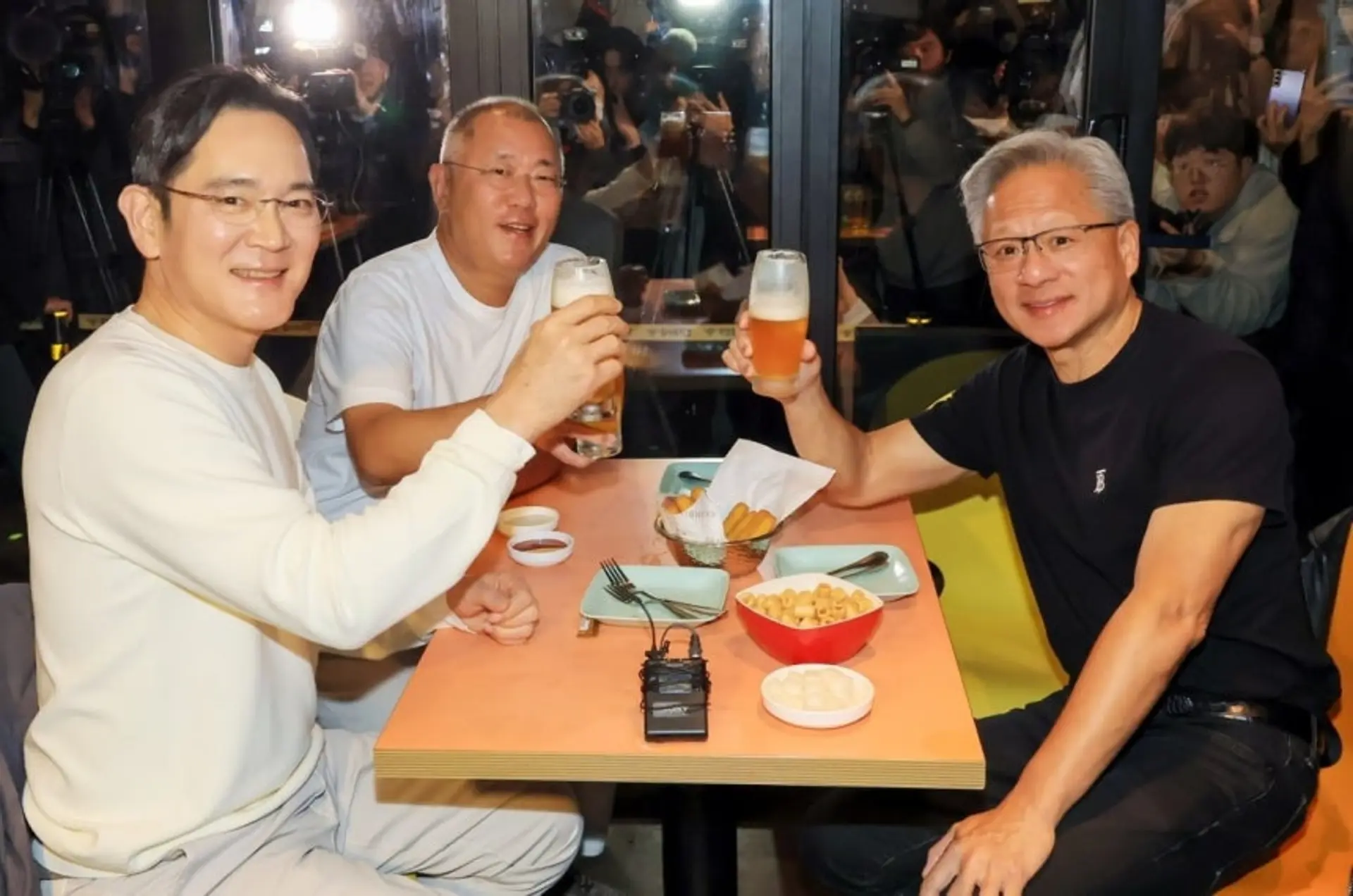
Huang also made headlines last year and this year when he met Samsung Electronics Chairman Jay Y. Lee and SK Group Chairman Chey Tae-won at Kkanbu Chicken, a South Korean fried chicken franchise in Seoul’s Gangnam district, in a display of closer cooperation.
Brokerages said Huang’s resignation was unlikely to deal a major blow to South Korea’s semiconductor industry. They also pointed to possible gains from tighter U.S. export restrictions on China.
“The mass-production schedule for Nvidia’s next-generation Vera Rubin products and supply contracts with key customers have largely been locked in, so the impact on domestic business over the next one to two years will likely be limited,” Han Ji-young, an analyst at Kiwoom Securities, said. Even if uncertainty triggered by Huang’s resignation creates temporary selling pressure on suppliers such as SK Hynix, “there is no need to interpret that as damage to the broader trend,” Han added.
Another brokerage official said South Korean chip stocks could face a short-term hit, but overall HBM exports would be unaffected. The person said proposed tighter U.S. export controls on China would restrict exports of high-performance semiconductors to the country, potentially benefiting South Korean companies. Foreign investors also appeared to have bought shares the previous day, the person said.
Oh Seung-ju, Hankyung.com intern reporter [email protected]
Korea Economic Daily