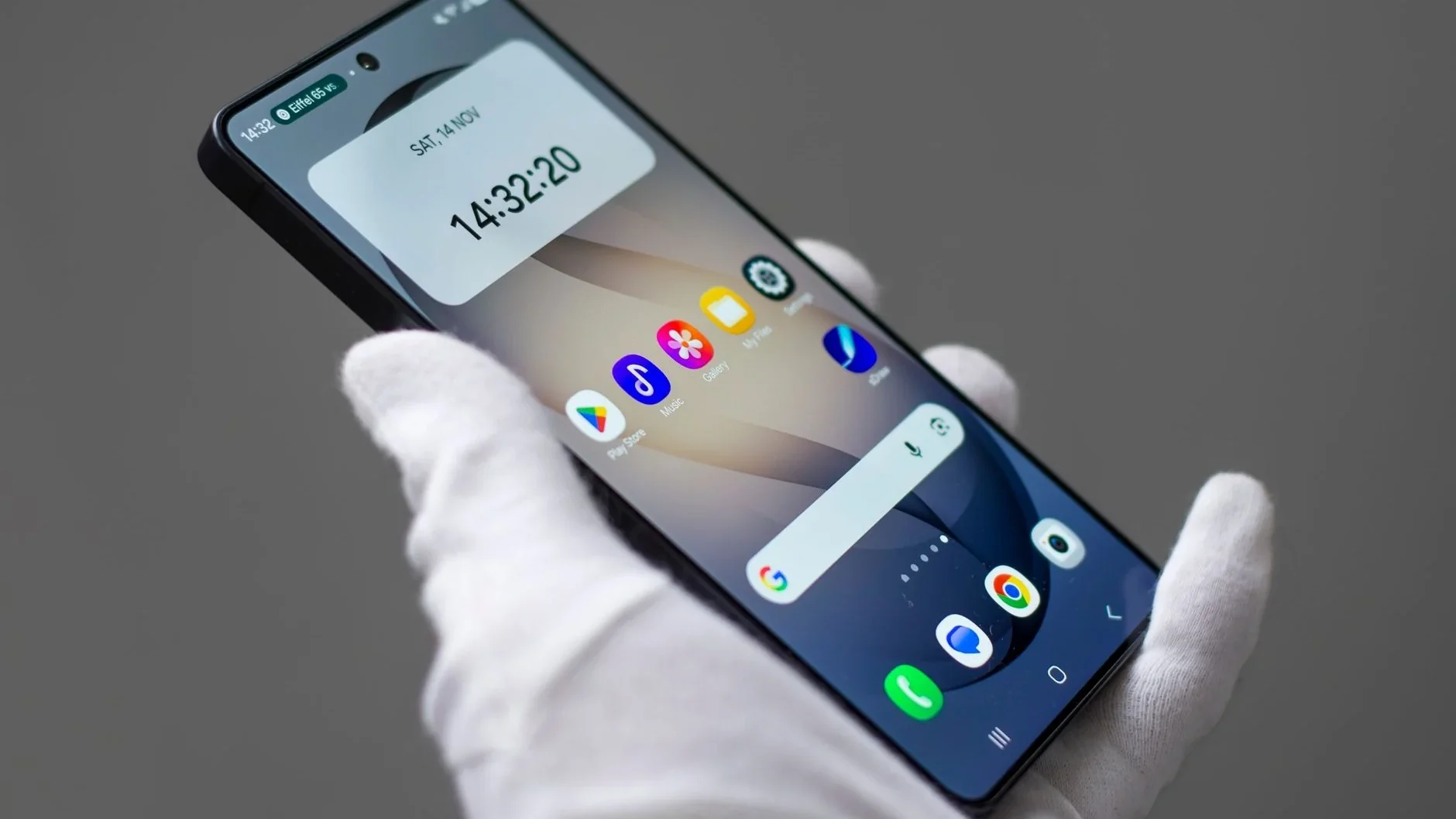
Samsung Wallet now moves USDC over the Sui network, and Kriptofoni reported that the launch reaches 82 million eligible Galaxy devices. Sui dated the announcement November 23, 2026. The headline claim is simple: one Samsung Wallet can send USDC to another with no transfer fee.
That sentence hides a lot of fine print. The 82 million figure counts eligible devices, not people who opened a stablecoin account. Samsung has not published an official breakdown of which phones qualify, and the sources we reviewed give no usage numbers at all. This analysis separates what outlets and Samsung’s own page confirm from what remains open.
For hardware readers the story matters because the phone in your pocket is becoming the front end for dollar-denominated crypto. A mid-range handset such as the Galaxy S26 FE at its $499.99 record low is exactly the kind of device that could carry a stablecoin account without a separate crypto app. Whether it does depends on eligibility rules Samsung has yet to spell out in the sources available today.
Don't miss new tech stories on Google
Add Shattered once in the Google app and our stories show up in your news suggestions.
The Samsung Wallet USDC launch in plain terms
Samsung’s own stablecoin page says Samsung Wallet supports buying, holding, sending and receiving USDC through a feature called the Stablecoin Account. Samsung built it with two launch partners, Bastion and Coinbase. The page also lists Solana and Sui as supported networks, so the Sui news adds a second rail rather than replacing an existing one.
According to The Defiant, the go-live came with the statement from Sui itself. Sui said that eligible U.S. Galaxy devices can send USDC on its network from one Samsung Wallet to another with no transfer fee. Samsung’s page goes a step further and says eligible users can send USDC between crypto wallets that support USDC on Solana or Sui at no transfer cost.
Those two descriptions differ in scope. Sui’s wording covers wallet-to-wallet transfers inside Samsung Wallet. Samsung’s wording reaches outward to any wallet that supports USDC on the two networks. Readers should treat the narrower claim as the safer baseline until Samsung publishes a support document that settles the question.
The Samsung Wallet USDC feature uses USDC, the dollar-pegged stablecoin, not a volatile token. That choice keeps the user experience closer to a payment app than to a trading app. A balance of 100 USDC is meant to stay near 100 dollars, which makes it easier to explain to a first-time user who has never touched a blockchain.
What the 82 million figure measures, and what it does not
Blockster Media Coin framed the launch as bringing USDC transfers on Sui to 82 million U.S. Galaxy devices. Other outlets used nearly identical wording. The figure traces back to Sui’s announcement, which makes it a company claim about reach, not an audited count of anything.
The sources we reviewed describe 82 million as eligible or compatible devices. They do not describe it as confirmed users, active Stablecoin Account holders or funded wallets. That distinction decides how big this story really is. A device count tells you how many phones could run the feature. It says nothing about how many owners will ever tap it.
Sloppy headlines already blur the line. Phrases such as reaches 82 million users appear in social posts, and they overstate the facts. Our fact check found no official Samsung source confirming that Sui transfers are live on every one of those devices. It also found no disclosure of how many people have opened an account.
Think of the number the way you would think of a carrier announcing that a new network feature supports 82 million phones. Support is a ceiling. Adoption is whatever fraction of that ceiling decides the feature is worth the trouble. For stablecoin wallets, that fraction has usually been small at launch, though no verified Samsung figure exists to test that pattern here.
Sui versus Solana inside one wallet
Samsung’s page names two networks, Solana and Sui, and that pairing tells you something about the product design. Both chains target fast, cheap settlement. Offering two lets Samsung avoid betting its wallet on a single ecosystem while still keeping the menu short enough that a consumer is not drowning in options.
Why a second network matters for users
A sender and a recipient must land on the same network for USDC to arrive without a conversion step. If a friend holds USDC on Solana and you send on Sui, the transfer will not reach their address the way they expect. Samsung’s own wording ties the free-transfer promise to wallets that support USDC on Solana or Sui, so the network you pick matters as much as the amount you send.
Why Sui wanted the placement
For Sui, a default slot inside a phone wallet beats almost any developer incentive program. Distribution through a preinstalled app puts the network in front of ordinary buyers, not just crypto natives. Sui carried the announcement itself, which signals how much the project values the placement. Samsung gets a network partner that markets the launch for it.
Fee-free transfers: who actually pays the network cost
The word free needs care. Cryptonews headlined the launch as gasless USDC transfers on Sui for 82 million U.S. Galaxy devices. Gasless means the sender does not need to buy and hold the network’s native token to cover the transaction. It does not mean the network does no work. Someone still pays for validators to process the transfer.
Samsung and Sui have not disclosed, in the material we reviewed, who covers that underlying cost or for how long. A sponsor can absorb fees as a growth tactic, and many consumer apps have done so at launch before introducing charges. We found no statement promising the zero-fee window will last, and no stated cap on how many transfers qualify.
The sources also give no minimum transfer amount, no maximum limit and no exchange-rate specification. A user who plans to move a large sum should wait for those details. A user who wants to send ten dollars to a friend has less to worry about.
Bastion and Coinbase: the custody layer behind the screen
Samsung’s page credits Bastion and Coinbase as launch partners for the Stablecoin Account. Most consumers will never think about custody, but it shapes every risk in the product. When a regulated custodian holds the keys, the user trades some control for convenience and recovery options. When the user holds the keys, the reverse applies.
Coverage of the rollout describes the arrangement as custody-based rather than a standalone self-custody wallet. Our verified material does not spell out the exact legal structure, and we will not guess at it. What a reader can say with confidence is that two named companies sit between Samsung and the blockchain, which means the feature depends on their uptime, their compliance posture and their contracts with Samsung.
That structure also explains why identity checks likely matter. Regulated custodians normally verify customers before they let them move dollars. Even so, no official Samsung or Sui source in our file confirms the specific checks, so this remains an inference from how custodial products usually work, not a reported fact.
Why this is a hardware story
Crypto news usually lands in the finance bucket, but eligibility here runs through hardware. A feature that reaches 82 million devices depends on which phones, which software builds and which regions qualify. The same logic applies to every new silicon generation. When a flagship such as the Galaxy S27 Pro with its leaked Exynos 2700 Geekbench scores ships, buyers will ask whether wallet features arrive on day one.
Phone makers have a structural edge in wallet products. They control the operating system layer, the secure storage on the device and the preinstalled app slot. Whether Samsung uses specific hardware-backed protections for this Stablecoin Account is not stated in the sources we reviewed, so we do not claim any. The point is that an app store download cannot match the default placement a manufacturer enjoys.
Several details readers would want are simply missing. We found no official list of eligible models, no minimum Android version and no statement on whether older Galaxy phones qualify. Claims circulating online about age limits, residency rules or a New York exclusion have no official Samsung or Sui source behind them in our research. Until Samsung publishes them, treat each as unverified.
Readers who want broader hardware context can browse the hardware section for device coverage that sits alongside this story.
Confirmed facts versus open questions
The table below sorts what we can attribute to named outlets or Samsung’s own page from what remains unconfirmed. We built it from the sources listed in this article, and we marked anything without an official source as open.
Notably, no named Samsung or Sui representative gave an on-record quote that our review could verify, which is why this article paraphrases the announcement instead of quoting executives.
Who does what: the roles in the stack
A stablecoin feature involves more moving parts than a typical phone app. The second table maps each component to its job, using only roles that Samsung’s page or the cited coverage assigns.
The table shows how much of the product sits outside Samsung’s direct control. Two networks, two named partners and one stablecoin issuer all have to work for a single send to succeed. That chain adds points of failure but also lets Samsung ship faster than it could by building everything itself.
Remittances and the 60+ country claim
Samsung’s official page states that international USDC remittances can settle in local currencies in 60+ countries. That claim targets a different audience than the U.S. wallet-to-wallet story. Sending money home has long carried high fees and slow settlement, and stablecoins pitch themselves as a cheaper path.
The claim comes from Samsung itself, and our review found no independent test of it. Local-currency settlement depends on payout partners in each country, and the sources do not name them. Nor do they give per-country fees, delivery times or exchange-rate terms. A sender comparing this route with a bank transfer or a remittance app cannot yet run an honest cost comparison.
The 82 million eligible-device figure covers U.S. devices, while the 60+ country claim covers where remittances can land. Readers should not blend the two. A feature available to U.S. senders does not mean every recipient country runs the same service on the same terms.
Market impact: what the launch means for Sui and for stablecoins
The immediate market effect is distribution, not price. A network that appears inside a mainstream phone wallet gains a consumer onramp that most blockchains spend years chasing. For USDC, the launch adds another consumer touchpoint, one that does not require a user to visit an exchange.
Several crypto outlets tied the news to short-term token chatter. We left those price remarks out of this analysis because no verified figure supports them, and one day of trading tells you little about whether phone users adopt the feature. The better test is whether active wallet counts rise over the next two quarters, and Samsung has not committed to publishing them.
The wider crypto backdrop is shaky. Our own coverage shows that Bitcoin fell for seven straight weeks, down 29% to $61,100. A stablecoin pitch looks different in that climate. Users who want exposure to dollars and settlement rails, without price swings, may find USDC easier to justify than a volatile coin.
Merchants and payment firms will watch whether Samsung extends the feature to purchases. The sources we reviewed describe transfers and remittances only. They do not describe checkout payments, so any talk of tap-to-pay with USDC is speculation today.
How Samsung Wallet compares with other ways to spend crypto
Samsung is not the only route from crypto to everyday spending. Card-based products offer another path. We covered Clapp’s crypto card with 0% fees in 150+ countries, and it works very differently from a wallet app. A card converts crypto at the point of sale, while Samsung’s feature moves the stablecoin itself between wallets.
Apple and Google also run wallet apps on their own platforms. We did not verify any stablecoin features for those wallets in this research, so we make no comparison of their capabilities. Readers weighing options should check each provider’s current page on four points:
- Which networks the wallet supports, and whether free transfers apply to all of them.
- Who holds the keys, and what recovery options exist if you lose the phone.
- Which countries and users qualify, including any age or residency rules.
- What limits apply to a single transfer and to a day’s total.
On the first point Samsung gives a clear answer, Solana and Sui. On the other three the public material is thin, which is the main gap to close before recommending the feature to anyone with real money at stake.
Historical context: phones, wallets and crypto
Phone makers have bundled payment wallets for years, and crypto has crept into them in stages. Early efforts leaned on third-party wallet apps that users had to download and fund. The newer pattern folds a custodial account into the manufacturer’s own wallet, which removes setup friction.
Security history is part of that backdrop. Cross-chain and vault systems have suffered painful losses in 2026. We reported that the Chainflip vault drain of $4.86M relied on one valid signature. That incident involved a bridge, not Samsung’s product, so it does not describe this launch. It does show why custody design and signing controls deserve scrutiny whenever a wallet scales to millions of devices.
The contrast with earlier attempts is distribution scale. A niche crypto wallet reaches enthusiasts. A manufacturer wallet reaches whoever bought the phone. That shift in audience, more than any technical novelty, is the real change behind this announcement.
Security and custody risks for everyday users
Custodial convenience carries trade-offs. If a user loses access to the phone or the account, recovery depends on the provider’s process, not on a seed phrase the user wrote down. Samsung’s sources do not detail that process, so users should find it before depositing funds.
Scams follow every consumer crypto launch. A fee-free send makes it cheap for a fraudster to ask for money and cheap for a victim to comply. Transfers on public blockchains cannot be reversed by a support call. Double-check the recipient before every send, and test with a small amount first.
People who do hold their own keys elsewhere should also plan for what happens to those holdings if they become unavailable. Our guide to a seed phrase inheritance plan in 15 steps covers that problem for self-custody wallets, which operate on different rules than a custodial Stablecoin Account.
Five predictions for the next six months
These are our own analysis, not reported facts, and Samsung has confirmed none of them.
- Samsung will publish a support page that lists eligible models and regions, because the current silence invites rumors about age and residency rules.
- The zero-fee promise will draw scrutiny, and either Samsung or Sui will clarify who funds network costs and whether the window has an end date.
- Other phone makers will test their own stablecoin features, since a distribution advantage this large rarely stays with one company.
- Independent analytics firms will estimate real active wallets, and the figure will land far below 82 million, as device counts usually exceed user counts.
- Samsung will extend the product beyond transfers, most plausibly toward payments, though the sources reviewed show no commitment to that today.
The first prediction carries the highest confidence because the gap is obvious and cheap to fix. The fifth carries the lowest because it requires merchant and regulatory work that the announcement does not mention.
What to watch next
Watch for official Samsung documentation first. A list of supported devices, a statement of regional availability and any transfer limits would turn most of the unconfirmed items above into facts. Also watch whether Samsung discloses how many users have opened a Stablecoin Account, since that single number would replace the device-count ambiguity.
Third, watch Sui’s own channels. The network announced the launch, so it will likely report usage first if the numbers look good. Silence on usage would itself be a signal worth noting.
The takeaway: Samsung Wallet USDC on Sui is real, partner-backed and aimed at a very large device base. The scale of the audience remains a claim, and the practical rules are still thin. Readers should treat the launch as a promising distribution move and verify eligibility on Samsung’s page before relying on it.
FAQ: Samsung Wallet USDC on Sui
What did Samsung Wallet launch on November 23, 2026?
Sui announced on that date that eligible U.S. Galaxy devices can send USDC on Sui from one Samsung Wallet to another with no transfer fee. Samsung’s Stablecoin Account, built with Bastion and Coinbase, supports buying, holding, sending and receiving USDC.
Do 82 million people use the feature?
No. The 82 million figure counts eligible or compatible Galaxy devices, according to the coverage we reviewed. It does not count confirmed users or active Stablecoin Account holders, and no usage figure has been published.
Which networks does Samsung Wallet support for USDC?
Samsung’s page lists Solana and Sui. It says eligible users can send USDC between crypto wallets that support USDC on either network at no transfer cost.
Are the transfers really free?
Sui and Samsung describe them as free for the user, and Cryptonews calls them gasless. The sources do not say who pays the underlying network cost or whether the free window will last.
Is my Galaxy phone eligible?
We could not confirm that from an official source. No Samsung or Sui document in our research lists eligible models, minimum software versions, age limits or state exclusions. Check Samsung’s Stablecoin page in the Samsung Wallet app for your own device.
Can I send USDC internationally?
Samsung’s page says international USDC remittances can settle in local currencies in 60+ countries. We found no independent test of that claim and no published per-country fees or delivery times.
Who holds my USDC?
Samsung names Bastion and Coinbase as launch partners for the Stablecoin Account. The sources we reviewed do not detail the custody arrangement, so confirm recovery and account terms in Samsung’s documentation before depositing meaningful sums.
Are there minimum or maximum transfer limits?
None have been published in the material we reviewed. The same goes for exchange-rate terms and launch pricing, so treat any figures you see online as unverified.
Laura Bennett edits and fact-checks shattered.io security and privacy coverage, making sure each piece is clear, current, and grounded in primary sources.