SharpLink Inc. (SBET) posted the largest profit in its history for the third quarter, but the result did little for its stock as investors zeroed in on where the money came from and on a pending index decision that could cut the company off from passive fund money.
The Ethereum treasury company said Monday that net income for the quarter ended Sept. 30 reached $751.4 million, or $3.45 per diluted share, compared with $104.3 million, or $0.62 a share, a year earlier. Revenue rose 24% to $13.5 million from $10.8 million, with staking income of $13.1 million accounting for nearly all of it.
The shares fell anyway, dropping about 4% in premarket trading to roughly $6. The profit was almost entirely accounting-driven: $676.7 million of it came from unrealized gains on the company's Ether holdings and $75.2 million from realized gains. Under U.S. GAAP, firms mark certain crypto assets to fair value each quarter, so a rising token price lifts reported income even if no coins are sold.
That is what happened here. Ether traded near $1,563 at the end of June and around $2,681 by the end of September, a rally of as much as 72% during the period. The same mark-to-market mechanism that multiplied profit sevenfold would produce a large loss if the token reverses.
The operating business beneath the crypto gains remains modest. Staking revenue climbed 27% from $10.3 million a year earlier, while selling, general and administrative expenses fell 8% to $11.0 million from $12.0 million. Both the top line and the per-share result beat Wall Street: analysts had forecast revenue of $12.96 million and a per-share figure near break-even.
Note: Figures are for the quarter ended Sept. 30, 2026, as reported by the company.
"Our strong third quarter performance reflects our progress in executing our Ethereum treasury strategy and further strengthening our institutional-grade treasury platform," Chief Executive Joseph Chalom said in the release. "We are focused on maximizing the productivity of our ETH holdings, maintaining a disciplined approach to capital allocation and supporting the broader Ethereum ecosystem."
The company held 892,708 ETH as of Sept. 30, valued at about $2.1 billion under GAAP. It has kept adding since, holding 895,117 ETH as of Nov. 2. On Sept. 28 it staked $200 million of ETH through Lido, receiving wrapped staked ETH in return, and it began deploying capital from the Galaxy SharpLink Onchain Yield Fund, launched in August with $125 million in commitments split between SharpLink ($100 million) and Galaxy Digital ($25 million). SharpLink also took an equity stake in Blockspace, an Ethereum staking-infrastructure firm. Cash stood at $47.9 million, up from $28.5 million at the end of 2025.
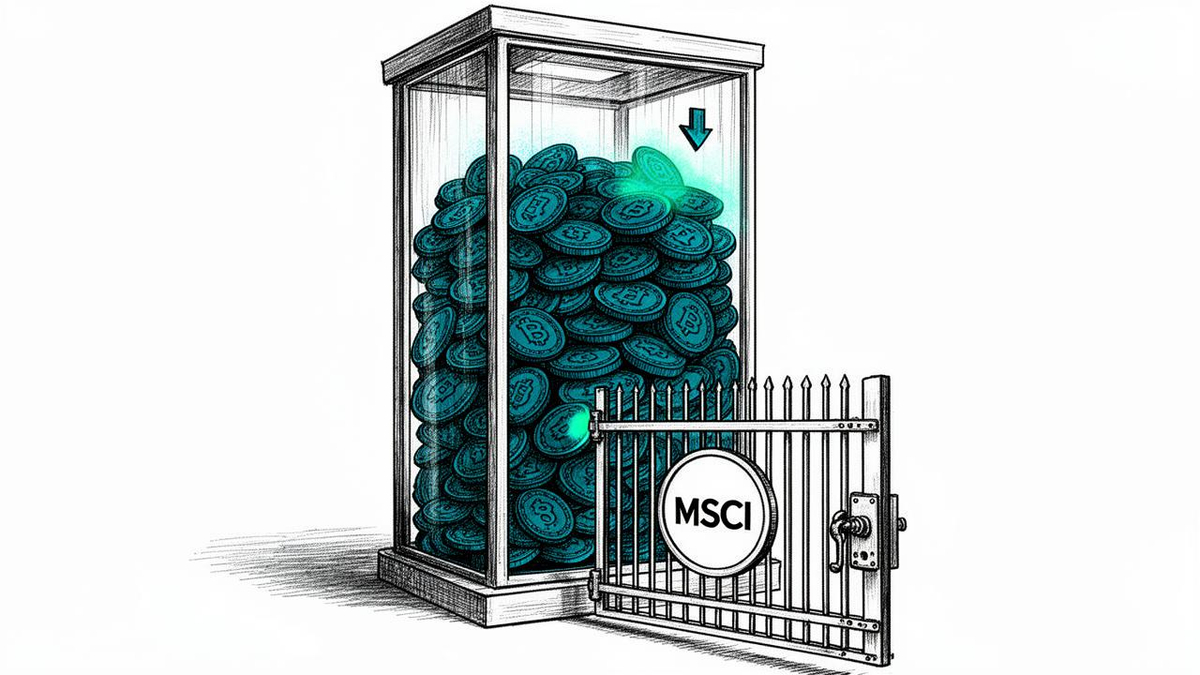
A larger overhang arrives this week. SharpLink sits on a watchlist under MSCI's finalized rules for "non-operating companies," which could push asset-heavy firms out of its global equity indexes. The index provider is due to publish the results of its review on Wednesday, Nov. 11, with changes taking effect at the close of Nov. 30. Removal would force passive funds tracking those indexes to sell, thinning the investor base that treasury-style companies depend on.
For investors, the quarter sharpens a question that has followed crypto-treasury firms all year: whether reported earnings reflect a durable business or the direction of a token price. SharpLink's staking operation and yield-fund deployments show an effort to turn its holdings into a working asset, but at $13.5 million in quarterly revenue against a $2.1 billion crypto balance, the income statement remains tied to Ether's swings. A GAAP quirk adds to the asymmetry: impairment charges on staked assets such as wstETH are not reversed when prices recover, so losses can stick even after a rebound.