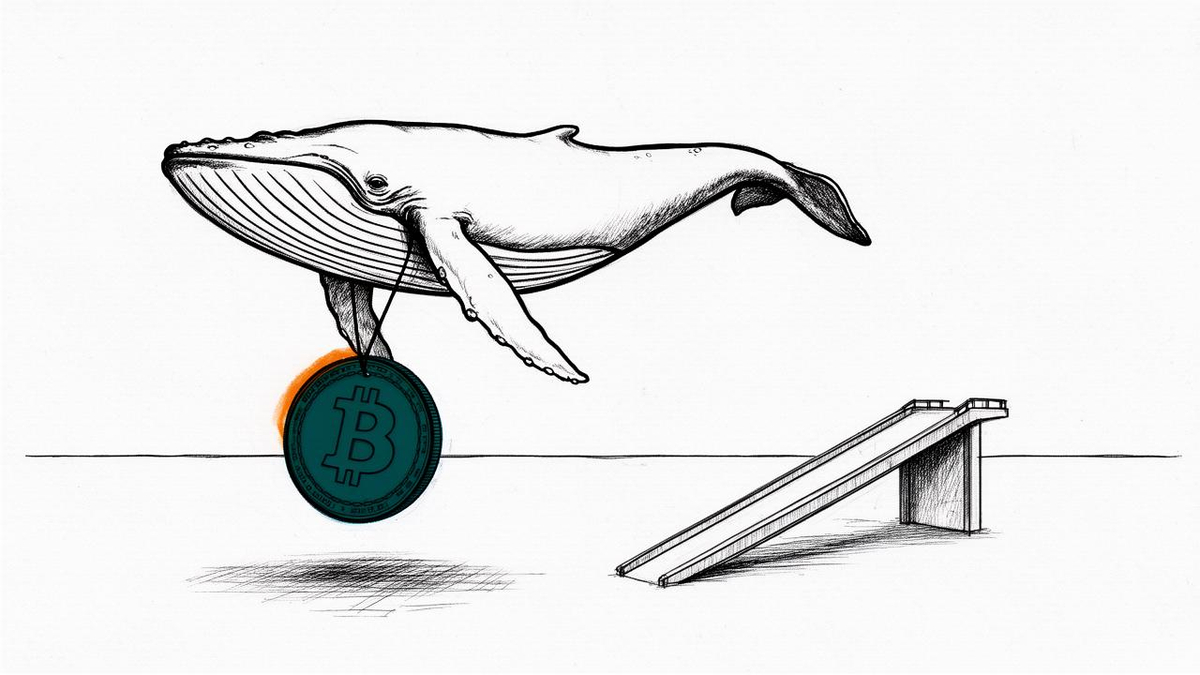
Unrealized losses for so-called "short-term whales" — investors who aggressively accumulated Bitcoin (BTC) within the past 155 days — have reached roughly $8 billion, the largest on record for this group. However, the volume they are moving to exchanges remains smaller than during past loss cycles, suggesting the risk of a large-scale sell-off is limited, according to market analysis.
In a post on X on the 16th (local time), Darkfost, an analyst contributing to on-chain data firm CryptoQuant, said "unrealized losses for short-term large holders who bought Bitcoin within the past 155 days stand at about $8 billion," adding that this is "an all-time high for this cohort." Bitcoin had rallied more than 51% since June, prompting large investors eager not to miss the uptrend to build positions in a hurry. But with a roughly 30% correction unfolding since October, coins bought near the peak have flipped into paper losses.
The crux is their average purchase price. Market analysis estimates the "short-term holder cost basis" — the average acquisition cost for holders of less than about 155 days — at around $74,700. With Bitcoin currently trading near $64,900, that means a substantial share of recent buyers remain underwater. One analyst said that "for bulls to reclaim this level, the price needs to close above $74,700 on a daily basis. Until then, bears hold the upper hand."
As losses mount, whale inflows to exchanges have also picked up. According to Darkfost, whale inflows to Binance have risen from a monthly average of 1,200 BTC to 2,100 BTC, with some days seeing inflows exceed 4,000–5,000 BTC. On the 3rd, more than 9,000 BTC flowed into the exchange in a single day. Still, he noted that "relative to the scale of unrealized losses, exchange inflows are lower than in the past," adding that "current inflows don't even match the levels seen in February and June, when unrealized losses were far smaller." Some of the increase in inflows may also reflect fund movements tied to the Binance hack.
Note: Figures based on CryptoQuant contributor analysis and market research data.
The $60,000–$63,000 range has been identified as the pivotal zone that will determine selling pressure ahead. Darkfost warned that "if the price continues to decline below the so-called 'pain zone,' short-term holders' unrealized losses will deepen and selling pressure could escalate quickly." Conversely, even if prices rebound toward the cost basis, some analysts note that without volume support, any rally may prove short-lived.
The market is watching both the possibility that the scale of these losses weighs on sentiment and the fact that exchange inflows have not yet surged. Because unrealized losses are still paper losses that have not been locked in, the timing and magnitude of actual selling by investors will be the key variable shaping price direction going forward.
Once added, BigGo Finance appears first in Google Search Top Stories, so you get the broadest, most up-to-the-minute, and most comprehensive global financial news first.