Blockchain risk-monitoring firm Inca Digital has revealed in a new investigation that the Peg Stability Module (PSM) of decentralized finance protocol Sky Protocol has processed transactions from 422 wallets linked to hackers, phishing groups or sanctioned entities, totaling about $518 million, of which $101.9 million is identified as directly tied to North Korean activity. The report also flags a structural concern: roughly $2.7 billion of the PSM's USDC reserves are concentrated in a single Ethereum address, and if issuer Circle freezes that address under a court order or law-enforcement request, legitimate reserves could be locked up alongside suspicious funds, in turn disrupting DAI and USDS swap liquidity.
The investigation measures "the volume of transactions that linked wallets routed through the module." It does not mean all the funds have been deemed stolen proceeds, nor that Sky itself was attacked. Still, the data has prompted a fresh look at the tension between open DeFi infrastructure and compliance requirements.
$91.5 Million Crossed the PSM Within Ten Days of the Bybit Hack
The report traced fund flows after crypto exchange Bybit lost about $1.5 billion in assets in February 2025. Inca Digital found that within ten days of the theft, wallets that received the stolen assets completed about $91.5 million in transactions through Sky's PSM, nearly $30 million of it after the FBI publicly attributed the case to North Korea on Feb. 26. The FBI named the TraderTraitor unit under North Korea's state-backed Lazarus Group, which is also believed to be behind last month's $6.3 billion Binance hack.
Nominis, another blockchain investigation firm, independently analyzed more than 560 transactions involving over 320 blockchain addresses at CoinDesk's request and likewise confirmed the wallets' links to North Korean hacking activity. Nominis founder and CEO Snir Levi said such transactions follow a consistent pattern: "When they convert, they pick the protocol with the deepest liquidity, clearly favoring decentralized protocols and assets that no one can freeze, and they move extremely fast. The window to act before funds are converted is very short."
Besides the Bybit case, the $518 million tallied by Inca Digital includes $26.1 million that the "FTX Accounts Drainer" swapped through the PSM during FTX's collapse, and $49.5 million in USDC that the Infini attacker converted to DAI on the day of the February 2025 incident. The report noted that the PSM performs no identity verification or transaction screening, and that 95% of the transactions entered through decentralized exchange aggregators such as 1inch, ParaSwap and MetaMask Swaps.
Reserves Concentrated in a Single Address, Putting Freeze Risk in Focus
The PSM was designed to let users swap Circle-issued USDC for Sky's USDS and DAI at a fixed one-to-one rate, thereby maintaining the dollar peg. That also makes it a channel for "moving dollars from a freezeable stablecoin into non-freezeable tokens."
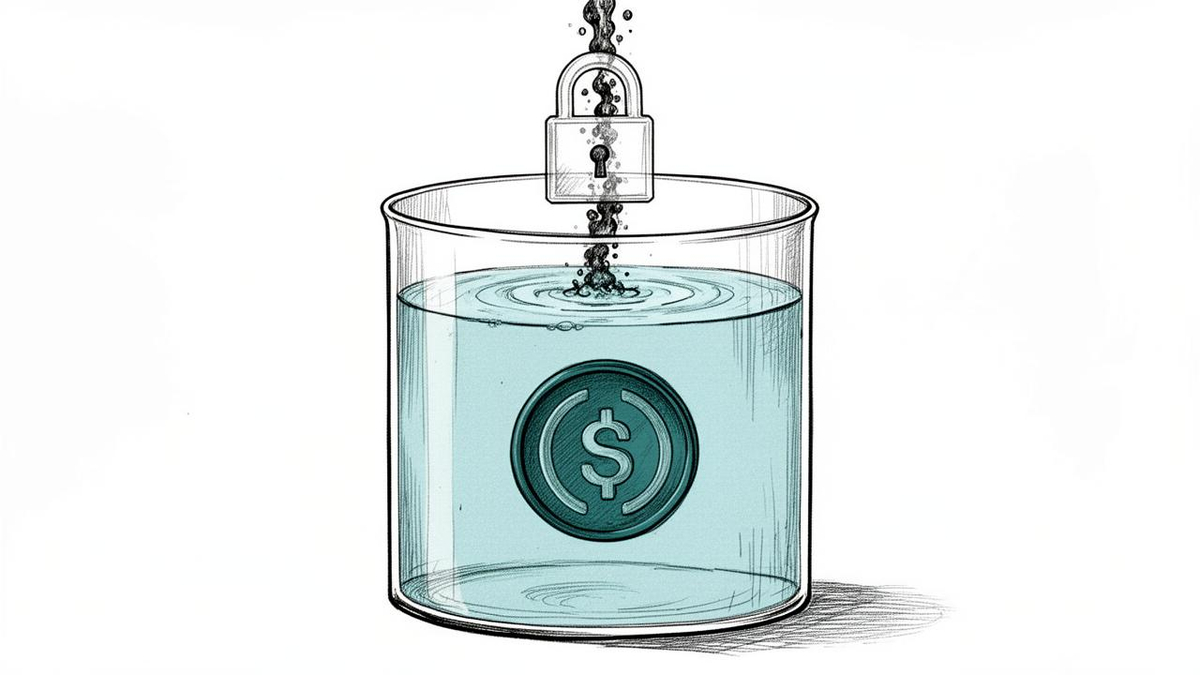
The real risk lies in reserve concentration. The investigation found that the PSM's roughly $2.7 billion in USDC reserves are held entirely in an Ethereum wallet set up through Coinbase Prime; Sky says the wallet's separate private key was destroyed after setup, with the PSM controlling fund movements. The problem is that Circle cannot freeze only a specific amount within a wallet — if the address is blacklisted, the entire $2.7 billion would be immobilized, and the PSM's two-way swaps would halt with it.
This is a risk scenario raised by the investigation, not a reserve that has already been frozen. Amey Dandawate, director of stablecoin ratings at Bluechip Ratings, sees the probability of a freeze as low but not purely hypothetical, citing a May case in which a California judge ordered a temporary freeze on $12 million of USDC in a Zama contract as evidence that court orders can indeed reach on-chain assets. He warned that if Sky's reserve address were frozen, PSM two-way swaps would stall and produce a "high-impact cascading effect" across DeFi protocols.
This is not the first time Sky has faced such pressure. During the MakerDAO era, after the U.S. sanctioned Tornado Cash in 2022 and Circle froze USDC at sanctioned addresses, the community discussed reducing DAI's reliance on USDC and prepared contingency plans.
Compliance Dilemma Amid the Institutional Pivot
Sky, formerly MakerDAO, rebranded in 2024 and launched the SKY governance token and the USDS stablecoin. USDS now has a market value of about $4.6 billion and DAI about $3.8 billion. After the transition, Sky no longer operates solely on its own but deploys capital into yield strategies such as tokenized funds and private credit through independent units called Sky Agents, often with traditional financial institutions as counterparties.
That institutional path has produced several concrete ties. Galaxy Digital (GLXY) formed a strategic partnership with Sky, holding about $100 million in the interest-bearing stablecoin sUSDS and an undisclosed amount of SKY governance tokens, and accepting sUSDS as loan collateral; Grove, within the Sky ecosystem, extended Galaxy a $500 million credit line. On the Coinbase (COIN) side, the PSM's USDC is held in a self-custody wallet set up through its Prime service, and the exchange pays rewards on the balance. A Coinbase spokesperson stressed that assets in self-custody wallets are controlled by clients and the exchange has no authority to move them, adding that the company works with law enforcement to monitor and report illicit activity.
Inca Digital warned that even if the reserves are not frozen, exchanges and institutional partners could tighten or restrict dealings with Sky under pressure over source-of-funds reviews. Ceteris, head of research at Delphi Digital, said: "When pools are deemed possible money-laundering conduits for stolen funds, their appeal and viability to institutions drop sharply."
Legal responsibility is similarly murky. Ari B. Good, a partner at Cogent, argues the key question is how much control identifiable people retain over a protocol; in the 2024 Tornado Cash case, a federal appeals court held that immutable smart contracts are not property the Treasury can sanction, but if developers or governance participants can upgrade contracts, pause functions or collect fees, "calling yourself decentralized does not hold up in the eyes of sanctions law." Sanjeev Bhasker, a partner at K&L Gates and former White House cyber lawyer, said no single rule currently requires DeFi protocols to screen every transaction, and that obligations depend on the activities a protocol engages in and who controls it.
Sky Frontier Foundation: Less Than 0.06% of Total Volume
In response to the scrutiny, the Sky Frontier Foundation, which supports the Sky ecosystem, said it "takes seriously any concerns about illicit activity in DeFi" and that it had reviewed the flagged transactions, most of which by value occurred between 2021 and mid-2024. The foundation stressed that Inca's figures reflect the activity of linked wallets and are not necessarily proceeds directly traceable to specific thefts; nearly all the transactions entered the PSM through third-party aggregators, and none came through official interfaces such as sky.money or spark.fi, which screen wallets and restrict access from sanctioned regions. The foundation said the flagged transactions represent less than 0.06% of the PSM's more than $930 billion in volume and less than 0.03% of LitePSM volume.
"Sky Protocol, including DAI and the PSM, is open, decentralized infrastructure that third parties can integrate outside Sky's governance framework," the foundation said. "Keeping DeFi both open and safe is an industry-wide challenge."
The investigation lands as crypto thefts hit record after record. After last month's $6.3 billion Binance hack, Binance said it had frozen or intercepted about $2.8 billion in stolen assets, more than $2.3 billion of it in USDT and USDC stopped by Tether and Circle. The more capable centralized issuers become at freezing assets, the more pressure protocols like Sky — which mix freezeable and non-freezeable assets in a single system — will face.
For investors, there are three near-term things to watch: whether Circle takes any action on the PSM reserve address, whether Sky's governance can propose stricter transaction screening and reserve diversification, and whether institutional partners such as Galaxy and Coinbase adjust their exposure to Sky. TokenBrice, founder of Pharos, recommends stronger transaction screening, identity checks at institutional gateways, clearer legal ownership and claims on reserves, and enforceable procedures for handling sanctioned funds and legitimate freeze requests.
Notably, Sky's exposure also spreads through public-market investors. U.S.-listed crypto asset manager Stablecoin Development Corp. (SDEV) held about 10% of the SKY token supply and governance voting power as of the end of June, meaning the fallout from this compliance dispute may not be confined to on-chain participants.
Once added, BigGo Finance appears first in Google Search Top Stories, so you get the broadest, most up-to-the-minute, and most comprehensive global financial news first.