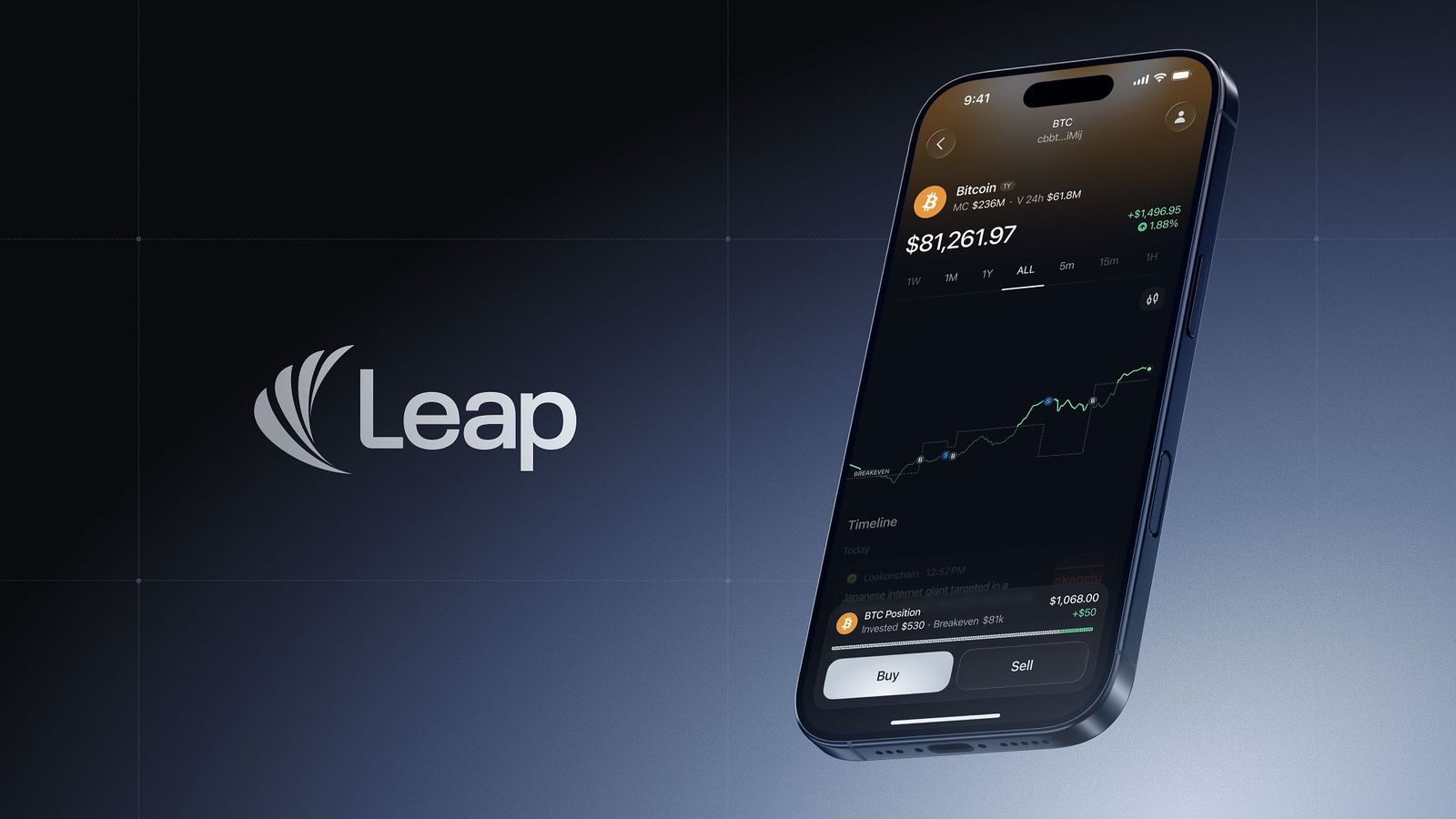
Solana Labs launches Leap, a mobile trading app for tokenized stocks, ETFs, commodities, forex, and crypto, with early access now open through Apple's TestFlight.
Table of contents
- Solana Labs launched Leap, a mobile trading app (iOS early access via TestFlight, Android to follow) offering tokenized stocks, ETFs, commodities, currencies, and crypto
- Features include news overlaid on price charts and detailed P&L tracking with breakeven prices with no platform fees at launch
- Leap leans on Alpenglow's ~150 ms confirmations, while Securitize has also brought tokenized Nvidia, Apple, and Amazon shares to Solana
Solana Labs is expanding its presence in on-chain financial markets with the launch of Leap, a mobile trading application that brings tokenized stocks, exchange-traded funds (ETFs), commodities, currencies, and cryptocurrencies into one platform.
The launch comes as interest in tokenized financial assets grows across the crypto industry, with blockchain networks competing to attract users who want access to traditional markets alongside digital assets.
Leap opened early access on Thursday through Apple's TestFlight program, allowing iPhone users to test the application. An Android version is expected to follow.
Solana Labs wants to take retail traders beyond memecoins with Leap
The platform is being developed under Solana Labs and is designed to give retail traders access to different financial markets while providing market information and detailed portfolio performance tracking.
Solana Labs said Leap was built around the belief that Solana can support different types of financial assets and that traders need better information when making investment decisions.
The company is also positioning the application as an alternative to the fast-paced trading activity associated with memecoins, which has attracted a large share of retail activity on Solana.
Anatoly Yakovenko, co-founder and CEO of Solana Labs, said the network is ready to support different financial markets, but the next stage depends on applications that make those markets easier for people to access and use.
"The network is ready for every kind of market. What matters now are the products that help people use it well and keep them coming back," Yakovenko said.
The application brings several asset categories into one interface. Users can access tokenized stocks, ETFs, commodities, foreign currencies, and cryptocurrencies, including memecoins and other tokens issued on Solana.
These markets are designed to remain available around the clock, although asset access depends on regional restrictions.
Tokenized stocks and ETFs are blockchain-based tokens that track the prices of underlying shares and funds. Their growing availability gives crypto platforms another way to connect traditional financial markets with blockchain infrastructure. However, access to these products through Leap will depend on the assets supported by the application and the jurisdictions in which users operate.
Leap brings market research, profit tracking, and on-chain trading into one app
Beyond trading, Leap is introducing a market research feature that displays selected news stories alongside asset price charts. Its research team curates developments considered relevant to market movements and places them on charts at the time the events occurred. The feature is intended to help users understand what happened around particular price movements rather than relying entirely on price charts.
The application also places considerable emphasis on profit and loss tracking. Leap calculates portfolio performance using deposits, withdrawals, transactions, and trading fees, allowing users to see their actual results across individual positions and their entire portfolio. It also displays the breakeven price for each position, giving traders a clearer picture of how far an asset must move before they recover their costs.
Leap trades use on-chain swaps, allowing users to enter the dollar amount they want to trade and review costs before confirming.
The platform charges no trading fees at launch, but network and routing costs apply. These appear before each transaction.
Leap relies on a variety of Solana-based services. Jupiter handles routing, Helius provides infrastructure support, and Birdeye supplies market data, allowing the platform to use existing infrastructure rather than build every component.
Can Leap's business model attract more traders to Solana?
General manager Chris Osborn said Leap was developed by the team behind Dialect, which was acquired by Solana Labs this year.
Dialect developed Solana Actions and Blinks, which let users share blockchain transactions through links, and worked on X’s cashtags feature.
Osborn highlighted that Solana’s Alpenglow upgrade enables transaction confirmations in about 150 milliseconds, noting that the team built Leap around that performance.
Leap is launching a referral program offering eligible early users will receive referral codes. Once trading fees begin, members are expected to earn 30% of fees from direct referrals and 5% from their referrals.
The company plans to use part of future fee revenue to buy and burn SOL tokens, removing them from circulation. Another portion will fund referral rewards.
Neither initiative will generate revenue at launch because Leap charges no platform trading fees.
The launch comes as Solana attracts tokenized financial products. Securitize has brought tokenized shares of companies including Nvidia, Apple, and Amazon to the network, expanding assets available to on-chain traders.
Hassan Shittu is a Web3 and finance journalist and editor with over six years of experience writing for crypto-native, stock market and tech publications. A five-year Web3 trader with hands-on experience in meme coins and NFTs, he brings firsthand market knowledge and a technical writing background to his coverage. Outside of crypto, he enjoys football.


