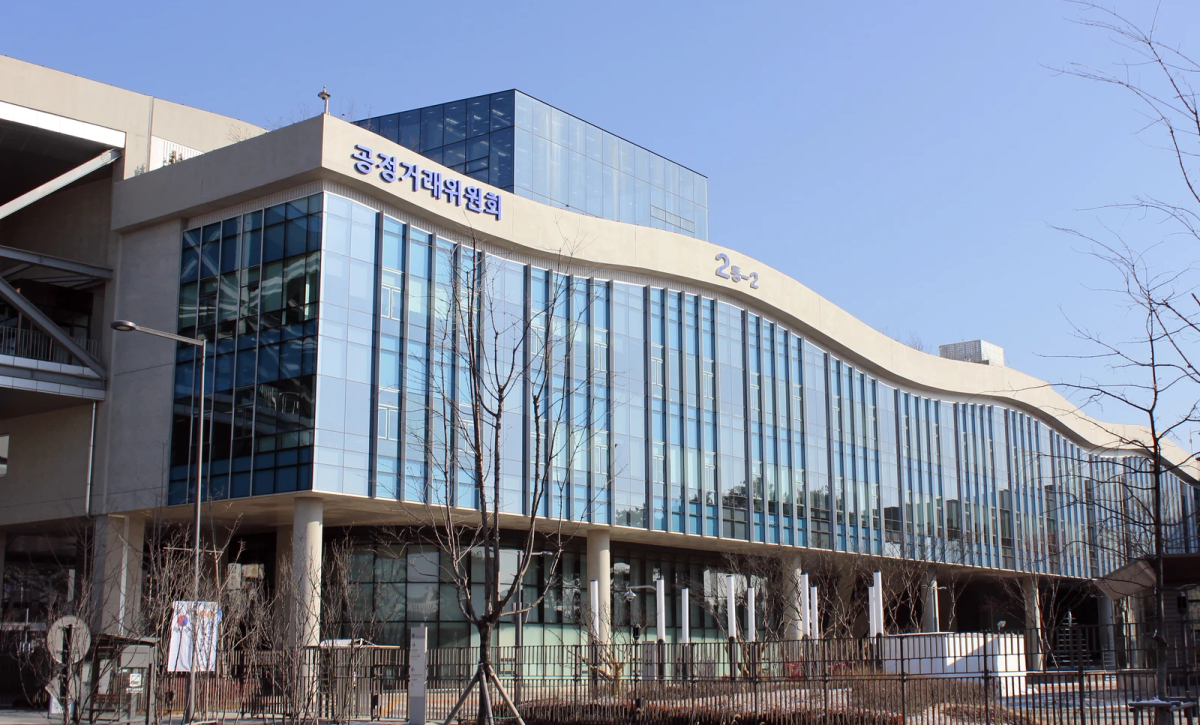
South Korea's Korea Fair Trade Commission (FTC) has begun formal deliberations on the corporate merger between Naver Financial (Naver) and Dunamu (operator of Upbit). With the review report referred to the commission about a year after the filing was received, a decision on approval is expected within the year. Examiners provisionally concluded that the combination could restrict competition in as many as 10 markets, but also stated that the concerns could be resolved if the remedial measures submitted by the two companies are strengthened.
The FTC said on the 10th that it had submitted its review report on the Naver Financial-Dunamu merger to the commission and sent copies to both companies on the 6th. The review report is a document containing the illegality identified by examiners during the investigation and their proposed measures, and its submission marks the start of deliberations. The final approval decision and the level of remedial measures will be decided by the full commission. The full commission is reportedly set to meet as early as the 18th, and given that conclusions typically come within one to two weeks of deliberation, a wrap-up within the year is highly likely.
The merger is being pursued through a comprehensive share swap in which Naver Financial will secure 100% of Dunamu's shares. Dunamu shareholders will receive approximately 2.54 Naver Financial shares per Dunamu share, and once the transaction closes, Dunamu will become a wholly owned subsidiary of Naver Financial. In effect, South Korea's No. 1 online simple payment operator and its No. 1 virtual asset exchange operator will be brought under one roof.
FTC examiners defined 10 relevant markets affected by the merger on a South Korean basis: online simple payments, digital asset exchanges, online search portals, online advertising, online shopping, financial MyData, unlisted stock brokerage, listed stock investment platforms, online secondhand trading, and the not-yet-institutionalized market for issuing won-backed stablecoins.
Note: Classification of the 12 merger types arising across the 10 relevant markets defined by the FTC.
Of the 12 merger types, examiners presumed only the two horizontal mergers—in listed stock investment platforms and online secondhand trading—to fall within the safe harbor with no competition restriction. All 10 remaining vertical and conglomerate mergers were judged not to fall within the safe harbor under the review criteria.
The core concern is that the two companies could transfer the dominance each holds in its own market into other areas to squeeze out competitors. Jeon Seong-bok, director-general of the FTC's Merger Review Bureau, said at a briefing that day that even mergers between different industries can produce competition-restricting effects if they impede potential competition or exclude rival businesses through bundled product sales. For example, if benefits for using Naver Pay were concentrated on virtual asset trading on Upbit, other exchanges or payment companies could be disadvantaged.
A notable aspect of this review is that it included the not-yet-formed won-backed stablecoin issuance market as a subject of analysis. The FTC examined four merger types that could arise among the won-backed stablecoin issuance market, digital asset exchanges, simple payments, and online shopping. According to the FTC, this is effectively the first case in which competition-restriction concerns in an unformed market have been reviewed.
Director-General Jeon said the agency judged that the market would form in the future after comprehensively considering bills proposed on stablecoins, the policy progress of relevant agencies, and materials submitted by the two companies. Kim Hye-seon, head of the FTC's Merger Division, also said, "If we refrain from making a judgment just because a market is unformed, that could actually affect competition down the road."
During the review, the FTC conveyed its competition-restriction concerns to the two companies and demanded remedial measures; the companies submitted a draft and then prepared a final version reflecting expert opinions and the authorities' requests for revision and supplementation. The remedial opinions proposed by examiners reportedly include various obligations such as equal treatment of competitors and restrictions on business practices. The specific markets to which they apply and the details of the measures were not disclosed.
Director-General Jeon said, "With the initial remedial measures, there were quite a few areas where it was difficult to resolve the competition-restriction concerns," adding, "We supplemented and strengthened the remedial measures." He added that the currently submitted measures are judged sufficient to resolve the concerns, but the final decision rests with the full commission. The full commission may consider both a conditional approval that strengthens or eases the remedial measures and a prohibition of the merger on the grounds that the measures alone do not resolve the monopoly concerns.
On the review taking about a year, the FTC pushed back, calling it a normal level. Director-General Jeon noted that the average processing time for six to seven recent major cases, including the Korean Air-Asiana Airlines merger, was also around a year, and explained that this case required extensive analysis and opinion-gathering because of the many relevant markets and stakeholders. Regarding some reports that there was no consultation with financial authorities, he said the agency went through official opinion-gathering procedures with relevant agencies, including South Korea's Financial Services Commission, late last month.
Naver and Naver Financial said, "We actively responded to requests to clarify the necessary facts and submit materials," and "We will faithfully participate in the relevant procedures at the full commission as well and do our best so that the merger process can be concluded smoothly." They also laid out a vision to combine Naver's AI and platform technology, Naver Financial's payment and financial capabilities, and Dunamu's blockchain and digital asset technology to create growth opportunities in the global digital finance market and enhance the competitiveness of South Korea's digital asset industry.
The merger schedule has already been pushed back three times. The share swap date, originally set for June 30 this year, was moved to September 30, then December 31, and finally to March 31 next year—a nine-month delay—while the shareholders' meeting date was adjusted to February 26 next year. Naver's position is that if the authorities conclude their judgment within the year, the transaction can be completed within the first quarter of next year without needing to change the currently disclosed schedule again. However, the possibility of further delays remains, as remaining approvals and filings—such as approval and reporting of the change in the largest shareholder—must also be satisfied.
The market expects the decision to have considerable ramifications for South Korea's digital finance landscape. If conditional approval is granted, Naver will be able to offer services that bundle simple payments, virtual asset trading, and search and shopping data together. On the other hand, the intensity of the remedial measures could change the competitive dynamics of the exchange and payment industries, and the case is expected to serve as a precedent in discussions on institutionalizing won-backed stablecoins. With dollar- and euro-based issuers already expanding their distribution networks in the global stablecoin market, some note that the longer the merger is delayed, the slower South Korean players may be to respond.