The debate over won-backed stablecoins is stuck on "who gets to issue them," critics said at South Korea's National Assembly. Min Byung-duk, a lawmaker from the Democratic Party of Korea, directly criticized proposals to limit issuance to banks during a special dialogue at D-CON 2026, a digital asset policy conference held on November 10 at the Fairmont Ambassador in Yeouido, Seoul. "We must not create a stablecoin that nobody uses just because banks are deemed safe issuers," he said.
He stressed that the discussion should focus on where stablecoins are used and how they circulate. "The center of the debate should be where it is used and how it is distributed, but South Korea is still tied up over who will issue it," he said, arguing that use cases and distribution plans must be designed first. Rather than predetermining the issuer's industry, he proposes allowing market participation based on whether an entity meets requirements for 100% reserve assets, guaranteed redemption rights, a supervisory framework, and anti-money-laundering and customer verification rules. "Competition only happens when anyone who meets those standards can participate," he explained.
He does not exclude banks from participating. Banks have strengths in infrastructure, fintech firms in convenience, and crypto companies in technology and networks, so the idea is to form consortiums in which different stablecoins compete on service, with domestic survivors then expanding abroad. As a distribution base, he proposed leveraging Samsung Electronics smartphones, Hyundai and Kia, and the overseas customers and distribution networks of K-content to target the global market from the start. "Blockchain is a technology aimed at the world, and we must not narrow the market to South Korea," he added.
At the same event, the ruling and opposition parties diverged sharply on the pace of legislation. Min pressed that the government's bill has been delayed, saying, "The time has come when we can no longer put this off." He demanded that the Digital Asset Framework Act be passed during the current regular session of the National Assembly, or by January 18 next year at the latest. His argument is that South Korean businesses cannot be told to keep waiting while dollar-based stablecoins spread. He also said, "The criticism that we are collecting taxes before even enacting a framework act has served as a wake-up call on the urgency of legislation."
Park Soo-min of the People Power Party, by contrast, counseled caution, saying, "I don't think a delay in the law is a bad thing." His concern is that the crypto industry is evolving so quickly that a law could need revision the moment it is enacted. "The law should move fast but stay somewhat loose," he said. "What worries me is that the law could block evolution." Even before legislation, he argued, financial authorities should send an administrative signal that businesses need not fear punishment if they comply with anti-money-laundering and transparency standards, and should quickly open crypto investment to corporations and institutions.
Min rebutted this cautious view directly. He said the framework act he proposed contains basic principles rather than detailed regulations, and that it is difficult to ask businesses worried about potential punishment to invest money and time. "A law that sets guardrails should come quickly, and follow-up legislation can be amended or added as changes unfold," he stressed. Both lawmakers agreed on the need for a won-backed stablecoin. Park also proposed using South Korea's strengths, such as K-content, to improve convenience and attempt to internationalize the won.
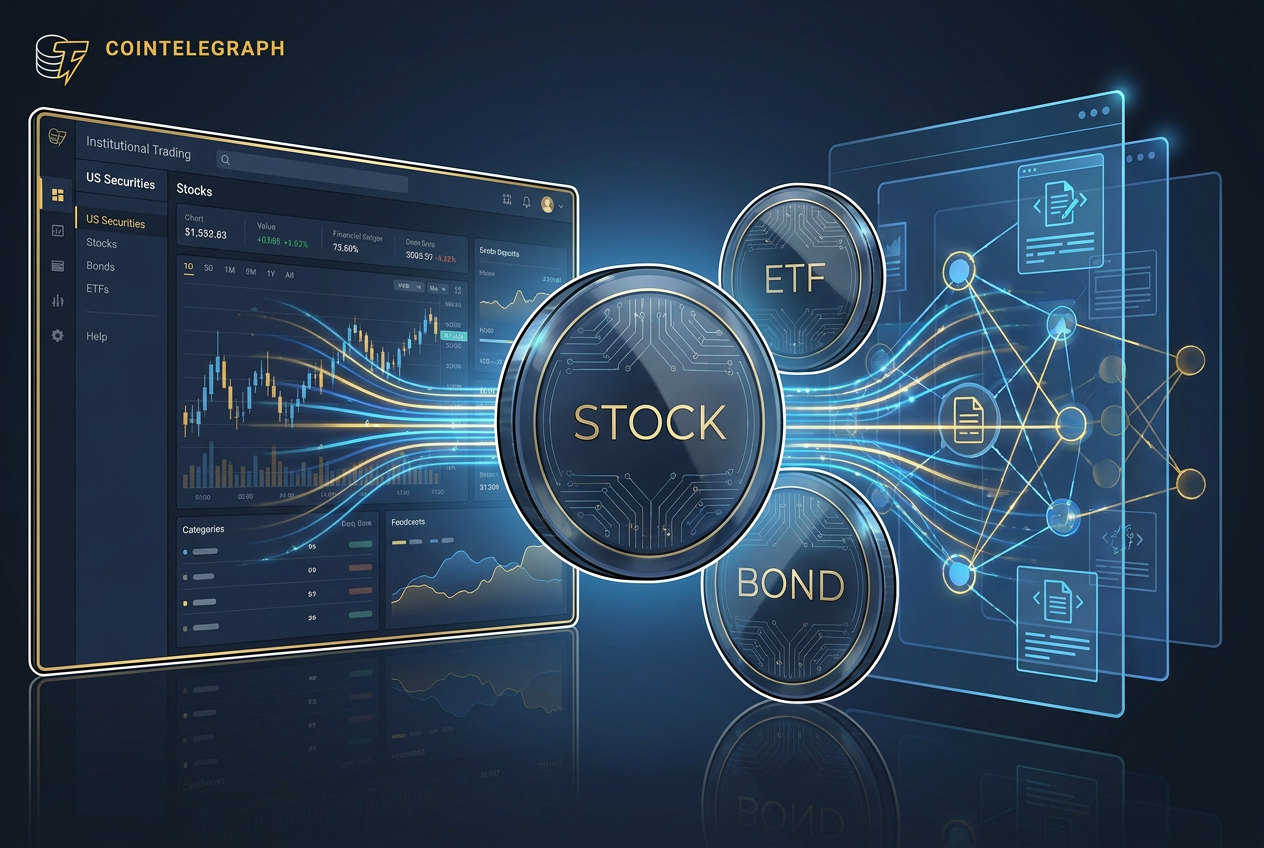
Industry figures appealed that the regulatory vacuum is pushing business opportunities overseas. Kim Hyung-nyun, vice chairman of Dunamu, said, "It is truly painful that Samsung Electronics and SK Hynix, South Korea's flagship stocks, are traded on overseas exchanges." He was referring to the situation in which products tokenizing South Korean stocks trade 24 hours a day abroad. "We have completed all technical preparations together with securities firms and financial companies, and once the rules allow, we can roll out what we have prepared," he said. He also called for an environment in which non-resident foreigners can freely trade in won on South Korean exchanges.
Min expanded on stablecoins' use as payment infrastructure. In an era when artificial intelligence (AI) agents carry out transactions, stablecoins will emerge as a means of payment instead of card payments, and this is an opportunity to change a structure in which fees are paid to overseas payment networks such as Visa and Mastercard, he said. "The question is whether we live paying fees to payment networks built abroad, or live receiving fees through a payment network built by South Korea," he said, adding that it could become a growth engine alongside semiconductors and shipbuilding. He drew a line, however, at trying to put all detailed rules into the framework act. "It is unreasonable to try to write into law everything that will happen in the future in a field changing rapidly in combination with AI," he stressed. "The framework act should set principles and guardrails and leave room for creative attempts within them."
South Korea's crypto market established a framework for user protection and unfair-trading regulation with the July 2024 enforcement of the Virtual Asset User Protection Act, but a framework act covering industry promotion and issuance and listing discipline remains pending in the National Assembly. The issuers of won-backed stablecoins and limits on major shareholders' stakes in exchanges are cited as key sticking points. While the ruling and opposition parties remain far apart on the scope of issuers and the intensity of regulation, industry officials warn that business opportunities around tokenized securities and won-backed stablecoins could flow to markets such as the United States and Japan that have already put rules in place. January 18 next year, cited as the legislative deadline, is expected to be a watershed for institutionalizing the won-backed stablecoin.