Stripe and MiPlata Launch a Stablecoin Visa Card: What Is New?
A new Stablecoin Visa Card has launched after Stripe and miPlata built a custom prepaid product together. In a Stripe Crypto post on X, the team said miPlata, a stablecoin-powered wallet for Latino workers and families, used Stripe Issuing to launch a physical Visa card in five weeks.
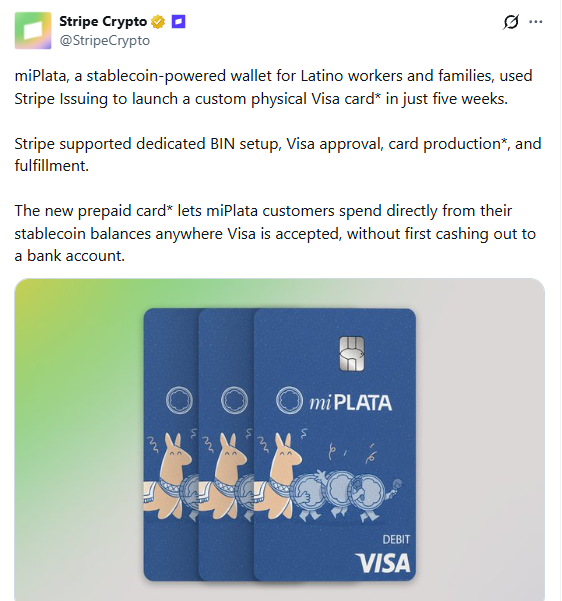
Source: Stripe Crypto post on X
The card lets miPlata customers spend directly from their stablecoin balances anywhere Visa is accepted. They do not need to cash out to a bank account first. That is the core of this Stablecoin Visa Card Launch.
Stripe said it supported dedicated BIN setup, Visa approval, card production and fulfillment. The partnership therefore covers network approval and the physical delivery of cards. The post did not give a customer rollout date, supported countries or fees.
Who Is MiPlata, and Why Does a Visa Prepaid Card Matter to Its Users?
miPlata describes its platform as a mix of employer payroll, digital banking and remittances to Latin America. The company runs its service through the miPlata website and a mobile app.
For workers who receive pay and send money home, a Stablecoin Visa Card linked to stablecoin balances shortens the path to everyday purchases.
The company has earlier referred to a USDC stablecoin card in its project updates, but the latest post does not name the token.
How Does a Stablecoin Visa Card Work Behind the Checkout?
Stripe's stablecoin cards documentation lists stablecoin-backed Issuing cards as a private preview product. The documented setup is a prepaid debit card on the Visa network, funded from stablecoin balances. The post does not say whether the MiPlata Visa Card follows that exact configuration.
The Stripe Stablecoin Card model also sits inside a wider push. Visa and Stripe's Bridge unit launched stablecoin-linked cards in six Latin American countries in April 2025: Argentina, Colombia, Ecuador, Mexico, Peru and Chile.
In March 2026, the companies announced plans to expand that product to more than 100 countries. This Stripe Visa Partnership history suggests the miPlata card is one piece of a larger build-out.
Is Stablecoin Spending Moving From Trading to Daily Payments?
Until recently, most stablecoin use centered on trading, transfers and settlement. A Crypto Debit Card brings the same balance into store and online purchases through Visa's existing network. That moves Stablecoin Spending from an exchange activity to a payment activity.
Demand data points the same way. Stablecoin adoption in emerging markets is rising, with Tether CEO Paolo Ardoino saying USDT use is growing in Venezuela, Argentina, Bolivia and Turkey.
Banks are testing the rails too. A US lender completed a USBDC pilot on Stellar on September 9, 2026, moving value between two of its entities. Stablecoin Payments now draw interest from both fintechs and banks, and Crypto Payments are slowly reaching ordinary checkout.
What Is Still Unconfirmed in This Crypto Card Launch?
The post does not name the stablecoin, the issuing bank, the countries served, fees, spending limits or the date customers receive cards. It also does not say whether the card runs on Bridge, Stripe's stablecoin unit. Those details matter for judging how far the product can scale.
Expert Take: What Could Decide the Next Phase?
The data suggests speed is the clearest signal. A custom Stablecoin Visa Card built in five weeks shows that issuing infrastructure can shorten launch timelines for wallet companies.
The main uncertainty remains scale. Stripe's documentation still places stablecoin-backed cards in private preview, and no usage figures from miPlata have been published.
Fees, conversion costs, compliance checks and the share of users who spend balances instead of holding them could all change the picture. Rules on stablecoin issuance and card programs add another variable.
Conclusion
This Stablecoin Visa Card Launch connects Stripe's issuing tools with workers who move money across borders. The confirmed facts are narrow: a custom Visa prepaid card, five weeks to launch and spending from stablecoin balances without a cash-out step.
Wider impact depends on rollout details that have not been shared. The update fits the steady flow of crypto news today on payments, and the broader cryptocurrency news around stablecoins.
Disclaimer: This article is for information only and does not offer financial or investment advice. Crypto assets are volatile and carry risk. Product details may change, and the facts above reflect public information at the time of writing.
About the Author Madhav Patel
English Blog Writer at coingabbar.com
Madhav is a Crypto and Web3 Content Writer with 6 months of professional experience in creating research-driven content across the blockchain and digital asset industry. He specializes in cryptocurrency, decentralized finance (DeFi), tokenomics, blockchain technology, and emerging Web3 projects.
With a strong focus on in-depth research, SEO content writing, and content optimization, Madhav transforms complex technical and financial concepts into clear, accurate, and engaging articles. His work focuses on simplifying industry developments, explaining project fundamentals, and delivering informative content that helps readers better understand the evolving crypto ecosystem.
Frequently Asked Questions (FAQ)