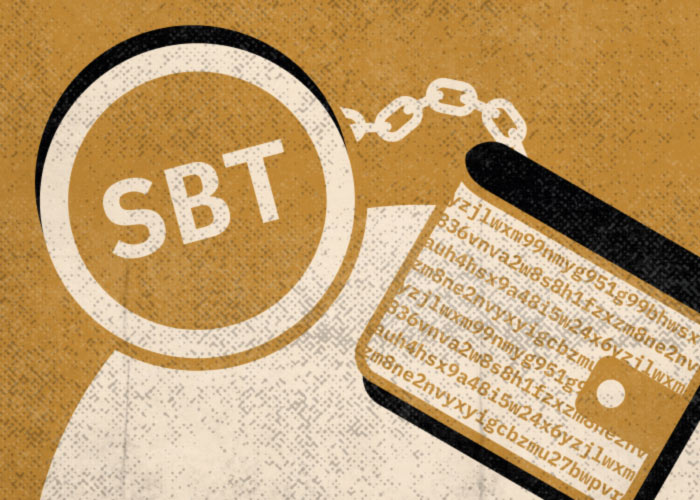
Soulbound tokens (SBTs) are blockchain tokens designed to stay attached to a single account. They can represent a completed course, event attendance, professional certification, membership, or project contribution without becoming a tradable asset.
Building an SBT requires selecting a suitable Ethereum standard, writing a smart contract, configuring metadata, and testing the transfer restrictions. For example, WisdomTree built the model into its tokenized asset platform, and Binance uses it for KYC credentials.
This guide explains the step-by-step process for building SBTs on an Ethereum-compatible chain.
Key Takeaways
- ERC-5192, ERC-5114, and ERC-5484 serve different credential and issuance requirements.
- Configure minting permissions, transfer restrictions, metadata, and revocation rules before deployment.
- Verify the contract, control credential issuance, and keep sensitive personal information offchain.
1. Choose a Suitable SBT Standard
For most first-time builders, ERC-5192 is the most direct option. It extends ERC-721, the widely used standard for non-fungible tokens (NFTs), and adds a locked function that returns whether a token is locked.
ERC-5114 is an alternative for soulbound badges. A badge is minted and bound to another NFT, after which it cannot be transferred or moved.
ERC-5484 introduces consensual SBT issuance, requiring the issuer and recipient to agree on who can burn the token before issuance.
2. Define the Credential
A vague token such as “community member” creates weak verification value. A specific credential such as “Completed Advanced Solidity Course, issued by XYZ Academy” is clearer.
Define four elements:
- The credential name and description.
- The authorized issuer.
- The eligibility rule for recipients.
- The token’s lifespan, renewal rule, and revocation policy.
Keep the on-chain record minimal. A wallet address, token ID, credential type, and metadata link are usually enough. Avoid placing names, identification numbers, health information, or other sensitive personal data directly on-chain.
3. Set Up the Development Environment
Use Solidity for an EVM-compatible contract. Install a development framework such as Hardhat or Foundry, connect a wallet such as MetaMask, and use OpenZeppelin Contracts as the base for ERC-721 functionality.
Deploy and test on a low-cost testnet before using a production network. This lets the team confirm that transfers fail, metadata resolves, and issuer permissions work as intended.
4. Build the Token Contract
Create an ERC-721 contract with an issuer-controlled mint function. The issuer should be the only address able to create tokens, unless the project has a clear reason to allow open minting.
Implement the ERC-5192 interface:
- Add a locked(uint256 tokenId) function that returns true for issued tokens.
- Emit a Locked event when a token is minted or locked.
- Override transfer functions so they revert when a token is locked.
- Restrict approval functions so a locked token cannot be approved for transfer.
- Add role-based permissions for the issuer, revoker, and contract administrator.
The contract should make non-transferability explicit. A token that merely discourages transfers in the user interface can still be moved if the underlying contract permits it.
5. Add Token Metadata
Store a token URI that points to metadata describing the credential. This can include the credential name, issuer, issue date, expiration date, and a link to supporting evidence.
Use decentralized, content-addressed storage for data that should remain available over time. ERC-5114 specifically requires immutable and content-addressable URIs for its badge metadata, reflecting the standard’s emphasis on permanence.
For an ERC-5192 token, decide early whether metadata can be updated. A revocable professional credential may need an update mechanism, while a permanent achievement badge may benefit from immutable metadata.
6. Test and Audit
Test every critical function before deploying to mainnet. At minimum, verify that:
- Only authorized issuers can mint tokens.
- A recipient receives the correct token ID and metadata.
- locked() returns true after minting.
- Direct transfers, safeTransferFrom, and approval-based transfers fail.
- Revocation or burning works only under the intended conditions.
- Metadata remains accessible and accurate.
Run unit tests, integration tests, and static analysis. For a public-facing credential system, commission an independent smart-contract audit before production deployment.
7. Deploy and Verify
Deploy the tested contract to the selected network. Verify the source code on the relevant block explorer so users and developers can inspect the implementation.
Publish the contract address, ABI, documentation, and metadata schema. Clarify which address controls issuance and whether the issuer can revoke or replace credentials.
8. Build the Issuance Workflow
Create a controlled process for issuing tokens. A basic system can verify a wallet signature, check eligibility, and call the contract’s mint function.
For products that need smart wallets, gas sponsorship, or custom validation, consider ERC-4337 account abstraction. The standard enables smart-contract wallets without changing Ethereum’s base protocol.
Keep personal eligibility data offchain. The blockchain should confirm that a credential exists, while the issuer’s private system determines whether an applicant qualifies.
Security and Privacy
A wallet address is pseudonymous, but repeated issuances can still reveal patterns about a person’s activity. Treat every credential as potentially identifiable information.
Use data minimization, obtain clear consent where required, and separate personally identifiable information from public metadata. Legal review is important for products involving employment, education, financial access, or identity verification.
Bottom Line
Building an SBT requires choosing an Ethereum standard and defining the credential, setting up the development environment, writing the smart contract, adding metadata, testing, deploying, and creating an issuance workflow.
Each step ensures the token is securely issued, permanently linked to its intended wallet, and easy to verify. Developers must also establish clear issuance and revocation rules, test the contract, and protect users’ personal information.