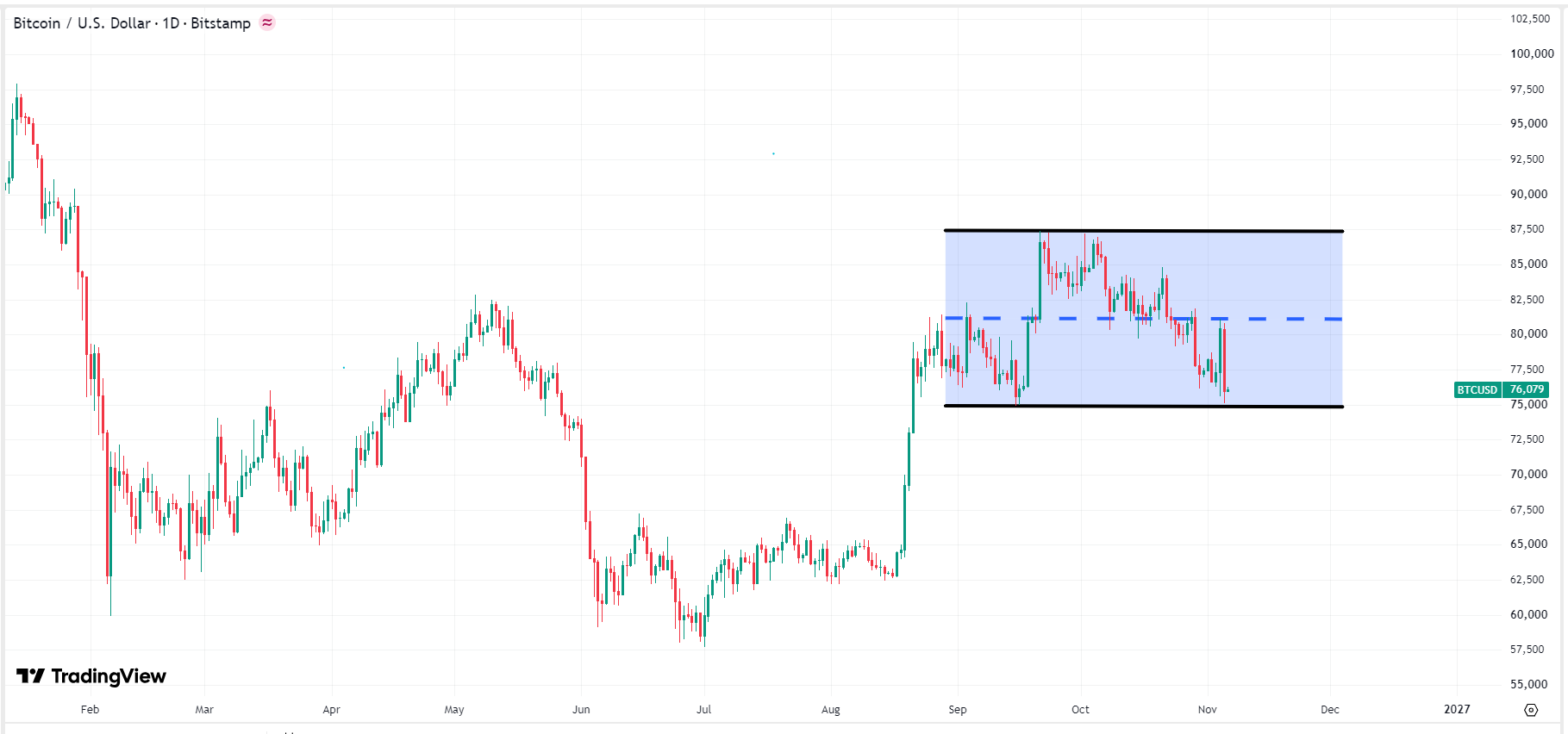
Despite growing its bitcoin stockpile by 26% this year, Strategy (NASDAQ: MSTR) has delivered a 3.7% decline in bitcoin per share to investors in 2026, exposing a dilution problem at the heart of its accumulation model.
The company has raised $21.23 billion in equity this year, and its diluted share count has nearly doubled since 2024, reaching 352.53 million by the second quarter of 2026.
New share issuance only benefits existing holders when buyers pay a sufficient premium over the underlying bitcoin value, and that threshold has not been met.
CEO Phong Le acknowledged on the third-quarter earnings call that the stock was trading at just 1.15 times the value of its bitcoin holdings, below the 1.22 times break-even he identified in May as the minimum for value-accretive share sales.
Until that premium is restored, the company cannot profitably sell stock to accumulate more bitcoin, leaving its flagship growth strategy effectively stalled.
Executive Chairman Michael Saylor struck a defiant tone in the company’s October 29 third-quarter release, declaring, “We’re at the beginning of the next bitcoin bull market,” but the mechanics of Strategy’s model require more than a rising bitcoin price to work in shareholders’ favor.
The share price itself is down 45% from its peak a year ago, with bitcoin having fallen from a 2025 high of $126,296 to roughly $58,700 by June 30, dragging the asset below the company’s average acquisition cost of $75,451 across its 849,327 coins.
Strategy’s preferred stock, STRC, compounded the pressure after trading below its $100 stated value from late May, prompting the company to halt new sales, lift its dividend rate to 12% in July, and repurchase $2.04 billion of the instrument this year.
The STRC episode cut off one of Strategy’s primary non-dilutive funding channels, and a recovery in that instrument back toward $100 would be an important signal that the capital markets have regained confidence in the structure.
On the balance sheet, the company says its $5.07 billion in USD assets covers 3.4 years of preferred dividends and interest payments, suggesting near-term obligations are manageable even without fresh fundraising.
The third quarter showed how dramatically results swing with bitcoin: a 43% rise in the cryptocurrency helped push Strategy’s stock up 76% and produced diluted earnings of $44.75 per share, almost entirely derived from a $20.91 billion gain on its coin holdings, while revenue edged down 3%.
The underlying software business contributed just $4.6 million in pre-tax income in fiscal 2025, offering no meaningful cushion against crypto volatility, and analyst estimates range from a loss of $17.44 per share in fiscal 2026 to a profit of $23.67 in fiscal 2027.
Wall Street has already repriced its expectations sharply, with the average analyst price target falling by more than half over the past year to $234.
The sector-wide damage extended well beyond Strategy, with MARA Holdings (NASDAQ: MARA) off 62% from its high despite holding 35,577 bitcoin as of June 30, while Coinbase (NASDAQ: COIN) has lost 53% as customer trading activity failed to recover alongside bitcoin prices.
Coinbase’s third-quarter transaction revenue came in at $590.2 million, down from $1.0 billion a year earlier and also below the prior quarter’s $599.2 million, illustrating that a rising bitcoin price does not automatically translate into platform activity.
A $6.3 billion hack at Binance in late October pushed bitcoin briefly under $80,000, arriving the same week Strategy disclosed that CFO Andrew Kang would depart on November 5.
For MARA, a separate political risk has emerged after Bernstein cut its price target on the stock to $10 from $17 following Gina Hinojosa’s gubernatorial victory over Greg Abbott, raising questions about whether the company’s 2-gigawatt Matagorda County facility will receive ERCOT approval.
The most immediate test for Strategy may be an index decision rather than a bitcoin move: on November 11, MSCI is scheduled to name the companies affected by a new index rule, and funds tracking its indexes currently hold approximately 13 million Strategy shares.
A forced exit by index-tracking funds would add selling pressure at a moment when the premium needed to restart bitcoin accumulation has yet to recover.
Tags: