C. Monasterio
TL;DR:
- Corporate position: Strategy indicated via a post on the social network X that the Bitcoin network can implement security measures resistant to quantum computing as required.
- Institutional statements: Michael Saylor previously estimated that a coordinated update deployment would require approximately ninety days after achieving global consensus.
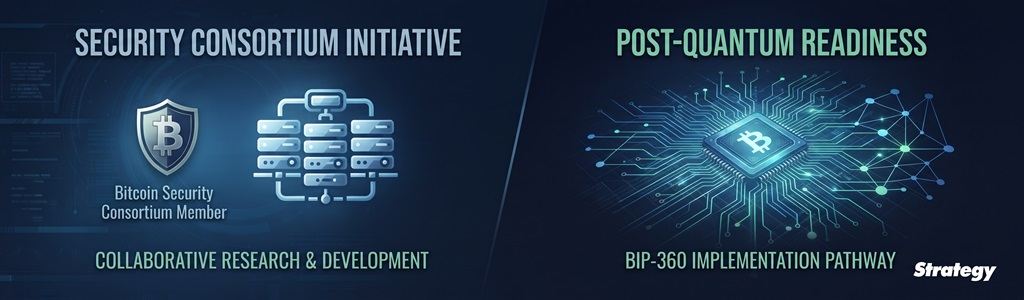
- Sector initiatives: The firm participates in the Bitcoin Security Consortium, a fifteen million dollar initiative focused on post-quantum research and the development of proposals such as BIP-360.
The cryptographic security of digital asset networks faces constant debate in the face of the technological development of advanced computational systems. Strategy, the largest corporate holder of Bitcoin globally, issued an official message to address the growing concern surrounding the potential threats of quantum computing.
Quantum-resistant upgrades can be adopted if and when they're needed. $BTC pic.twitter.com/HDAxKCwf4s
— Strategy (@Strategy) November 13, 2026
Quantum-resistant upgrades can be adopted if and when they're needed. $BTC pic.twitter.com/HDAxKCwf4s
— Strategy (@Strategy) November 13, 2026
The company co-founded by Michael Saylor publicly pointed out that the main network possesses the structural capacity to incorporate security modifications adapted to future scenarios. According to the institutional statement released by the firm, defense protocols against advanced quantum algorithms could be integrated at the moment the ecosystem deems it necessary.
The central debate revolves around the use of elliptic curve cryptography that protects current transactions within the decentralized network.
Technical Perspectives and Deployment Deadlines
Preliminary industry analyses suggest that equipment with sufficient quantum capacity could, in theory, deduce private keys from public keys exposed in previous blocks.
However, technical experts emphasize that there is currently no operational quantum computer capable of publicly compromising the network’s current cryptographic standards.
During his speech at the World Bank held in Washington, Michael Saylor explained that the network relies on defense mechanisms based on decentralized consensus and coordinated software updates.
According to the estimates presented by the executive during the October event, the technical process required to achieve global synchronization would take approximately ninety days. Despite the projected timelines, various sectors of technical development have expressed caution regarding the hasty implementation of new advanced cryptographic schemes.
Specialists point out that the rushed introduction of complex security layers could foster unforeseen operational vulnerabilities within the protocol’s base architecture.
Research Consortia and Improvement Proposals
As part of its long-term strategy, the financial entity has backed formal initiatives aimed at the research and development of technological safeguards. In July, the corporation was part of the initial group of seven financial institutions and sector companies that established the Bitcoin Security Consortium.
This interinstitutional body allocated a fund of fifteen million dollars with a three-year time horizon to research post-quantum cryptography and mitigate future risks. Simultaneously, independent protocol developers have advanced formal improvement proposals within the open-source ecosystem.
Among the prominent initiatives is Bitcoin Improvement Proposal number 360, known as BIP-360, aimed at introducing an innovative type of transaction output called Pay-to-Merkle-Root.
Sector evaluations indicate that the adoption of these measures will depend exclusively on the evolution of computational infrastructure and the coordination of validating nodes.
Peter Schiff Says Saylor’s STRC Is ‘Dead’ Despite 12% Yield
TL;DR: According to a market report, investor and Bitcoin critic Peter Schiff declared that Strategy’s STRC preferred stock product is “dead.” Company data reveals that
Saylor Highlights Bipartisan Bitcoin Support Following Key Election Wins
Michael Saylor stated this Wednesday that the outcome of the midterm elections in Florida and Texas demonstrates that support for strategic Bitcoin reserves transcends party
Michael Saylor Says Strategy Could Create Up to $30B in Digital Credit for Bitcoin Buys
TL;DR Michael Saylor said Strategy could create up to $30 billion in digital credit capacity without another common-stock raise or additional Bitcoin appreciation. Phong Le
Strategy Shareholders Approve Daily Payouts for 4 Preferred Stocks Tied to Its Bitcoin Strategy
TL;DR: 99.3% of the votes cast at the special meeting supported the amendment to accrue dividends every calendar day. The STRC preferred share will launch
Michael Saylor Fires Back at Critics Who Question Bitcoin’s Value
TL;DR: Michael Saylor, Executive Chairman of MicroStrategy, issued a direct response this October 27 against the narrative questioning the need to acquire Bitcoin. The critical
Saylor Sparks Bitcoin Speculation With Cryptic “Closed Doors” Post
Strategy’s Executive Chairman, Michael Saylor, raised alarms across the crypto market after posting an enigmatic message on his X account claiming to be “resolving some