The T3 Financial Crime Unit is gone. The crypto crime-fighting alliance that Tron, Tether and TRM Labs launched in September 2024 reportedly ended in late August 2026, and Silicon UK reported the shutdown this week. The timing comes from people familiar with the matter, not from a joint public announcement, which is why the story spent about two months out of sight.
For a unit that claimed more than $250 million in frozen illicit assets across five continents, the exit was quiet. Tron DAO confirmed the programme “has concluded,” Tether said it would keep working with TRM Labs, and nobody has published a post-mortem. The reporting lands in a month when exchange security is already under pressure, as our own coverage of the nation-state angle on the Binance hack shows.
This piece is filed under software because the people most exposed to the change are engineers. Wallet teams, exchange backends, payment startups and compliance-tooling vendors all wire freeze lists, address screening and law-enforcement requests into code. When a shared coordination layer disappears, somebody has to rewrite the integration assumptions. Below we separate what is confirmed from what is not, map the money and the players, and spell out what developers should do next.
Don't miss new tech stories on Google
Add Shattered once in the Google app and our stories show up in your news suggestions.
What Happened to the T3 Financial Crime Unit
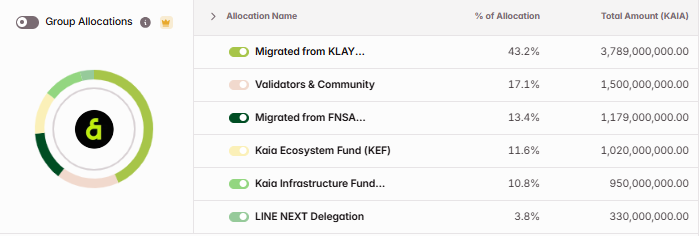
The facts available today are thin but consistent across outlets. The T3 Financial Crime Unit was set up in September 2024 by the Tron Decentralised Autonomous Organisation (Tron DAO), Tether and TRM Labs. About a year later Binance joined, and Binance described itself as the first member of T3+, the wider collaborator tier. By the time it ended, the initiative said it had frozen more than $250 million in illicit assets while working with law-enforcement agencies on five continents.
Reports say the alliance was terminated in late August 2026. Those reports attribute the timing to people familiar with the matter. The reasons cited in coverage include slow response times and poor coordination among members. Neither reason has been confirmed as an official explanation, and no member has put its name to a reason on the record.
The headline framing matters here. Silicon UK’s title says crypto players “shut down” an anti-crime programme, which suggests every participant pulled the plug together. The reporting does not support that reading. It confirms that the T3 programme concluded, but it also says Tether and TRM Labs plan to keep cooperating outside the T3 banner. Yahoo Finance UK carried a similar report framed around the alliance being scrapped as hackers circle, and other outlets picked up the story.
That gap between “the programme ended” and “the industry quit fighting crime” is the core of the story. A branded alliance with shared governance can end while the underlying work, freezing funds and passing intelligence to police, carries on through other channels. Whether those channels are as fast as T3 was supposed to be is the open question.
Timeline: September 2024 to the Late-August 2026 Exit
The sequence is short, and that is part of the story. A programme that took a year to attract its first exchange partner lasted roughly two years in total. The table below lists only the milestones that appear in the verified reporting.
Two details in that timeline deserve attention. First, the lag between the late-August termination and the early-November reporting means the industry operated for roughly two months without a public signal that the unit was dead. Second, the replacement is promised but unspecified. Tron DAO says more on its new initiative is coming soon, which tells readers a successor exists in some form and tells them nothing about its members or mechanics.
The $250 Million Claim in Context
The headline number attached to T3 is “more than $250 million” frozen worldwide. That figure comes from the initiative’s own materials, including the TRM Labs announcement that welcomed Binance, so it is a self-reported total. Some secondary coverage has carried different totals, and we have no way to reconcile them from the public record. We use the lower, initiative-stated figure and treat anything higher as unverified.
It helps to be precise about what “frozen” means. A freeze in this context stops tainted tokens from moving, typically because the stablecoin issuer or an exchange blocks the relevant addresses after a request from investigators or a flag from analytics firms. It does not return money to victims and it does not by itself produce prosecutions. Seizure, forfeiture and restitution happen in courts and usually take far longer.
We cannot size total stablecoin flows on Tron from the verified reporting, so we will not judge the figure against them. What the number does show is that a coordinated private-sector channel could freeze nine-figure sums when it worked. That is the capability the industry now has to rebuild or replace, and every month without a clear successor is a month where a fast-moving thief has slightly better odds.
The speed point is the one to remember. Freezes are a race. Stolen funds usually get split, bridged and swapped within hours, so a freeze mechanism that responds slowly loses most of its value. If the reports about slow response times are accurate, they describe a failure on the one metric that matters most.
Why Reports Blame Slow Response and Poor Coordination
Reports attribute the breakdown to slow response times and weak coordination among members. Again, no member has confirmed that on the record, so treat it as the working explanation of anonymous sources. Still, it fits how multi-party alliances fail in other industries. A unit that spans a blockchain foundation, a stablecoin issuer, a blockchain-intelligence firm and an exchange has four sets of legal teams, four escalation paths and four definitions of “urgent.”
Consider the mechanics of a single incident. An analytics firm spots suspicious movement. The issuer must decide whether to freeze. An exchange must decide whether to halt deposits. Law enforcement must confirm the case is real. If any hand-off waits on a person in a different time zone, hours pass. Engineers know this pattern from incident response, where mean time to acknowledge often matters more than mean time to resolve.
Where shared channels usually break
Shared alerting channels degrade when nobody owns the on-call rota, when alert volume outruns triage capacity, and when members disagree about thresholds. None of that is confirmed for T3. We raise it because it is the standard failure profile, and because the reported reasons (slow response, poor coordination) map onto it neatly. Readers should hold it as a hypothesis, not a finding.
What the Members Said
Public statements so far are brief. The most direct comes from a Tron DAO spokesperson, quoted by Briefs: “While the very successful T3 program has concluded, Tron remains committed to working to help stop illicit activities on the blockchain, in partnership with law enforcement.” The same spokesperson added that more on the new initiative “will be coming soon.” The wording calls T3 successful and ends it in the same breath.
Tether and TRM Labs
A Tether spokesperson said the company would “continue to work with TRM to disrupt and interdict illicit funds.” Tether also said it is participating in the Beacon Network, a real-time intelligence-sharing initiative founded by TRM Labs. That detail is the clearest sign that the working relationship between the issuer and the analytics firm survives the T3 shutdown.
The founding documents give useful contrast. At launch, Tether, Tron and TRM Labs said that “T3 was designed to create a safer and more secure industry, with the goal of making it more difficult for criminals to exploit digital assets,” according to the original Tether announcement. The same announcement described the unit as “a first-of-its-kind initiative aimed at facilitating public-private collaboration to combat illicit activity associated with the use of USDT on the TRON blockchain.”
When Binance joined, TRM Labs described the next phase in its own post on the T3 collaborator programme. It said that through T3+, the unit would “work more closely with exchanges, financial institutions, and other stakeholders to improve monitoring capabilities, speed communications and collaboration, and multiply the ability to address illicit activity more effectively across the entire blockchain industry.” The same post noted that since its inception in September 2024, the unit had worked closely with law enforcement agencies worldwide.
Read side by side, the promises are striking. T3+ was supposed to speed communications. Reports now say speed and coordination were the weak points. We cannot prove cause and effect, but the distance between the stated design goal and the reported failure is the sharpest editorial observation in this story.
Binance, T3+ and the Exchange Question
Binance’s role is the part of the story most likely to draw follow-up. The exchange joined roughly a year after launch and positioned itself as the first member of T3+. Trade outlets such as Crypto Briefing have folded Binance into their headlines about the disbanding. What the verified sheet does not contain is any Binance statement on the closure, so we make no claim about its view or its next step.
Exchanges sit at the choke point in any freeze regime. Tokens that never reach a centralised venue are hard to stop, while tokens that do reach one can be halted if the venue acts quickly. That makes exchange participation the highest-value part of an alliance like T3+, and it makes the loss of a shared channel with an exchange of Binance’s size a real operational cost, even if bilateral channels remain.
The timing also sits awkwardly against recent events. Our reporting on the exchange’s recent troubles, including the fake coding tests behind the reported $6.3B Binance theft, shows how much of the current threat landscape targets engineers directly. A coordination layer for stopping stolen funds is only one half of the defence. The other half is keeping attackers out of developer machines in the first place.
Beacon Network, T3 and Tron’s Next Initiative Compared
Three structures now matter. The first is the departed T3 unit. The second is the Beacon Network, which Tether says it is part of. The third is the unnamed Tron DAO successor. The table compares them using only what has been disclosed, and it marks every gap as a gap.
The comparison shows an asymmetry. T3 had a public scoreboard and public branding. Beacon Network, on the verified record, has a description and a participant. The Tron successor has a promise. If you are a compliance lead choosing where to plug in, only one of those three has a track record, and it just ended.
Why Developers Should Care
Most engineers will never join an industry alliance. They do, however, ship the code that consumes its output. Freeze lists, sanctions lists and address-risk scores arrive through vendor APIs, and applications decide whether to allow a deposit, hold a withdrawal or flag a transfer based on them. When the organisational layer behind those feeds changes, the data can change too, in coverage, latency or format.
We have no evidence that any vendor feed degraded because of the T3 shutdown. The concern is forward-looking. Teams that treated “T3-backed” as a trust signal in vendor due diligence should re-check what that claim now means. Teams that built around a single screening provider should ask whether a second source is worth the cost. The wider software coverage on shattered.io follows these tooling shifts as they surface.
Screening checks belong in the pipeline
Address screening is easiest to maintain when it behaves like any other automated check. Run it on pull requests that touch payment or wallet logic, fail loudly on configuration drift, and log every provider response. Our walkthrough of AI code review on GitHub Actions shows the CI pattern, and the same structure works for compliance gates.
A provider-agnostic screening sketch
The snippet below is illustrative. It is not any vendor’s real API. It shows how to hide providers behind one interface so that swapping a feed after an industry shake-up does not mean rewriting business logic.
Two design choices carry the weight. The function fails closed, so an outage at one provider holds a transfer instead of waving it through. And it accepts a list, so adding a second feed is a one-line change. If the industry spends the next few months reshuffling who shares what with whom, that flexibility costs almost nothing and pays off quickly.
Market Impact: Stablecoin Rails and Compliance Costs
No price data ties the T3 news to any token move, and we will not manufacture one. The market impact is structural. Stablecoin issuers and chains compete partly on trust, and a visible crime-fighting alliance was a marketing asset as well as a security tool. Losing the brand without a replacement leaves a gap that competing chains and issuers can point to in sales conversations.
Compliance vendors face the opposite effect. Fragmented coordination tends to raise demand for tools that stitch sources together, because customers want evidence they are not relying on one pipe. Analytics firms with their own information-sharing networks, such as TRM Labs with Beacon Network, are positioned to absorb some of the demand T3 would have covered. That is an inference from the structure, not a reported fact.
Infrastructure design faces the same pressure. As we noted when LayerZero dropped sole-verifier setups after the $292M loss, single points of trust are the weak joints in crypto systems. A shared coordination layer is one of those joints. When it breaks, the lesson is the same one infrastructure teams keep relearning: build redundancy before the incident, not after.
Historical Context: Private Freeze Power Before and After T3
Before T3, freeze actions mostly ran through bilateral relationships. An issuer such as Tether would respond to a law-enforcement request or an exchange’s tip, and an analytics firm would trace flows for investigators. The T3 pitch, laid out in the September 2024 announcement, was to formalise that into a standing unit with shared tooling. Two years later the formal structure is gone and the bilateral relationships remain.
Recent incidents show those bilateral freezes still happen. We covered how Tether froze $4.5M in the Mercado Bitcoin incident, which is a reminder that issuer-level action does not depend on any alliance brand. What an alliance adds is speed through pre-agreed process, and that is exactly what reports say was missing.
The broader pattern is familiar from other sectors. Industry bodies form after a high-profile problem, grow quickly, then struggle once the novelty fades and the members’ interests diverge. T3’s lifespan fits that arc, though we stress again that the reasons for its end are reported, not officially stated.
What Is Confirmed and What Is Not
Headlines blur certainty, so here is the ledger. We sort each claim by how strong the evidence is today.
The two unconfirmed rows are the ones to watch. If an official reason emerges, it will tell the industry whether the failure was technical, legal or political. If the joint-shutdown framing is wrong, as the reporting suggests, then the real story is a split in which some members keep a working relationship and others exit it.
Five Predictions for the Next Six Months
These are our analysis, not reported facts. We have kept them directional and avoided invented figures.
- Tron DAO names its successor initiative. The spokesperson said more is coming soon. Expect a named programme with at least one law-enforcement partner in its launch materials.
- Beacon Network becomes the visible hub. With Tether already participating, TRM Labs has the strongest position to absorb the coordination role T3 played.
- Vendor due diligence changes. Compliance buyers will start asking whether a provider’s information-sharing arrangements still exist, and “T3-backed” will fade from sales decks.
- An official explanation, or a leak of one, surfaces. Two months of silence rarely lasts. A member or a regulator will say more about why response times lagged.
- Exchanges favour bilateral channels in the interim. Until a new multi-party structure appears, large venues will lean on direct contacts with issuers and analytics firms.
The common thread is that coordination does not vanish. It moves. The open issue is whether it moves to a structure with clear ownership and measurable response times, or to a patchwork that repeats T3’s reported problems under a new name.
What Engineering Teams Should Do This Quarter
Start with an inventory. List every place your product consumes a freeze list, risk score or law-enforcement feed, and record which vendor supplies it and what that vendor says about its sharing arrangements. Ask each vendor in writing whether the T3 shutdown changes data coverage or latency. Written answers become useful evidence if an auditor asks later.
Next, test your response time. Simulate a freeze request and time how long it takes to reach the person or service that can block an address in your system. If the answer is hours, you have your own coordination problem, whatever the industry does. Finally, add a second screening source behind the interface pattern above. The cost is small and the benefit shows up the first time a provider has an outage or a coverage gap.
FAQ: The T3 Financial Crime Unit Shutdown
What was the T3 Financial Crime Unit?
It was a private-sector unit created in September 2024 by Tron DAO, Tether and TRM Labs to combat illicit activity tied to USDT on the Tron blockchain. Binance later joined as the first member of the T3+ tier.
When did the T3 Financial Crime Unit end?
Reports say the alliance was terminated in late August 2026. The timing was attributed to people familiar with the matter, and no joint public announcement has been published.
Why did the alliance end?
Reports cite slow response times and poor coordination among members. No member has confirmed either as an official reason, so treat both as unconfirmed.
How much did T3 freeze?
The initiative said it had frozen more than $250 million in illicit assets worldwide, working with law-enforcement agencies across five continents. That is a self-reported figure.
Did every crypto company shut the programme down together?
That is not confirmed. Tron DAO says the T3 programme concluded, but Tether says it will keep working with TRM Labs to disrupt and interdict illicit funds, including through the Beacon Network.
What is the Beacon Network?
Tether describes it as a real-time intelligence-sharing initiative founded by TRM Labs, and said it is participating. Further details were not part of the verified reporting.
What comes next from Tron?
A Tron DAO spokesperson said the organisation remains committed to stopping illicit activity in partnership with law enforcement and that more on a new initiative will come soon. No members, scope or dates have been disclosed.
Does this affect developers who use screening APIs?
There is no evidence yet that vendor feeds changed because of the shutdown. Teams should still confirm coverage with their providers and consider a second screening source that fails closed.
Dr. Elena Marchetti writes about cryptography and the math that underpins it: hash functions, collision attacks, and why algorithms age out of trust. She has a research background in applied cryptography and tests a claim before explaining it.