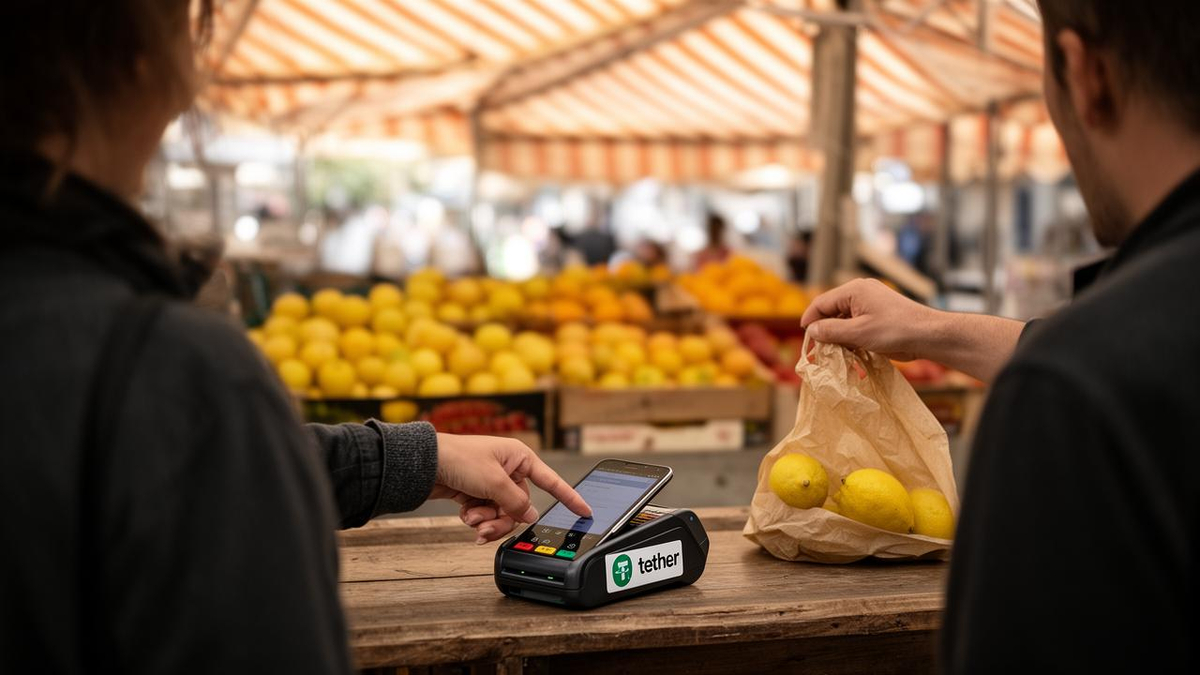
Stablecoin issuer Tether is putting $14.5 million into Argentine fintech platform Lemon, stepping up its push into the Latin American market. The move is aimed at extending its dollar-pegged USDT stablecoin and gold-linked XAUT token into everyday payments and remittances.
Lemon founder and CEO Marcelo Cavazzoli confirmed the investment size to local media. Of the total, $5 million will go toward acquiring a stake in Lemon, while the remaining $9.5 million is earmarked for an incentive program targeting products the two companies will develop jointly. Tether officially announced the partnership on the 25th (local time) but did not disclose specific investment terms, nor did it reveal Lemon's valuation or the size of the stake secured for $5 million.
The deal extends a string of Tether bets on Latin American fintech ecosystems. In July it invested $20 million in Brazilian crypto exchange Mercado Bitcoin, and it reportedly put $15 million into Brazilian dollar-account service provider Nomad. It has also reached into Bolivian fintech Pesos and institutional payments platform EFY Finance, among others. The Lemon deal differs from those earlier investments in that equity accounts for only about a third of the total, with the remainder tied to product launch performance.
Lemon is a financial platform that handles savings, stock investing and international remittances in a single app, with 4.5 million verified users. Users hold a single "digital dollar" balance backed by USDT, while currency conversion and blockchain network processing are handled automatically by the platform. The app allows users to buy XAUT in small increments, and in some markets payments can be made with a Visa prepaid card.
"The USDT is no longer just a way to protect assets in Argentina and across Latin America," Tether CEO Paolo Ardoino said. "It is actively used to receive salaries, spend and send money across borders." He added that "digital dollars and digital gold through XAUT are becoming part of everyday finance in the region." Cavazzoli stressed that "users don't want to choose among multiple currencies — they want one currency that works for everything."
Behind the deal lie Argentina's structural currency instability and inflation. According to Chainalysis's 2026 regional report, Argentina's crypto transaction volume rose 15.3% year over year to $88.5 billion in the 12 months from July 2025 to June 2026, making it the second-largest market in Latin America after Brazil.
Note: Based on Chainalysis's 2026 regional report
The market reads the investment as a signal that stablecoin issuers are diversifying their revenue structures. Tether has relied heavily on interest income from the assets backing USDT; by planting capital in retail financial channels like Lemon, it can secure new revenue streams from payment and remittance fees and from distribution of its gold token. In XAUT's case, the range of uses is widening after institutional investors recently gained a path to borrow against their holdings. If Latin American fintechs establish themselves as conduits for absorbing demand for dollar-denominated assets, Tether's regional position is expected to become even more entrenched.
Once added, BigGo Finance appears first in Google Search Top Stories, so you get the broadest, most up-to-the-minute, and most comprehensive global financial news first.