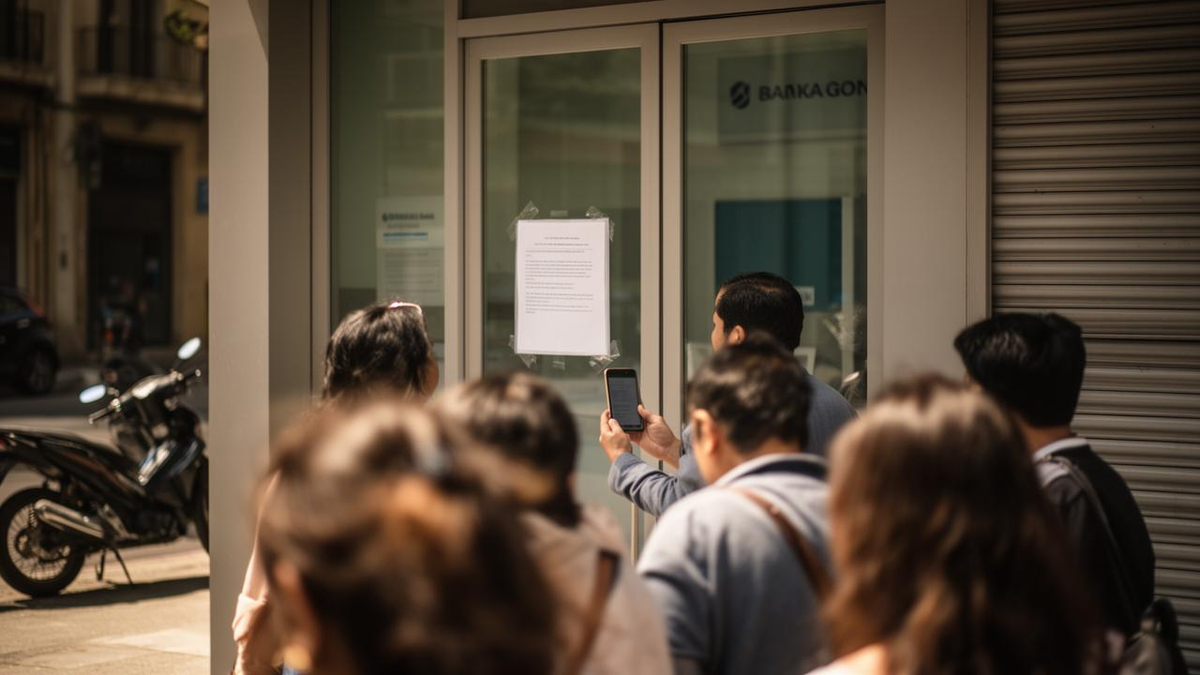
Tether chief executive Paolo Ardoino is describing the rush into his company's dollar-pegged stablecoin in Paraguay as a "flight to safety," after the collapse of digital lender Ueno Bank left an estimated 3 million customers locked out of their accounts.
The token climbed from roughly 5,692 guaranies on Oct. 15 to more than 6,000 guaranies by Nov. 4, a gain of over 5%, according to tracking cited by Bitcoin advocate Samson Mow. The U.S. dollar also strengthened against the guaraní, a move that pulled capital out of the local currency and into dollar-linked alternatives.
Note: Figures cited by Samson Mow.
The trouble surfaced when the Central Bank of Paraguay found that Ueno Bank's solvency ratio had dropped to less than half the required minimum. The regulator opened resolution proceedings on Nov. 3, effectively suspending operations and temporarily cutting depositors off from their savings and routine banking services.
Ueno Bank was one of the country's largest digital lenders, with a customer base spanning a large share of Paraguay's adult population. The institution also held hundreds of millions of dollars tied to the national social security system, putting public money in the spotlight alongside private deposits.
Eight people linked to the bank have been detained, and central bank president Carlos Carvallo has resigned. Officials have stressed that the problems are confined to Ueno Bank and do not point to a broader breakdown in the country's banking sector.
Ardoino's comments frame the stablecoin demand as a vote of no confidence in local deposit institutions rather than a bet on crypto prices. Tether's token is designed to hold a 1-to-1 peg with the dollar, making it a common refuge when domestic currencies and banks come under strain.
One limit on the shift: account holders whose balances are frozen at Ueno Bank cannot move or convert their money into stablecoins until authorities lift the restrictions. That means the guaraní-denominated demand captured in the price data reflects savers who still have access to funds elsewhere, not the bank's trapped depositors.
For Tether, the episode offers a real-world test of its pitch as a crisis hedge in emerging markets, a narrative the company has leaned on as it expands beyond trading into payments and remittances. For Paraguay, the test runs the other way: whether official assurances that the damage is contained will be enough to keep confidence in the banking system from eroding further, and whether dollar-linked assets keep drawing savings away from the guaraní.