- Third Point acquired a 54,000-share stake in Core Scientific valued at $1.38 million in Q2
- Core Scientific plans to exit Bitcoin mining entirely by year-end 2026 to focus on AI data centers
- Q3 colocation revenue rose nearly 60% sequentially to $215 million; adjusted EBITDA tripled to $134 million
- Combined contracted capacity with CoreWeave and AMD exceeds 1.1 gigawatts
- Stock trails peer group average by 20.66 percentage points over the past year
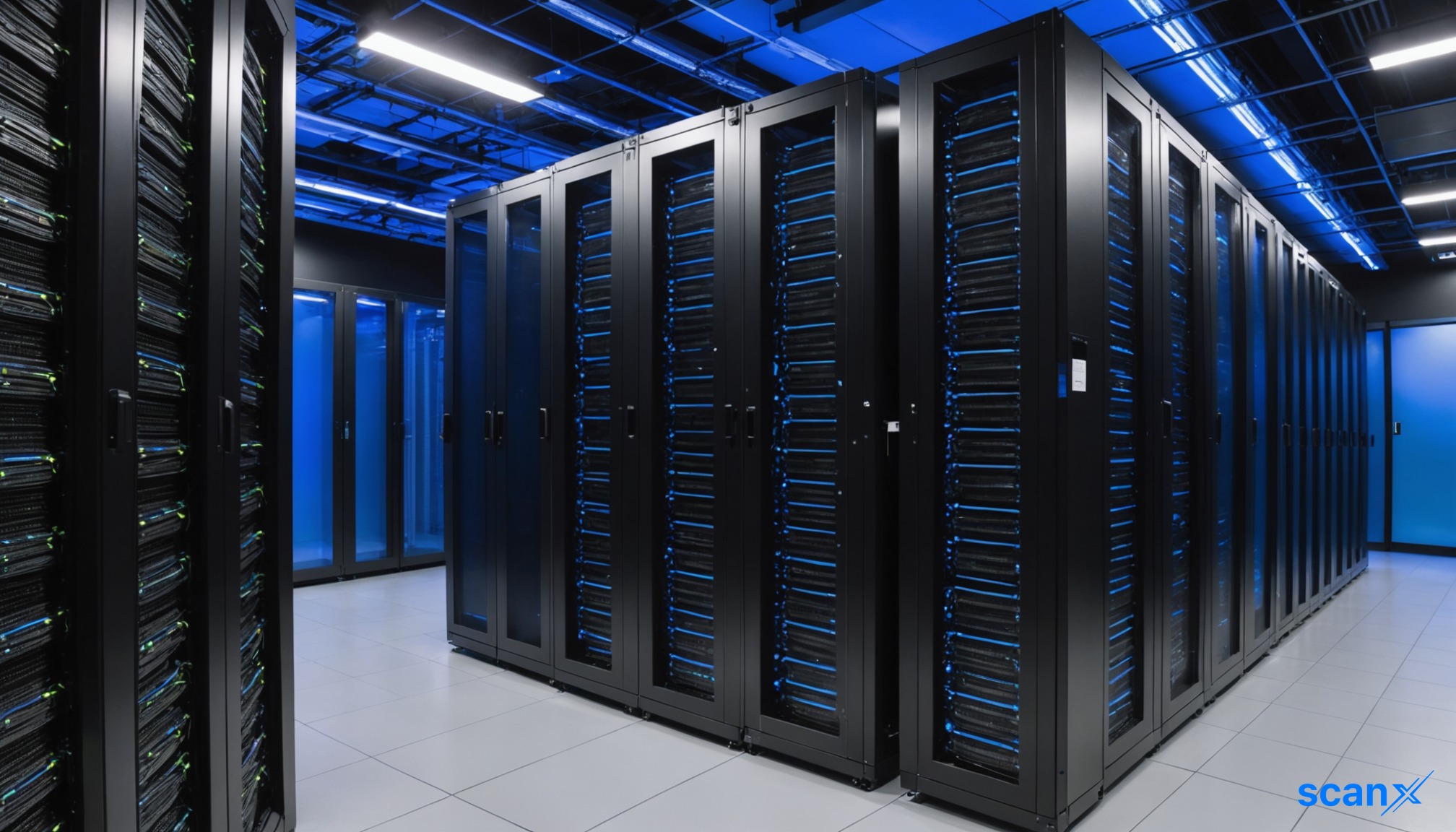
*this image is generated using AI for illustrative purposes only.
Core Scientific, Inc. saw a new institutional entry as Dan Loeb’s Third Point acquired a 54,000-share stake valued at approximately $1.38 million as of June 30, according to the hedge fund’s August 13F filing. This position was established during the second quarter, ahead of the company’s strategic shift away from cryptocurrency mining.
Strategic pivot to AI infrastructure
Core Scientific is accelerating its transition from Bitcoin mining to high-performance computing. The company disclosed plans to exit Bitcoin mining entirely by year-end 2026, aiming to operate as a pure-play provider for AI and high-performance computing workloads by 2027. By the end of September 2026, Bitcoin mining operations were reduced by nearly 50% compared with year-end 2025 levels.
Financial performance reflects this transition. Third-quarter 2026 colocation revenue reached $215 million, an increase of nearly 60% sequentially. Adjusted EBITDA more than tripled to $134 million from $41 million, driven by 90 megawatts of additional billable capacity. Management expects fourth-quarter revenue to grow by double digits sequentially as further capacity comes online.
Major capacity commitments
The company has secured significant long-term contracts to support its new business model:
- CoreWeave, Inc.: Contracted for 590 megawatts of colocation capacity. Currently billing for 485 megawatts across five completed campuses, up from 120 megawatts at the start of 2026.
- Advanced Micro Devices, Inc.: Signed a contract for 530 megawatts across five campuses. First capacity delivery is expected in the first half of 2027, with half the contracted capacity scheduled for 2027 and the remainder for 2028.
Combined commitments from CoreWeave and AMD exceed 1.1 gigawatts. Additionally, Core Scientific has secured another 385 megawatts of grid-connected power capacity expected by mid-2028 and is exploring on-site power generation at Pecos via a planned 10.6-mile natural gas pipeline.
What the Numbers Show
The divergence between Core Scientific’s operational metrics and its stock performance highlights a disconnect between fundamental execution and market sentiment. While adjusted EBITDA tripled sequentially and colocation revenue grew nearly 60%, the stock fell 34.60% over the past year, trailing its peer group average of -13.95% by 20.66 percentage points. This suggests that despite strong order inflows exceeding 1.1 gigawatts and rapid capacity conversion, the market remains focused on the transitional risks of exiting a legacy business model before the full revenue impact of the AI pivot is realized.
Market context and peer comparison
Core Scientific’s relative strength on Tuesday, where it declined 1.1% against a 1.8% drop in the State Street Technology Select Sector SPDR ETF (XLK), occurred within a broader sector weakness. The Technology sector is down 14.41% over the past 30 days. Within a curated peer group including D-Wave Quantum, Workiva, CCC Intelligent Solutions, Q2 Holdings, and BILL Holdings, Core Scientific was the second-worst performer, ahead only of D-Wave Quantum (-65.19%).
The stock carries notable weight in thematic ETFs, including the Schwab Crypto Thematic Natural Language Processing ETF (4.02%) and the Grayscale AI Compute ETF (4.69%), meaning ETF flows may influence trading volume.
Historical Stock Returns for Core Scientific
How will the delayed revenue recognition from AMD's 2027-2028 capacity deliveries impact Core Scientific's near-term cash flow needs and potential dilution?
What are the regulatory or environmental hurdles associated with the planned 10.6-mile natural gas pipeline at Pecos, and could they delay the 385 MW capacity expansion?
Given the 34% stock decline despite tripling EBITDA, what specific valuation metrics is the market prioritizing, and when might the AI pivot fully re-rate the stock?