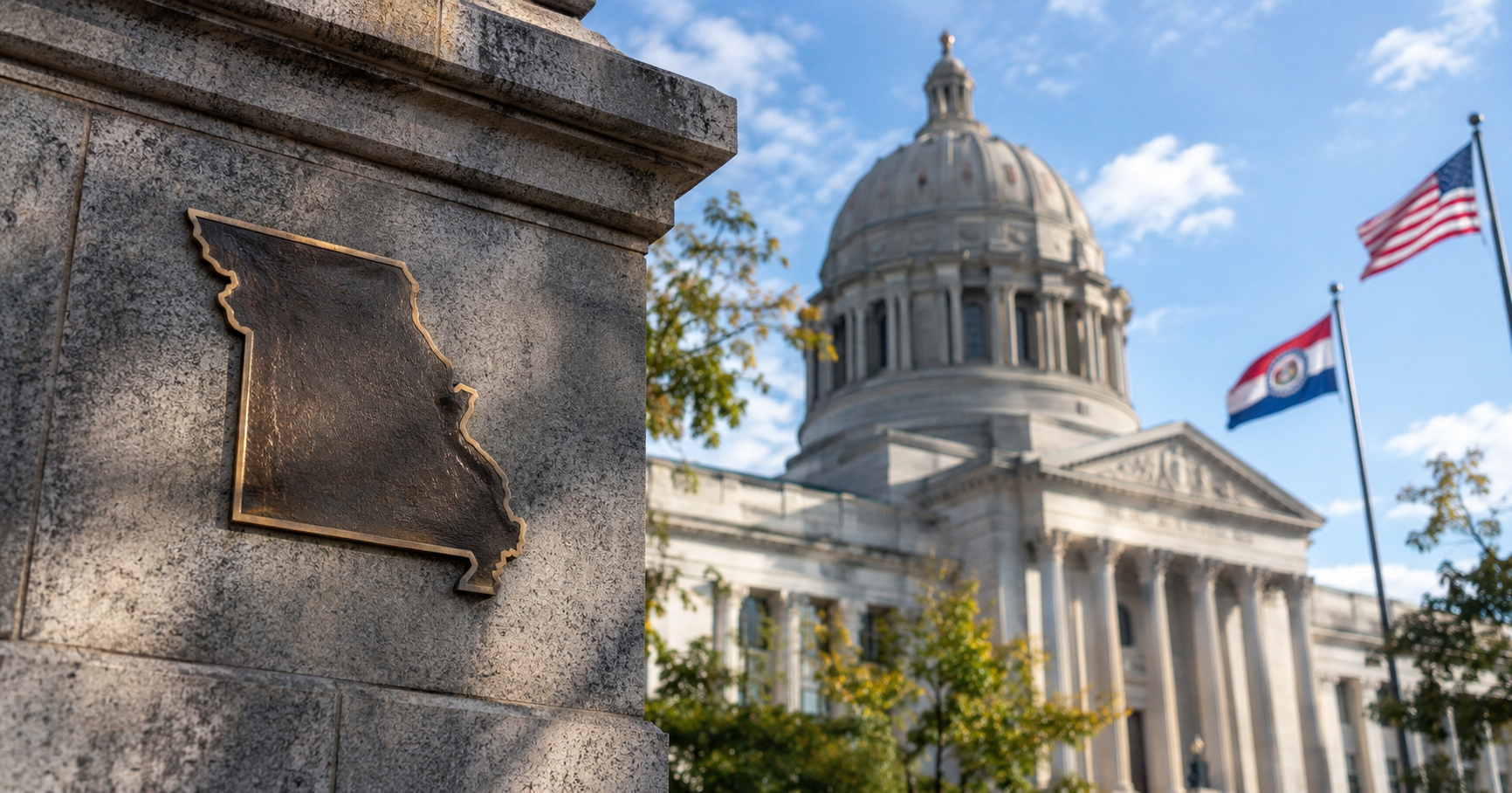
All six prediction market operators targeted by Missouri’s September cease-and-desist campaign have now challenged the state in federal court.
Polymarket US and Robinhood filed lawsuits Monday, following Underdog’s challenge filed Sunday. They join Crypto.com’s exchange, Novig and Kalshi, which sued earlier this fall, arguing that Missouri cannot apply its gambling laws to federally regulated sports event contracts.
Missouri is also going on offense. Attorney General Catherine Hanaway filed counterclaims against Novig Monday, seeking to stop payments connected to its sports wagering business, recover money and impose civil penalties. Those are allegations and requested remedies, not a court-ordered shutdown or an award.
The filings turn a six-company warning into a six-operator litigation campaign, with the state now pursuing enforcement within one of the exchanges’ own federal cases.
New enforcement warnings prompted the latest suits
Robinhood’s complaint followed a warning last week from Missouri’s solicitor general that officials intended to seek a court order compelling compliance within three days.
Underdog alleges it received a similar warning of imminent enforcement. Its lawyers argue that the company faces a choice between suspending Missouri operations and risking civil penalties or criminal liability. The company seeks a preliminary injunction blocking enforcement against its federally regulated markets.
Underdog faces an additional commercial wrinkle: it previously planned to enter Missouri’s regulated sportsbook market through a Kansas City Royals partnership, then withdrew its license before launch to focus on prediction markets.
The company is now asking a federal court to protect the alternative business model from the same state licensing framework it once planned to enter.
Polymarket adds a constitutional argument
Polymarket US’s case goes beyond the industry’s familiar federal-preemption defense.
Like its October challenge in Ohio, the Missouri lawsuit argues that the state’s sports wagering framework unlawfully restricts interstate commerce. The exchange objects to requirements that would force its national business into an in-state operating model, including geographic restrictions and local infrastructure requirements.
Its position is that Missouri cannot impose that framework on a federally regulated exchange or require it to fragment trading along state lines. Those constitutional claims remain untested in the new case.
Robinhood’s complaint centers on federal preemption: it argues that the Commodity Exchange Act and Commodity Futures Trading Commission authority prevent Missouri from treating its sports contracts as state-regulated wagers.
Missouri seeks an injunction and penalties against Novig
Hanaway’s counterclaims make the Novig case more than an operator's effort to block a threatened action.
Missouri alleges violations of the federal Unlawful Internet Gambling Enforcement Act, the Missouri Merchandising Practices Act and state public-nuisance law. It seeks an injunction barring Novig from accepting payments connected to sports wagering, restitution and civil penalties of up to $1,000 per violation. It also asks the court to declare the operation a public nuisance.
Novig, which filed its challenge Oct. 16, argues that its sports contracts are swaps under federal commodities law and that its exchange model does not fit a licensing system designed for house-banked sportsbooks.
The state disputes that classification. Its September announcement expressly rejected the argument that the contracts qualify as federally protected swaps.
The dispute began with six September letters
Hanaway announced the cease-and-desist campaign Sept. 18.
The letters told Polymarket, Kalshi, Crypto.com, Novig, Underdog and Robinhood to stop offering sports event contracts unless they obtained Missouri authorization and complied with state tax and age requirements. The companies were given 30 days to confirm compliance.
“Companies cannot repackage sports bets as ‘event contracts’ to avoid Missouri law,” Hanaway said. “We will enforce the rules voters approved and protect consumers.”
Her office also alleged that five recipients permitted access by users under 21 or lacked adequate safeguards to prevent it. Novig was the exception to that specific allegation.
Missouri is not attempting to prohibit all sports wagering. Its regulated market opened December 1, 2025, following voter approval in 2024. The disagreement is over whether these operators must participate in that state system.
Nor are the two awarded untethered mobile licenses the entire available framework. Missouri permits up to 14 mobile licenses, including casino-company and professional sports team pathways. The exhaustion of the two independent slots does not, by itself, establish that every licensing route is unavailable.
The Eighth Circuit is already considering the central question
The Missouri cases sit within the Eighth Circuit Court of Appeals, where Kalshi’s Iowa appeal already raises the federal-versus-state jurisdictional dispute.
Kalshi’s opening brief and appendix in that appeal are due Dec. 7. A ruling could influence the Missouri cases, but the appeal has not automatically protected other operators or resolved their additional constitutional claims.
Elsewhere, appellate outcomes remain divided. The Third Circuit sided with Kalshi in New Jersey, while the Ninth Circuit ruled against it in Nevada and denied rehearing last week. The Sixth Circuit rejected preliminary protection in the linked Ohio and Tennessee disputes.
The CFTC is also pressing its own national-access position. Its recent interpretation gives exchanges 30 days to cease domestic geographic restrictions that violate impartial-access requirements or explain why compliance is not feasible.
That leaves operators facing competing demands: Missouri says it needs state authorization to continue sports trading, while the federal regulator says geographic exclusions can conflict with its federal obligations.