Which topics should we dive deeper into?
Select what genuinely interests you. Your picks feed directly into our editorial planning.
Crypto news that's actually worth your time.
Weekly. 60 seconds. Carefully curated by our editors: no hype, no promo flood, no spam.
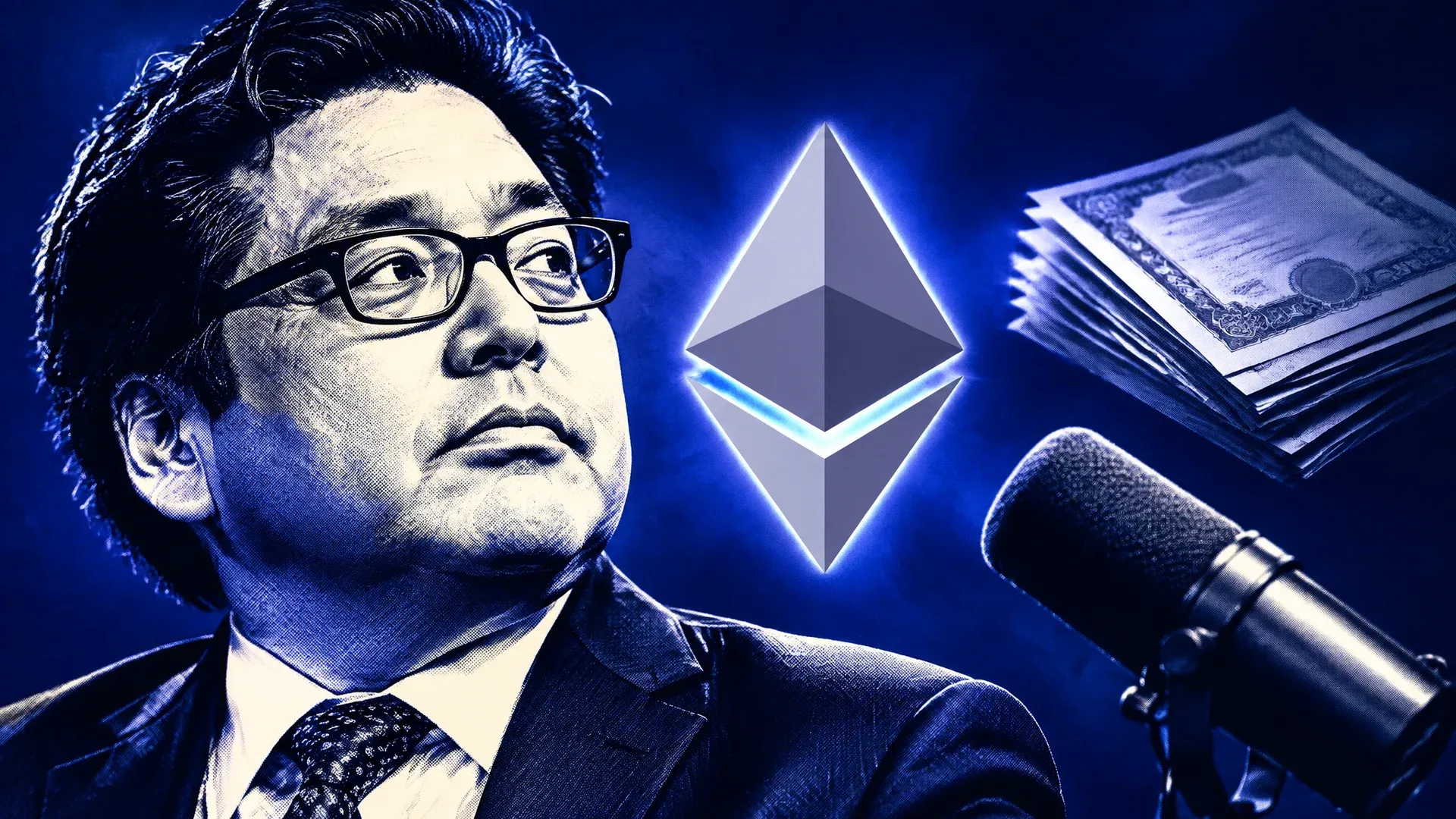
Tom Lee is co-founder and head of research at the US research firm Fundstrat and, since the end of June 2025, chairman of BitMine Immersion Technologies, the listed company with the largest ether holdings in the world. According to BitMine, it held exactly 6,070,092 ETH on November 8, 2026, or 4.97 percent of all ether in circulation. Anyone searching for "Tom Lee Ethereum" therefore almost always ends up with the same question: how did a Wall Street equity strategist turn a former bitcoin mining company into one of the largest single holders of Ethereum, and what does that mean for you as an investor?
The short answer: BitMine keeps issuing new shares, uses the proceeds to buy ether and stakes most of it. The stock thus becomes a leveraged proxy for ETH. Whether this detour makes sense for you, or whether you would rather hold ether directly on a regulated crypto exchange, depends on cost and risk. That is exactly what this article sets out.
Tom Lee: from JPMorgan strategist to Fundstrat founder
Before going independent, Thomas "Tom" Lee was chief equity strategist at the US bank JPMorgan. In 2014 he and partners founded Fundstrat Global Advisors, an independent research house that mainly supplies institutional clients with market analysis. Outside the US, Lee became known less for his equity outlooks than for his early and outspoken bitcoin calls on US television.
An equity strategist is an analyst who does not value individual companies but forecasts the overall market and the weighting of sectors. That role still shapes Lee's view of crypto today: he argues with capital flows, interest rate cycles and the question of which asset class institutions will discover next. According to the company, he is also a private investor in BitMine.
Why Lee's word carries weight in the crypto market
Lee has access to the major US financial networks and to fund managers. When he puts forward a thesis, news agencies, trade media and social networks quote it within hours. That gives BitMine a reach that smaller treasury companies lack and explains part of the attention the stock receives. It does not mean his price targets come true, though. More on that below.
BitMine Immersion: from bitcoin miner to Ethereum treasury company
BitMine Immersion Technologies is based in Norwalk, Connecticut, and is listed on the New York Stock Exchange under the ticker BMNR. The company originally mined bitcoin using immersion cooling, a process in which the machines are submerged in a non-conductive liquid so they run cooler and can be packed more densely. Until June 2025, BitMine held bitcoin in its reserves, around 154 BTC according to BitcoinTreasuries.
The change of course came on June 30, 2025. BitMine announced a $250 million private placement: just over 55 million new shares at $4.50 each, with investors including Founders Fund, Pantera, Galaxy Digital and Kraken. The proceeds went into an Ethereum treasury, a corporate reserve that consists mainly of ether. On the same day Tom Lee became chairman of the board. According to Decrypt, the stock rose more than 400 percent that Monday.
The mining business continues but has become a sideline. BitMine now describes itself as an infrastructure company for institutional staking, bitcoin mining and strategic digital asset management. Besides ether, the company held 216 bitcoin on November 8, stakes in Beast Industries and Eightco, and $475 million in cash and securities.
The "Alchemy of 5%": BitMine's goal of five percent of all ether
As early as July 2025, BitMine presented an investor deck titled "The Alchemy of 5%". The goal: to own up to five percent of the entire ether supply. With a circulating supply of 122.2 million ETH, the figure BitMine uses in its latest release, that equals just over 6.1 million ether. With 6,070,092 ETH, the company sees itself 99 percent of the way there, after just under 15 months.
Lee openly compares the approach with Michael Saylor, whose Strategy provided the template for bitcoin treasury companies (we summarized Saylor's 21 rules of bitcoin here). The difference: according to BitMine, Strategy holds 849,327 BTC and is the largest crypto treasury of all, while BitMine ranks second and is the largest for ether. BitMine says it has bought ether every week since June 30, 2025, for example 9,587 ETH in the first week of November 2026.
What happens once five percent is reached?
The mark is not a hard limit. Lee has reportedly said several times that BitMine could keep buying beyond it. In October the company already slowed the pace of its ether purchases and put more money into its own shares, as our report of October 8 on the buying cap at five percent shows. The closer the target gets, the more important the question of how BitMine will create value for its shareholders in future.
6,070,092 ETH on the books: how BitMine funds its purchases with stock
The basic principle is simple. If BitMine shares trade above the value of the ether per share, the company issues new shares and uses the money to buy more ether. This raises the number of ETH per share, even though more shares are outstanding. Lee and chief executive Jonathan Bates have named exactly this metric, ether per share, as the target from the start. According to reports, BitMine relies mainly on share sales and avoids debt.
This capital raise above net asset value works only as long as investors are willing to pay more for the stock than for the ether inside it. They do so when they expect BitMine to grow, for example through staking income or further cheap purchases. If sentiment turns, the mechanism breaks. Every new share then becomes dilution, a reduction in the share of the ether holdings that each existing share represents.
Since June 26, 2026, BitMine has been included in the Russell 1000, the US index of large companies. A Series A preferred share also trades on the NYSE under the ticker BMNP. Both widen the pool of potential buyers: index funds have to hold the stock, and preferred shares appeal to investors looking for a fixed payout.
mNAV below 1: why BitMine is buying back its own shares
The key metric for any treasury company is the mNAV. The abbreviation stands for "multiple of net asset value" and describes the ratio of market capitalization to net asset value, that is, the value of all crypto assets and liquid funds minus debt. An mNAV of 1.5 means investors pay $1.50 of share value for one dollar of ether. An mNAV below 1 means the stock is cheaper than the ether it contains.
Exactly that happened several times in 2026. The trade outlet The Block reported that BitMine's mNAV fell below 1 during a weak market phase. In such a phase a capital raise no longer pays off, but a share buyback does: buying back your own shares below asset value raises the ether per remaining share. BitMine has done this on a large scale. According to a Decrypt report of October 26, the company had by then bought back 22.9 million of its own shares in 2026 for about $399.6 million. Lee called it the largest buyback ever carried out by a crypto treasury company.
For you as an observer, the mNAV is the most honest sentiment gauge. If it is clearly above 1, the market is betting on further growth. If it is below, you pay less for the stock than for its contents, but you also carry the company risk: management decisions, costs, legal risks in the US and the question of whether the buyback can be sustained.
Staking through MAVAN: 5.2 million ETH earn a yield
Unlike bitcoin, ether can be used to secure the network. In staking, validators deposit ether as collateral, confirm transactions and receive new ETH plus a share of the fees in return. A validator is the node that does this work. In 2026 BitMine launched its own platform for it: MAVAN, short for "Made in America Validator Network".
On November 8, according to the company, 5,227,037 ETH were staked, around 86 percent of the holdings. BitMine put the staking yield of the past seven days at 2.65 percent per year. On that basis the company expects annual income of around $309 million, or $359 million if the entire holding were staked. These projections depend on the ether price, which BitMine set at $2,234, and on the yield, which fluctuates with the total amount of ETH staked in the network.
Staking income is the argument Lee uses to set BitMine apart from a mere box of ether: the company is meant to generate ongoing revenue that justifies a valuation above asset value. Private investors can use the same mechanism directly. Our comparison of staking platforms shows which providers offer ether staking and how much of the yield they keep.
Buterin's store-of-value thesis and Tom Lee's "supercycle" for Ethereum
The latest justification for Lee's optimism comes from Ethereum's founder himself. At Devcon 8 in Mumbai, Vitalik Buterin said, according to a BitMine release: "I've finally made up my mind, ETH is a store of value, ETH is money." In the release of November 9, Lee called this a "seismic shift". A store of value is an asset that preserves purchasing power over a long period, as investors believe gold or bitcoin do.
Lee links this to his thesis of a "supercycle" driven by tokenization and artificial intelligence. Tokenization means representing traditional assets such as bonds, funds or stocks as tokens on a blockchain. Lee's argument: most financial institutions choose Ethereum as their base layer, and ether becomes the trusted collateral of the system. We assessed what this debate means for the price in our article on Buterin's store-of-value statement of November 10.
The opposing view belongs in the picture too. Critics argue that fee burning, on which the store-of-value thesis long rested, has weakened since many transactions moved to layer-2 networks. According to BitMine, Buterin himself wrote that fee burning was not as strong "as it seemed". Whether ether establishes itself as money is therefore an open question rather than a settled matter.
Tom Lee's price predictions: right on direction, often off on targets
Lee is one of the best-known crypto optimists on Wall Street. Reviews of his statements reach almost the same conclusion: he was often right about the direction and often wrong about the target and timing. According to these reviews, in early 2019, with bitcoin at around $5,000, he advised a small allocation in portfolios. Other targets, such as $200,000 for bitcoin by the end of 2022, the market missed by a wide margin.
For 2026, Lee told CNBC he expected a range of $200,000 to $250,000 for bitcoin. The bitcoin price stood at $73,700 according to a cryptoticker report of November 11. On October 7, BitMine published a chairman's message titled "Crypto Bull Underway", according to which this cycle would probably be the biggest yet. Such statements are the opinions of a man who, as chairman and shareholder, benefits directly from rising ether prices. That does not make them wrong, but you should read them with that in mind.
Bull case and bear case for BitMine at a glance
- Bull case according to Lee: tokenization brings institutions onto Ethereum, ether gains as collateral and store of value, staking delivers ongoing income, and BitMine can keep raising the ether per share through buybacks and purchases.
- Bear case according to critics: if the ether price falls, asset value shrinks, the mNAV slips below 1, new shares can only be placed with dilution, and the company is left with holdings it can hardly sell without pushing the price down.
Concentration risk: what five percent in one hand means for Ethereum
The bigger BitMine gets, the louder the question of decentralization becomes. A company with almost five percent of all ether and more than five million staked ETH is a relevant part of the validator landscape. Lee has reportedly said that even stakes of up to ten percent would not endanger Ethereum's decentralization. Other voices in the community are more skeptical, because large stakers carry weight in software upgrades and votes on network rules.
There is a second side for the market: BitMine has become the most reliable buyer. If the company exits, sells in an emergency or has to service debt, that supply would hit a market that has grown used to this buyer. Our report on ETF outflows of November 3 shows that BitMine already absorbs only part of the selling pressure.
BitMine stock or ether directly: cost, risk and trading venue
The stock bundles ether with company risk and mNAV swings, so it can rise and fall much more sharply than ETH itself. With a US security, currency risk and, depending on the broker, foreign exchange fees come on top. If you would rather hold ether in a securities account without company risk, our overview of buying crypto ETFs in Germany lists physically backed ether ETPs.
Whether your broker offers BMNR shares, and on which venue, you can check directly with the broker. Pay attention to the venue: on European exchanges, liquidity in foreign small caps is often lower than on the NYSE, and the spread between bid and ask is correspondingly wider.
Ethereum via BitMine: the stock is no substitute for owning ether
In 15 months Tom Lee has turned a small bitcoin miner into the largest ether holder among listed companies. That is a remarkable capital markets achievement, but no proof of rising ether prices. If you want to take advantage of this development, there are three routes to consider:
- Buy ether directly: through a regulated exchange you hold ETH yourself, without company risk or mNAV swings. You can compare providers with a MiCA licence among the best crypto exchanges.
- Stake ether: if BitMine's staking argument convinces you, you can use it yourself and compare the providers' fees. The overview of staking platforms helps you choose.
- BitMine stock as an addition: if you want to bet specifically on Lee's strategy and the mNAV, you need a broker with access to the NYSE. Terms and foreign exchange costs are in our comparison of crypto brokers.
(As of November 12, 2026. This article is not investment advice. Prices and fee structures change; check the terms with the provider before you buy.)
Frequently asked questions about Tom Lee and BitMine
Tom Lee is co-founder and head of research at the US research firm Fundstrat and was previously chief equity strategist at JPMorgan. Since June 30, 2025, he has been chairman of the Ethereum treasury company BitMine Immersion Technologies.
According to BitMine, it held exactly 6,070,092 ETH on November 8, 2026. That equals 4.97 percent of all 122.2 million ether and 99 percent of its five percent target.
"The Alchemy of 5%" is BitMine's goal of owning up to five percent of the entire ether supply. To get there, BitMine has bought ether every week since June 30, 2025.
On November 8, 2026, BitMine had 5,227,037 ETH staked, around 86 percent of its holdings. At a yield of 2.65 percent, the company expects around $309 million in staking income per year.
Partner links: some links on this page are partner links. If you become a customer through one of them, we may earn a commission at no extra cost to you. Selection, ratings and ranking are decided independently by our editorial team. Ethics and Independence · Ownership and Funding
Transparency note: This article was produced with the assistance of artificial intelligence and reviewed by our editorial team before publication. All figures and claims were checked against the primary sources linked in the text. The feature image was generated with AI.
Related articles
- Ethereum price prediction: Buterin bets on store of value as Bitmine adds 9,587 ETH
- Ethereum Price Prediction: 2,982 New ETH in a Day, Only 10 Burned
- Ethereum price prediction: 986,847 ETH queue to stake while only 4,320 ETH wait to exit
- Ethereum mining after the Merge: 36 percent of all ETH is now locked in staking
- Ethereum price prediction: BlackRock fund sheds 580,145 ETH, and BitMine absorbs only a fraction
Which topics should we dive deeper into?
Select what genuinely interests you. Your picks feed directly into our editorial planning.
Crypto news that's actually worth your time.
Weekly. 60 seconds. Carefully curated by our editors: no hype, no promo flood, no spam.
November 1, 2026 3:16 PM
Ethereum price prediction: 1.39 million ETH have left DeFi contracts
Analysis: the contracts of the decentralised finance applications on Ethereum still hold 19.44 million ETH. Since the peak on October 26, 1.39 million ETH have been withdrawn, and for the first time in weeks that is not merely an arithmetic effect but an actual outflow.
October 28, 2026 9:27 PM
Ethereum staking at 2.63 percent: what investors need to know
Analysis: the Fed left the policy rate at 3.75 to 4.00 percent on Wednesday evening, and two members even wanted a hike. For Ether this decision counts for more than it does for Bitcoin, because the staking yield of 2.63 percent competes directly against the money-market rate.
October 27, 2026 9:46 PM
Cardano treasury: 115,172 ADA flow back, what changes for delegators
For the first time a budget managed by Intersect has returned money to the Cardano treasury, 115,172 ADA from 2025. The amount is tiny, the event is not: it shows for the first time that the contract's clawback really works.
October 20, 2026 10:16 PM
Solana: a Nasdaq company sells all 2 million SOL, and $107.51 is the level that decides
SkyAI has sold its entire holding of just over 2 million SOL and is offering shareholders $201.3 million in a buyback. The exit price of $107.51 is the level the Solana price now has to measure itself against.
October 20, 2026 7:29 PM
Ethereum price prediction: 1.16 million ETH in the staking queue, the consequences for the price
On October 20, 1,155,535 ETH are waiting for a staking slot and the wait runs to 20 days. In the opposite direction only 174,282 ETH are left. What the asymmetry means for the price at $2,443, and why EIP-8061 changes little about it.
October 18, 2026 10:16 AM
Ethereum staking pays 2.21 percent while the ECB pays 2.50
Ethereum's staking yield of 2.21 percent sits below the European Central Bank's deposit rate of 2.50 percent. What that gap means for the price, for the levels at $2,364 and $2,438 and for your tax return.
October 17, 2026 10:33 PM
Ethereum forecast: 2,955 new ETH a day, only 13.6 burned, next target: $2,552
Ethereum's supply grew by 2,955 ETH over the past 24 hours, while only 13.6 ETH were burned. What that finding means for the levels between $2,417 and $2,552, and what investors in Germany can take from it.
October 17, 2026 1:33 PM
Cardano: 91.5 percent of the spending cap is committed, 42.6 million ADA remain
Of the 500 million ADA Cardano may spend in the current budget period, 457.4 million are committed through approved payouts. A single proposal for 22 million ADA is still up for a vote, and it lapses in mid-November.
October 16, 2026 10:15 AM
Ether gains 4.22 percent, Glamsterdam clients are due today: Hoodi forks on October 26
Ether trades at $2,451.86 on Friday morning, 4.22 percent above the previous day, while $60.22 million left the US funds on Thursday. The documented date of the day sits with the developers: client releases for Glamsterdam are due today, and on October 26 the last public testnet, Hoodi, forks.
October 10, 2026 7:49 PM
252,402 ETH Gone From the Staking Buffer: Ethereum at $2,507 and 24 Days in Both Queues
Ether trades at $2,507 on Saturday afternoon while something shifts in the queues of the staking system: the lead of the entry queue over the exit queue has shrunk by 252,402 ETH since October 4. What the 24 days of waiting in both directions mean for your stake, and why a full queue still does not support the price.
October 8, 2026 1:16 PM
Ethereum Price Prediction: “We Thought It Would Take Five Years”, and 100,000 Ether Separate BitMine From Its Buying Cap
BitMine holds 6,016,414 Ether and stops buying at five percent of the circulating supply, around 100,000 Ether short of that line. At the same time the spot ETFs pulled $506.3 million over five days, and Glamsterdam has no date for mainnet.
October 6, 2026 4:40 PM
Ethereum price prediction: Glamsterdam live on Sepolia with 64 million gas instead of 200, and why the gap matters
Ethereum's next big upgrade has been running on the Sepolia test network since Tuesday afternoon. The much-quoted gas limit of 200 million is not in place there yet, and the gap says more about the mainnet date than any price target estimate.
October 5, 2026 4:36 AM
Ethereum pays 2.66 percent, just over 2.2 arrives: what investors need to know about staking
The Ethereum network pays out around 2.66 percent a year, and just over 2.2 percent arrives through Lido and Rocket Pool. Where the gap comes from, how long the exit takes and what applies for tax in Germany.
October 4, 2026 10:14 PM
Ethereum price $2,702: next target is $2,775, but 812,887 ETH are queued for the exit
Ethereum trades at $2,702 on Sunday evening, 2.7 percent below the September high of $2,775.17. At the same time 812,887 ETH sit in the staking exit queue, and the way out takes roughly 22 days including the sweep.
October 2, 2026 5:02 PM
Bitcoin or Ethereum in the fourth quarter of 2026: the two largest crypto-assets compared
Bitcoin (BTC) is scarce by protocol rule, Ethereum (ETH) only as scarce as its utilisation, and on access and tax in Germany the paths part again. This comparison puts the verifiable figures on supply, usage, staking and purchase route side by side, without making a price call.
October 1, 2026 4:14 PM
MetaMask security incident: Ethereum validators exit by October 7, how to check where your stake sits
MetaMask has confirmed a security incident in parts of its infrastructure and is pulling the affected Ethereum validators out of the network. The quantified loss is 0.36 ETH, while a stake of 523,000 ether is being idled on one estimate.
September 30, 2026 10:15 AM
Ethereum Price Prediction: 1.6 Million ETH Face a 28-Day Wait for Activation, and What You Can Do Now
1,603,958 ETH are standing in the entry queue for Ethereum staking and waiting almost 28 days for activation. What that tied-up supply means for the price levels, for your yield and for the 256 euro exemption limit at the German tax office.
September 27, 2026 4:25 PM
Ethereum Price Prediction: What to Check on ETH Before the Quarter Turns
Ethereum trades at 2,714.60 dollars on September 27, 2026 and remains pinned to the zone between 2,750 and 2,820 dollars. Which levels decide October, how far apart the analyst targets sit, and which checks to complete before the quarter turns.
September 24, 2026 10:36 PM
Ethereum Price Prediction: What to Check on Staking, Leverage and Where You Buy After Three Attempts at $2,800
Ether stands at $2,700 and has bounced off the zone around $2,800 three times in thirty days, without a single daily close above it. What our own count shows, and the three things to settle before the next attempt.
September 22, 2026 7:20 PM
ETH Price Prediction: What to Check at the $2,800 Mark Now
Ether stands at $2,735.96 on September 22, 2026, right below the zone at which it has failed repeatedly. Instead of a target number, you get four checks that count before your next order: holding period, buying route, the staking line and the distance to liquidation.
September 18, 2026 9:15 PM
Ethereum Breaks Through the $2,600 Mark: What Is Behind the Short Squeeze and What to Check Now
Ethereum rises almost 7 percent to $2,616 and clears the mark it failed at only days ago. Short positions worth $85 million were forcibly closed in the process. What that reveals about the rally and what you should check now.
September 12, 2026 7:11 PM
Ethereum Staking Fees: What 14 Providers Take From Your Rewards
On September 12, 2026 we pulled the staking pages of 14 Ethereum providers and noted which commission figure appears in the text there. Only five name a specific number, and the range runs from zero to fifty percent.
September 9, 2026 10:21 PM
Ethereum Validator Check: At 97 Percent, Every Reward Above 32 ETH Is Swept
A prefix two characters long decides whether your staking rewards compound or drain away at regular intervals. A count of 12,000 validators carried out in house shows how rarely the compounding type 0x02 has been set so far.
August 21, 2026 5:08 PM
Ethereum Price Above $2,300: 3 Reasons Why ETH Is Leading This Rally
Ethereum jumped past $2,300 and is now testing $2,400. ETH is outpacing Bitcoin, and the reasons are specific to Ethereum.
August 20, 2026 7:39 AM
Ethereum Staking Queue: 2.23 Million ETH Wait Around 39 Days for Activation
On 17 August 2026, 2,229,411 ETH sat in Ethereum's entry queue while exactly two validators stood in the exit queue. We measured both queues directly against the chain and worked out what the waiting time means for the first year's reward.
August 18, 2026 9:31 AM
Crypto News Today: The CLARITY Act Vote Nears and Bitcoin Holds Its Range
Bitcoin trades near $78,600 with the market cap back above $2.68 trillion. ETF flows turned positive in August, and the CLARITY Act cloture vote lands on 15 September.
July 6, 2026 5:43 PM
Ethereum Price Prediction: BitMine Buys $74M ETH as Strategy Sells Bitcoin
Ethereum price prediction as BitMine adds more ETH while Strategy sells Bitcoin. Is institutional money rotating from BTC to ETH?
More from CryptoTicker