SINGAPORE, Digital Today - Toss Bank CEO Lee Eun-mi (이은미) said securing trust is more important than technological advances for expanding the market for AI agent-based payments. She said letting AI buy coffee or sneakers for users is entirely different from letting it buy a home or a car. She said an agent’s identity must be verified and its authority and responsibility clearly defined before transactions. She also suggested that for AI payments to take hold in daily life, financial companies should build institutional and technical safeguards based on the trust and verification capabilities they have accumulated.
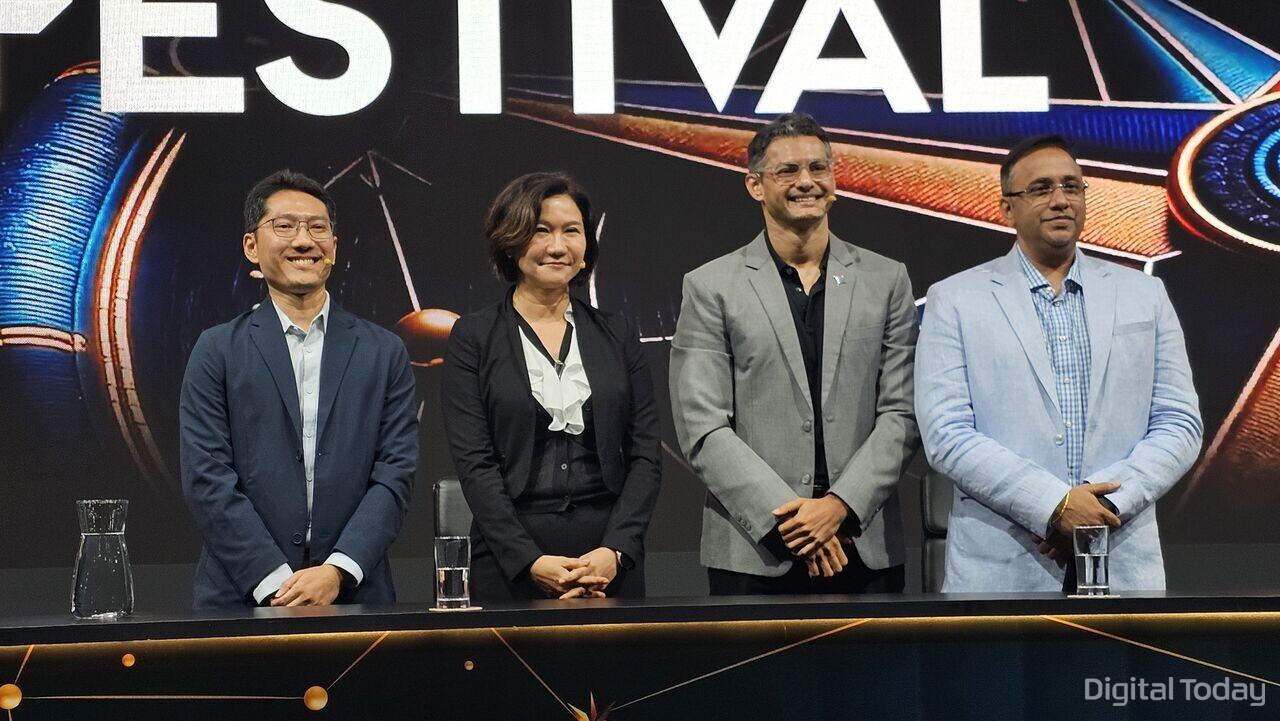
Lee attended an AI agent-based commerce and payments panel discussion at the Singapore FinTech Festival (SFF 2026) at Singapore Expo on Nov. 20. "The most valuable asset in the future will no longer be technology but trust," she said.
The discussion included Lee, Kunal Guha, head of commerce partnerships for Google Asia Pacific, and Prasanna Bharadwaj, Singapore head of Pine Labs. It was moderated by Tang Wei, Stripe's head of public policy for Southeast Asia and China.
Lee said AI technology is advancing rapidly, but the purpose of introducing it into financial services must first be made clear.
"If last year there were many discussions about how to use AI and what technologies support AI, this year the discussion has shifted to how to use AI safely and why it should be used," she said.
She said finance is fundamentally about measuring, moving and allocating money quickly, transparently and conveniently. "If AI does not fit that purpose, there is no reason to use it," she said.
She also stressed that adopting new technology should not become a goal in itself.
"With stablecoins, tokenised deposits, and various forms of currency and wallets, choices have increased, but what matters in the end is whether this technology solves people's problems and makes life more convenient," she said. "If it does not fit that purpose, it may be better to use the existing passive 방식 depending on need," she said.
"AI may buy coffee but cannot buy a home" - identity, authority and accountability
Lee presented three core conditions for AI agent-based payments to spread in earnest: identity verification, authority setting and accountability.
She said that for AI to go beyond simply recommending products and actually carry out purchases and payments, it must be possible to clearly distinguish whose instructions it takes and how far it can transact.
"For AI agents to spread, three elements are important," she said. "First is confirming that the agent is a normal agent that actually exists, second is deciding how far authority will be granted, and third is clearly defining who will take responsibility when a problem occurs," she said.
She stressed that the authority allowed to AI should vary depending on the size and nature of the transaction. "People may not make much of an issue if an AI agent buys coffee or a pair of sneakers," she said. "But buying a home or a car is an entirely different matter," she said.
She said transaction authority must be clearly set. She also said it is important to determine who will bear responsibility when problems occur. She said she does not think current laws, related systems and the ecosystem are mature enough to fully define this.
Lee also pointed out that financial services must consider not only normal transactions but also unexpected errors and accidents.
"When we discuss technology, we often assume the best-case scenario in which everything works normally," she said. "But in reality, various exceptional situations and software errors occur, and usage can surge or there may be problems with system processing capacity," she said.
She said Toss Bank is also a digital bank that uses a lot of technology and AI, and it is also paying attention to putting safeguards in place.
"We need to verify AI agents as well as customers" - emphasis on banks' role
Lee also outlined the role banks should take on as AI agent payments spread. She said the customer identification and transaction verification capabilities accumulated by existing financial companies can be used importantly in the new payment environment as well.
"We must be able to verify whether the AI agent trading on my behalf is a real agent and not a fake one," she said. "It is also essential to clearly define the authority granted to AI and the safeguards," she said.
She also mentioned the need to extend the existing financial sector’s know-your-customer, or KYC, system to AI agents.
"If KYC, confirming customers, has been important up to now, going forward KYA, know your agent, will become important," she said.
"Banks already have relevant procedures, know-how and expertise in the financial field," she said. "If these capabilities are used, they can play a significant role in strengthening trust in AI agent-based payments," she said.
"Since Toss Bank was launched in October 2021, over about 5 years it has expanded its customer base to about 17 million," she said. "It was a challenging process because we did not acquire an existing bank and had to build everything from scratch, but AI has continuously been an important topic during that time," she said.
Lee said the role banks must perform to secure trust in financial services remains important even if AI agent technology spreads.
"Stablecoins will not replace fiat currency" - payment networks expected to coexist
Lee said changes in payment infrastructure driven by expanding AI-based payments will result in coexistence between existing payment networks and new technology.
She said AI agents do not need a complete replacement of existing payment and settlement systems in order to make payments.
"There is no need to rebuild everything from scratch when it comes to payment methods," she said. "Existing systems can be used," she said.
She also drew a line against viewing existing financial infrastructure and stablecoins as being in an adversarial relationship.
"These discussions often flow into a problem of having to choose A or B, but now we are in an era where A and B can exist together," she said. "By providing users with a variety of choices, life can be made more convenient," she said.
"Stablecoins do not replace fiat currencies," she said. "Stablecoins will play a role in complementing fiat currencies," she said.
Lee took the same view on blockchain-based payment and settlement technology. "Even if new payment methods such as blockchain emerge, it does not mean the current payment network will disappear completely," she said. "I see the existing system and new technology as complementary," she said.
Other panelists also agreed that rather than completely replacing existing payment networks, they should be developed to be suitable for AI agent transactions.
Prasanna Bharadwaj, Singapore head of Pine Labs, said existing cards, e-wallets and regional payment methods can be sufficiently used for most commerce. He added that in an environment where AI agents make high-frequency payments for data or API usage fees, existing payment fees and settlement costs could become a burden, increasing the need for new micropayment methods.
"A car cannot move with only an accelerator pedal" - emphasis on balancing technology and trust
Lee again stressed that as the AI agent-based payments market develops, technological advances and safeguards must be put in place together, comparing it to driving a car.
"Payments are about moving money from point A to point B, and driving a car is also about moving from point A to point B," she said. "But if a car had only an accelerator pedal and no brakes, traffic lights, traffic rules or steering wheel, it would not be able to move properly," she said.
She meant that even if AI agents increase payment speed and convenience, it will be difficult to use them widely in actual financial services without authority and rules to control them and a responsibility framework.
"Last year we discussed protocols and this year we are talking about trust," she said. "Ultimately, we need an ecosystem that encompasses all of these elements," she said.
"I look forward to how these discussions will develop next year," she said. "In the AI agent-based payments market, technology and trust must develop together," she said.