- Trump Administration to Name Nvidia, OpenAI, Anthropic as AI ‘National Champions’ 15 seconds ago News
- SBF misses $37B Anthropic windfall as AI giant prepares for Nasdaq IPO November 14, 2026 Tech
- CFTC’s Selig says states are trying to jail prediction-market founders November 14, 2026 Regulation
- MEGA cuts 20% of staff, days after earmarking $30M for AI inference November 14, 2026 Tech
- SBF misses $37B Anthropic windfall as AI giant prepares for Nasdaq IPO November 14, 2026 Tech
- CFTC’s Selig says states are trying to jail prediction-market founders November 14, 2026 Regulation
- MEGA cuts 20% of staff, days after earmarking $30M for AI inference November 14, 2026 Tech
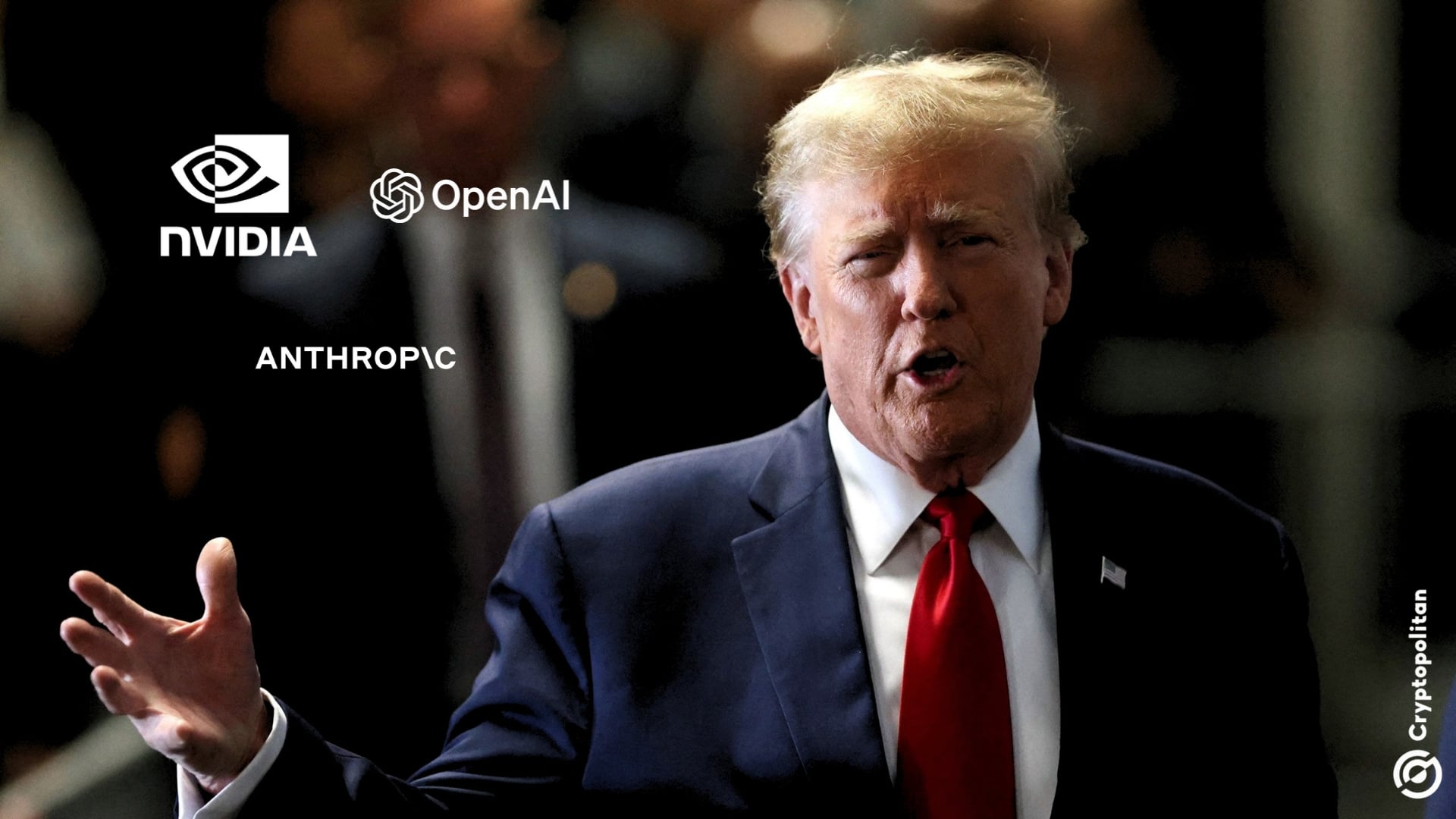
The White House wants to label more than two dozen US AI firms “national champions,” per a WSJ report.
It’s a sales pitch to the rest of the world as Chinese open models gain ground.
Anthropic makes the list while it’s still in a legal fight with the Pentagon.
The Wall Street Journal reported on Sunday, November 15 that the Trump administration is on course to designate more than two dozen American AI companies as “national champions.” Names like Nvidia, OpenAI, Amazon and Anthropic are on the list.
That label does not come with any sort of domestic cash injection or subsidy. Washington wants the label to work overseas, helping these companies land foreign contracts and nudging other governments toward American chips and cloud services before opting for Chinese-based ones.
China’s Share of Global AI Use Jumped in a Year
There is a massive reason for why officials want to speed up this process. Back in November 2024, Chinese AI models were only around 1% of global AI use. A year later, this figure rose to around 15%, according to data from OpenRouter and a16z cited by Nikkei. Open-source releases from DeepSeek and Alibaba’s Qwen, where devs can download and adapt without paying per query, was the main reason for this growth.
US-based AI labs mostly monetize access to closed models, which is a strategy that actually works well in wealthier markets. However, in countries where the AI budget is limited, that proposition becomes harder to justify. Those early investment decisions also tend to lock countries into the stacks they adopt first.
The Export Push Started in 2025
In July 2025, Trump signed Executive Order 14320 which directed the Commerce Department to promote exports of the full American “AI stack.” Then in May this year, the Export-Import bank launched ExportAI, which unlocked billions for overseas buyers of US AI technology.
The policy also fits the administration’s wider shift toward state-backed industrial policy. The government took a roughly 10% stake in Intel last year, and Trump told TIME in October he “might” pursue similar arrangements with OpenAI and Anthropic.
Anthropic Gets Praise and a Blacklist in the Same Year
Anthropic’s spot on the list is awkward. In February, the Pentagon labeled the company a supply chain risk after it refused to drop its limits on autonomous weapons and mass surveillance. A federal judge in California ruled that move unlawful in August. Weeks later, the D.C. Circuit upheld a parallel designation under a different statute.
So the White House now wants to promote Anthropic’s models to foreign governments while the Pentagon still bars its own contractors from using them.
Nvidia’s inclusion surprises nobody. Jensen Huang received the National Medal of Science from Trump on October 8, and Nvidia has pledged $1 billion toward a federal AI research compute effort. Its chips are also the part of the American stack foreign buyers want most, which makes it the easiest name on the list to sell.
Nobody Has Said What the Label Gets You
The Journal’s report is thin on practical details. It’s unclear whether champions get faster export licenses or priority access to EXIM money. Approved consortia under the existing AI Exports Program can already get some of that.
The bigger unknown is what Washington expects back. This administration has asked favored companies for equity stakes and revenue shares before. Nvidia agreed in 2025 to hand the government 15% of certain China chip sales in exchange for export licenses. Firms on the list may find this designation comes with terms attached too, and so far nobody has published them.
The smartest crypto minds already read our newsletter. Want in? Join them.
Disclaimer. The information provided is not trading advice. Cryptopolitan.com holds no liability for any investments made based on the information provided on this page. We strongly recommend independent research and/or consultation with a qualified professional before making any investment decisions.
Anush Jafer
Anush is a crypto research analyst and journalist with four years of experience in the industry. He covers stablecoins, on-chain analysis, regulatory developments and macro-driven crypto narratives. He also hosts Cryptopolitan’s live market streams and podcasts.
5 Ingenious Applications of ChatGPT And What You Should Do About Them
93% Business Leaders Favor AI-Powered Solutions for Brand Sustainability Management, Reuters
Here’s How Macron Supports France’s Vibrant and Productive AI Ecosystem
Bloomberg Estimates the Generative AI Market to Reach $1.3 Trillion by 2032
- Bitcoin ETF vs. Ethereum ETF: What’s the Difference? November 5, 2025 Learn Crypto: Beginner Guides
- What Is Base? The Ethereum Layer-2 Network Launched by Coinbase October 21, 2025 Learn Crypto: Beginner Guides
- Dogecoin vs. Bitcoin: Key Technical Differences October 20, 2025 Learn Crypto: Beginner Guides
- What Is TVL (Total Value Locked) in Crypto? October 14, 2025 Learn Crypto: Beginner Guides
- How to Read a Crypto Whitepaper? October 13, 2025 Learn Crypto: Beginner Guides
- Ripple vs. XRP vs. XRP Ledger: What’s the Difference? October 13, 2025 Learn Crypto: Beginner Guides