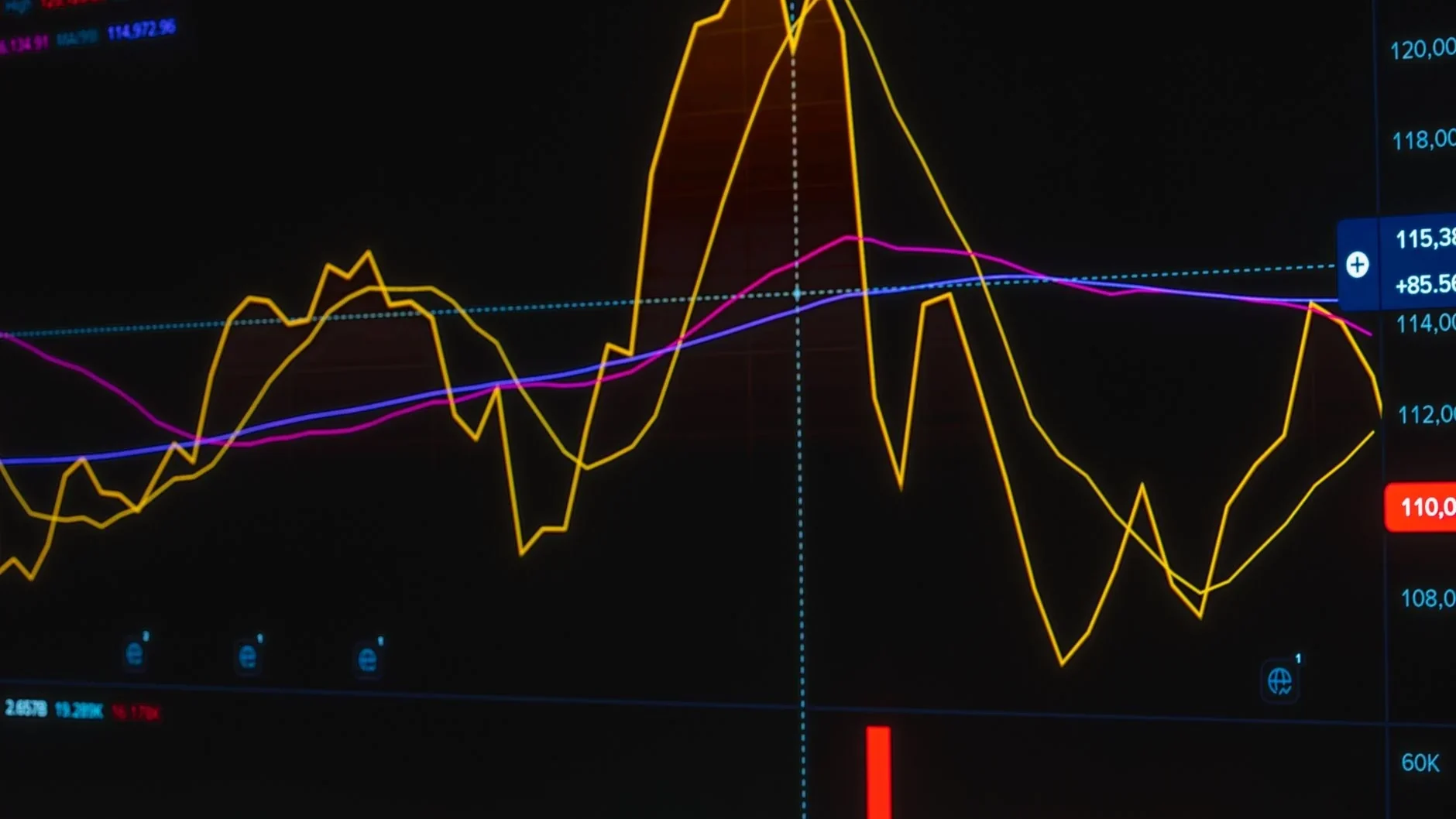
The US dollar was the only asset to record a gain among 14 financial assets and market benchmarks tracked by Coinbase Institutional over the 30 days through November 18, while Bitcoin and Ethereum suffered the steepest declines. The dollar advanced 2.5% during the period, contrasting with losses of 24.0% for Bitcoin and 26.5% for Ethereum, according to Wu Blockchain Coinbase Institutional's November 20 weekly market report.
The figures highlight the extent of the recent weakness across cryptocurrency markets, which underperformed traditional financial assets during the reporting period. The performance comparison also showed declines in gold and major US stock indexes, although their losses were considerably smaller than those recorded by the two largest cryptocurrencies.
Bitcoin and Ethereum Record the Largest Declines
Bitcoin fell 24.0% over the 30-day period, while Ethereum posted an even steeper decline of 26.5%. Both assets recorded the largest losses among the 14 instruments and market benchmarks included in Coinbase Institutional's comparison.
The scale of the declines placed cryptocurrencies among the weakest-performing assets in the report. Ethereum's loss exceeded Bitcoin's by 2.5 percentage points, indicating that the second-largest cryptocurrency experienced greater downside over the same period.
Coinbase Institutional identified rising real yields and expectations of further Federal Reserve interest rate increases as the primary factors behind Bitcoin's weakness. Higher real yields can influence the relative attractiveness of riskier investments, while expectations of additional monetary tightening can weigh on market sentiment.
Gold and US Stock Markets Also Decline
Weakness extended beyond digital assets. Gold declined 10.2% over the same 30 days, making it the second-weakest performer among the specifically reported assets after Bitcoin and Ethereum.
US equities also recorded losses, although their declines were less pronounced. The Nasdaq 100 fell 6.4%, while the S&P 500 dropped 4.3%. Both indexes therefore outperformed Bitcoin and Ethereum during the comparison period, despite remaining in negative territory.
The difference in performance illustrates how sharply cryptocurrency losses exceeded declines in traditional equity benchmarks. Bitcoin's 24.0% drop was substantially larger than the Nasdaq 100's 6.4% decline, while Ethereum's 26.5% loss represented the weakest performance among the named assets.
US Dollar Stands Out in Coinbase Market Comparison
The US dollar's 2.5% advance distinguished it from every other asset and benchmark in Coinbase Institutional's 14-instrument comparison. It was the only tracked instrument to finish the 30-day period with a positive return through November 18.
Coinbase Institutional published the findings in its November 20 weekly report, attributing Bitcoin's underperformance primarily to rising real yields and expectations of further Federal Reserve rate hikes. The comparison covered the 30 days through November 18 and showed the US dollar gaining 2.5%, while Bitcoin, Ethereum, gold, the Nasdaq 100 and the S&P 500 all recorded losses.
Among the reported figures, Ethereum posted the largest decline at 26.5%, followed by Bitcoin at 24.0%, while the US dollar remained the sole gainer across the 14 tracked assets and market benchmarks.
Writer: Victoria Hale Technology & Blockchain Writer
Victoria Hale writes about blockchain technology, digital infrastructure, and the intersection of emerging technologies with finance. Her articles explore how new protocols and systems are shaping the evolving digital economy.
She prioritises clarity and accuracy when explaining technical developments to a general audience.
Check out other news and articles on Google News
Disclaimer:
The articles on Hokanews are here to keep you updated on the latest buzz in crypto, tech, and beyond—but they’re not financial advice. We’re sharing info, trends, and insights, not telling you to buy, sell, or invest. Always do your own homework before making any money moves.
Hokanews isn’t responsible for any losses, gains, or chaos that might happen if you act on what you read here. Investment decisions should come from your own research—and, ideally, guidance from a qualified financial advisor. Remember: crypto and tech move fast, info changes in a blink, and while we aim for accuracy, we can’t promise it’s 100% complete or up-to-date.