US Inflation Hits 3.8%: What Did Two Big Reports Reveal?
US inflation climbed to 3.8% in October, according to the BEA PCE report released on 25 November 2026. That is up from 3.7% in September. The PCE price index is the Federal Reserve's preferred gauge, and core PCE, which excludes food and energy, rose to 3.3%.
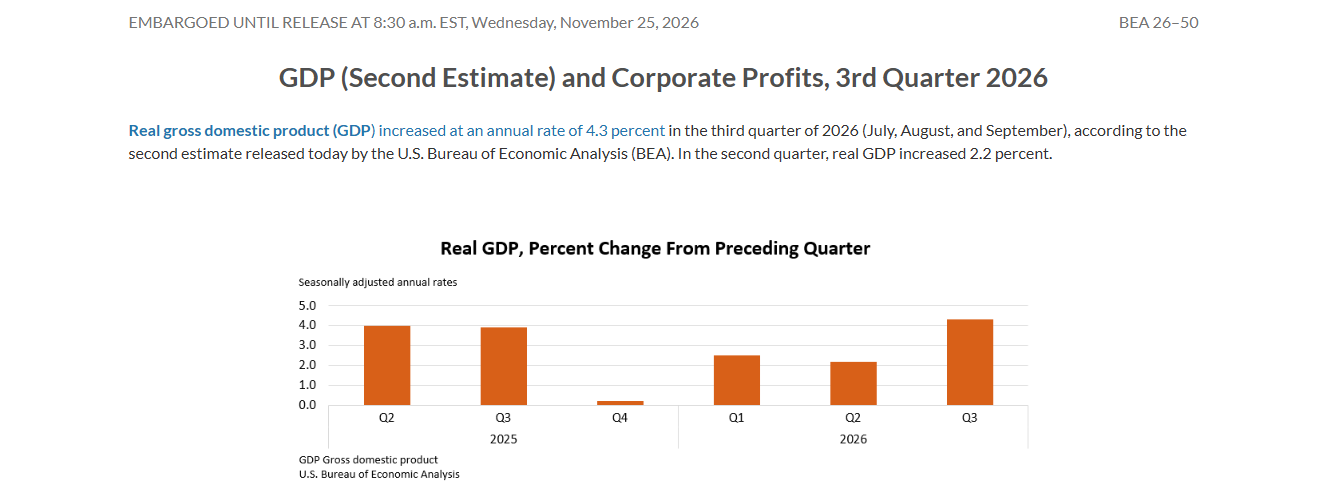
The same morning, the BEA's GDP second estimate lifted third-quarter growth to a 4.3% annualized rate from 3.4%. Together, the reports give the Fed strong growth and firm prices ahead of its 8–9 December meeting.
For crypto, the question is whether tighter policy could weigh on risk appetite and liquidity.
Why Is US Inflation Rising Again After September?
Measure
September
October
PCE price index, year over year
3.7%
3.8%
Core PCE, year over year
3.1%
3.3%
PCE price index, monthly
0.5%
0.3%
Core PCE, monthly
0.3%
0.3%
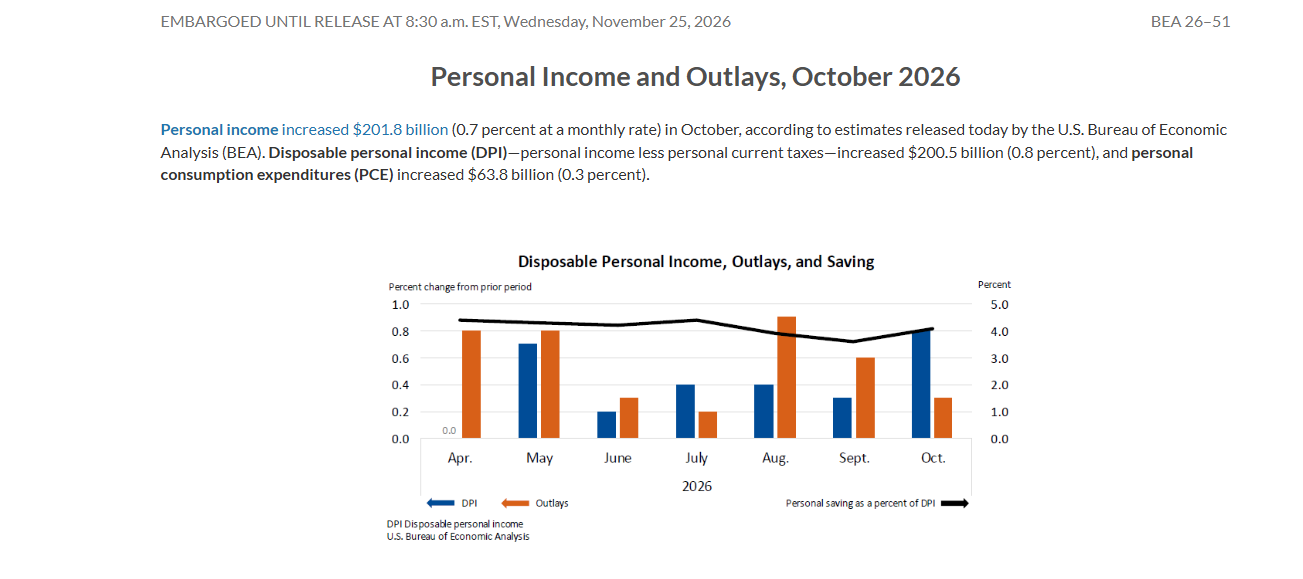
Source: BEA, released 25 November 2026.
Headline PCE inflation moved from 3.7% to 3.8%, while core PCE rose from 3.1% to 3.3%.
The Fed targets 2% inflation, so the core reading matters. It suggests price pressure reaches beyond food and energy.
Is 4.3% Annualized GDP Growth Making a Fed Rate Hike More Likely?
BEA data show real GDP grew at a 4.3% annualized rate in the third quarter. Annualized means the quarterly gain, about 1.1%, is scaled to a full-year pace. The second quarter was 2.2%.
Investment and consumer spending drove the 0.9-point upgrade from the 3.4% advance estimate, the BEA said. Real final sales to private domestic purchasers, a gauge of underlying demand, rose 5.8%.
Fed December Decision: Is a Rate Hike Already Locked In?
No. The Fed has announced nothing, and the committee decides on 9 December. The policy range now sits at 3.75% to 4.00%.
Fed funds futures implied about a 97.8% probability of a 25-basis-point hike on 9 December, as of 25 November 2026, shortly after the PCE release. That was about 99.8% before the data. Futures show expectations, not a decision.
On 10 November, Governor Christopher Waller said in a Federal Reserve speech that he leaned toward a 25-basis-point hike. He said a 50-basis-point hike should be considered if October core CPI ran near 0.3% or higher. That is one governor's view, not an FOMC decision.
How Could US Inflation and Rate Hikes Hit Bitcoin and Altcoins?
Higher rates make safer assets, such as Treasury bills, more attractive. That can reduce demand for risky assets like crypto.
Tighter liquidity can also hit smaller tokens harder, so Ethereum and altcoins often swing more than Bitcoin. This is analysis, not a forecast.
Bitcoin traded at $60,724.85 as of 26 November 2026, 11:30 AM IST, up 2.8% in 24 hours. Market cap stood at $1.22 trillion, with 24-hour volume near $41 billion.
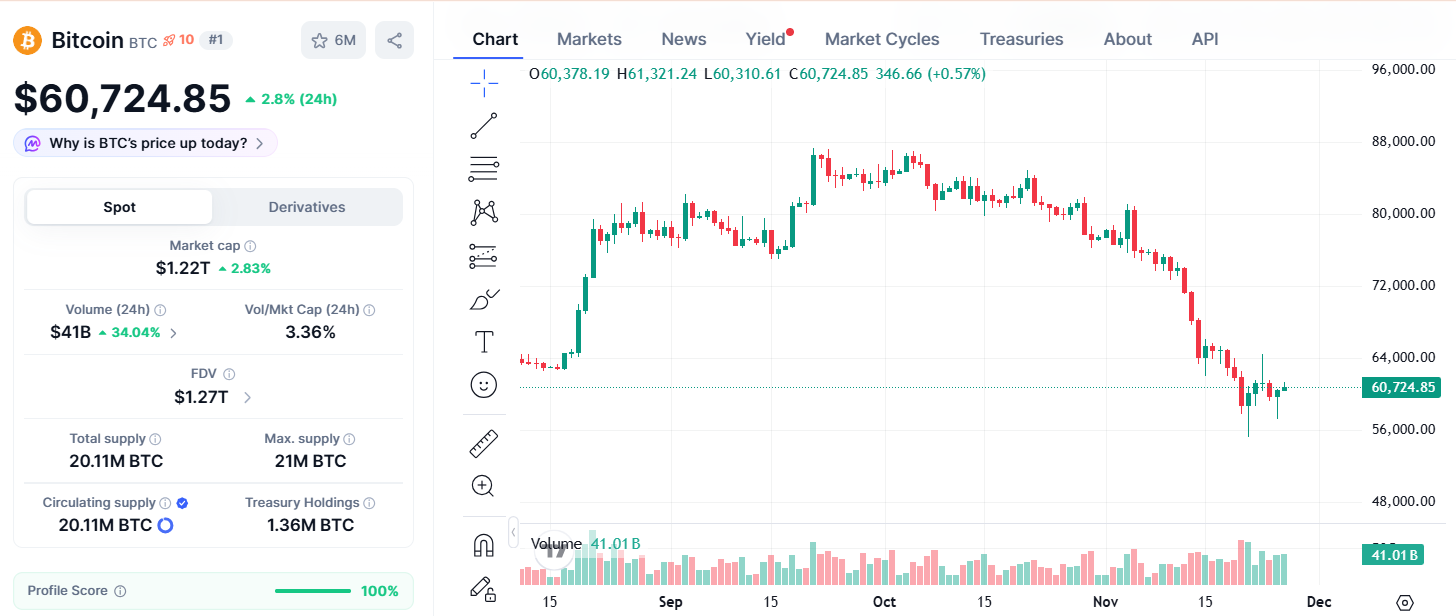
Source: Bitcoin CoinMarketCap Data
The chart captured at that time shows Bitcoin falling from above $85,000 in early October to around $55,000 in mid-November. That slide began before the 25 November data, so inflation is one factor among several.
What Comes Next After the Inflation Data? Key Dates to Watch
The FOMC calendar and the BEA schedule set three dates:
8–9 December: Central bank meeting, rate decision, policy statement, and projections.
23 December: BEA releases November personal income and outlays, the next PCE reading, plus the third GDP estimate.
26–27 January 2027: next scheduled Central bank meeting, still tentative.
8–9 December: Central bank meeting, rate decision, policy statement, and projections.
23 December: BEA releases November personal income and outlays, the next PCE reading, plus the third GDP estimate.
26–27 January 2027: next scheduled Central bank meeting, still tentative.
The 23 December release comes after the US central bank meeting, so it can only shape January expectations.
What Could Shape Bitcoin's December Outlook?
The data suggests US inflation has moved markets from asking whether the Fed will hike to asking how far tightening will go. Three factors matter most:
Fed message: a 25-basis-point hike with calm guidance may ease pressure.
Core inflation: another reading near 3.3% or higher would keep tightening expectations alive.
Liquidity and risk appetite: a weaker stock market or thinner crypto volume may amplify any move.
Fed message: a 25-basis-point hike with calm guidance may ease pressure.
Core inflation: another reading near 3.3% or higher would keep tightening expectations alive.
Liquidity and risk appetite: a weaker stock market or thinner crypto volume may amplify any move.
The main uncertainty remains the Fed projections due on 9 December, which will show how many hikes policymakers expect in 2027. Anyone reading a Bitcoin price prediction should treat targets as scenarios, not facts.
Conclusion: Can US Inflation Keep Bitcoin Under Pressure?
US inflation at 3.8%, a 4.3% annualized GDP print, and December rate hike expectations form a tough backdrop for risk assets.
The macro picture remains unsettled. The 8–9 December US central bank meeting is the next real test. For wider updates, read our latest crypto market news.
Disclaimer: This article is for information only and is not financial advice. Crypto prices are volatile, and predictions are not facts. Economic data and market expectations do not guarantee future Fed decisions or Bitcoin price moves. Do your own research and consult a licensed advisor before investing.
About the Author Madhav Patel
English Blog Writer at coingabbar.com
Madhav is a Crypto and Web3 Content Writer with 6 months of professional experience in creating research-driven content across the blockchain and digital asset industry. He specializes in cryptocurrency, decentralized finance (DeFi), tokenomics, blockchain technology, and emerging Web3 projects.
With a strong focus on in-depth research, SEO content writing, and content optimization, Madhav transforms complex technical and financial concepts into clear, accurate, and engaging articles. His work focuses on simplifying industry developments, explaining project fundamentals, and delivering informative content that helps readers better understand the evolving crypto ecosystem.
Frequently Asked Questions (FAQ)