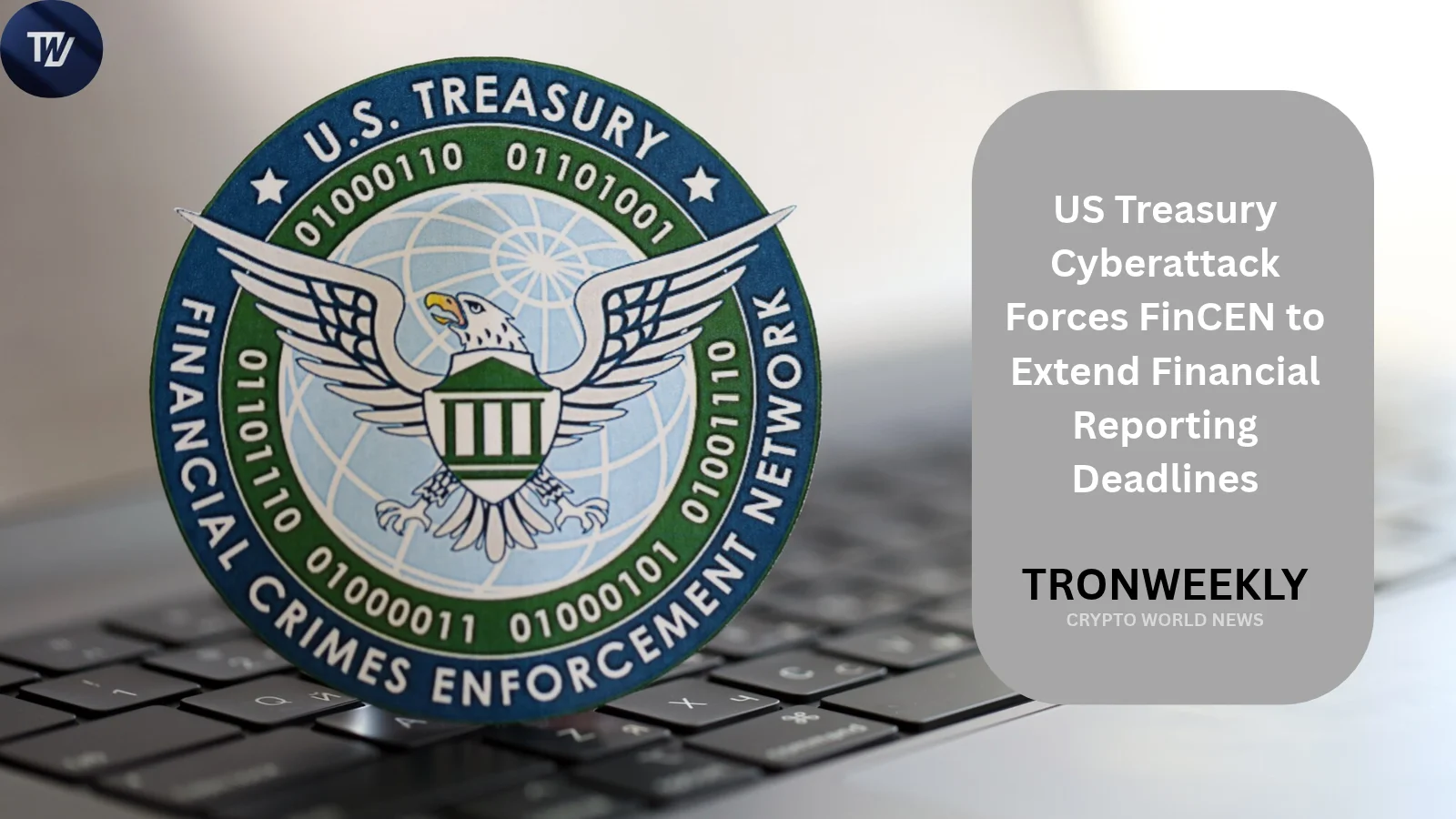
The US Treasury cyberattack has brought up the issue of the security of federal financial systems following confirmation by the Financial Crimes Enforcement Network (FinCEN) that there was an intrusion into part of its network. It was reported that third parties gained access to a portion of its system and, as a result, some of its services have been shut down.
Table of Contents
This disclosure has also occurred in an era of heightened concerns about cybersecurity threats associated with US government agencies. It has been reported that there has been a separate cybersecurity breach in which the CIA and other intelligence agencies were involved just a few hours prior to the breach at the Treasury Department.
Also Read | Ethereum Treasury BTCS Cuts Aave Loans to $10.5M After ETH Sale
FinCEN Confirms Unauthorized Access to Its Network
The FinCEN, a branch of the US Treasury Department, plays a crucial role in tracking any financial transactions that will help in detecting money laundering, terrorist financing, and many more financial crimes.
The information is collected from banks and other organizations using the BSA reporting requirements. The records can then be used by law enforcement agencies in the investigation of any illicit financial activities.
As per the disclosure, unauthorized access to a small part of FinCEN’s network took place. The organization reacted to the situation by shutting down certain systems in order to minimize the risks involved.
The extent of the problem, who was behind it, and whether there was any theft of financial data is yet to be determined.
US Treasury Cyberattack Disrupts Financial Reporting Operations
Consequences of the US Treasury Cyberattack have gone beyond network security and include some financial reporting procedures.
In particular, FinCEN issued Order FIN-2026-R002 on November 24, 2026, setting temporary extensions of deadlines for some financial reporting requirements in the wake of the service outage.
According to the order, some reports under the Bank Secrecy Act and beneficial ownership reports due on November 18 through December 29, 2026, may now be filed until December 30, 2026.
Through this, the financial institutions that have been affected have extra time to fulfill their responsibilities while FinCEN sorts out the disruptions.
Nevertheless, financial monitoring has not been suspended by the institution. Financial institutions, including banks and other organizations included under the regulations, still need to review their transactions.
It should be noted that the change of deadline for reporting does not mean the suspension of financial monitoring responsibilities.
Financial Institutions Must Continue Monitoring Suspicious Transactions
While the US Treasury cyberattack has allowed extra time for specific filings, financial institutions must continue following their existing compliance procedures.
Financial institutions, including banks, are still expected to monitor client activities and identify transactions that may appear unusual or suspicious.
The extended period applies to organizations that faced difficulties submitting information due to the disruption. It does not provide an automatic exemption from Bank Secrecy Act (BSA) requirements.
The US Treasury cyberattack also highlights how cybersecurity breaches can affect financial compliance operations beyond the systems directly targeted.
When an agency responsible for collecting financial intelligence experiences disruptions, it can create additional challenges for organizations that depend on its services.
Separate Intelligence Agency Breach Adds to Security Concerns
The breach by FinCEN has been made public knowledge right after news broke of another hacking incident that happened at the CIA and the other US intelligence agencies.
This has sparked further concerns regarding the safety of government network systems and the dangers that may arise with regard to the federal network systems. There is no evidence that has been made known yet that links both hacking attacks to one another.
There is nothing yet proven regarding the methods used and the parties responsible.
For the moment, the investigation by FinCEN continues to focus on finding out how and why their systems were penetrated and who was affected in terms of access to information and/or services.
The extensions will offer more time for financial organizations to fulfill certain duties, but at the same time, this incident shows how important the protection of the government’s financial infrastructure is.
Also Read | Coinbase Prime Unlocks 10x Leverage on BTC Basis Trades
Bena Ilyas is a Global News Correspondent and Market Analyst at Tronweekly with over four years of experience covering global cryptocurrency, blockchain, and Web3 developments. She has written 1,000+ articles for leading crypto news platforms, reporting on Bitcoin, Ethereum, altcoins, DeFi, and global crypto regulation, alongside Web3 trends, Layer 2 ecosystems, and AI-driven crypto use cases. Her work is based on verified sources and fact-based reporting for global market participants.