Vitalik Buterin endorses leanPCS as a faster route to a quantum-safe Ethereum upgrade focusing on efficient signature aggregation and gas savings.
Article produced with artificial intelligence systems and published under the editorial responsibility of Amelia Tomasicchio. How we work
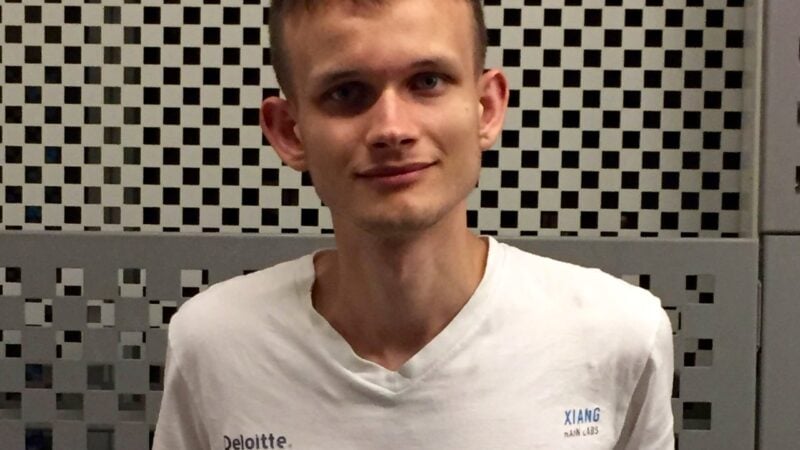
Vitalik Buterin has reversed his view on leanPCS, backing it as a potentially faster route to a quantum-safe Ethereum upgrade. In a November 16, 2026 post, Buterin supported a proposal that would compress bulky quantum-resistant signatures and proofs rather than store their full data onchain.
Summary
Key takeaways
- Buterin now favors leanPCS after previously dismissing the approach.
- The proposal would aggregate large signatures into compact proofs.
- Buterin sees fewer design hurdles for leanPCS than for leanSTARK.
- SPHINCS- verification already works on Ethereum at about 150,000 gas.
Buterin backs leanPCS for a quantum-safe Ethereum upgrade
Buterin favors leanPCS because it promises broad cryptographic flexibility with fewer implementation decisions than leanSTARK.
His endorsement marks a sharp change in his assessment.
“Over the past few weeks I’ve gone from thinking leanPCS is total bull to being a total bull,” Buterin wrote.
The security problem behind the proposal extends beyond Ethereum. Quantum computers are expected eventually to break the elliptic curve cryptography currently protecting Ethereum and Bitcoin accounts. Quantum-resistant replacements address that threat, but their much larger signatures and proofs create storage and gas-cost challenges.
Buterin’s explainer focuses on handling that extra data through aggregation: verifying many signatures and proofs together, without requiring Ethereum to retain all of them onchain.
How leanPCS compares with leanSPHINCS and leanSTARK
leanPCS uses polynomial commitment schemes, or PCS—the mathematical foundation of STARK proofs—to bundle large quantum-safe signatures and proofs into a compact proof. Buterin described it as an approach that offers leanSTARK’s generality while requiring fewer design choices.
The three proposed approaches differ in what users would be able to submit and how much development work they require.
leanSPHINCS is the simplest option. It would handle one type of quantum-safe, hash-based signature at a small gas cost per signature, but would not support other uses.
leanSTARK would support any signature scheme, privacy protocols, and hidden multisignature logic. That flexibility comes with a prerequisite: Ethereum would first need to agree on a programming language for users’ programs, moving beyond the Ethereum Virtual Machine, or EVM. Buterin said that process would likely take time.
By contrast, he said leanPCS “could potentially be implemented very quickly,” with leanSTARK added later. That is the implementation advantage behind his support for leanPCS as a route toward a quantum-safe Ethereum upgrade.
Growing signature sizes raise questions about storage and gas costs
According to Buterin’s explainer, moving to quantum-safe cryptography would push signature sizes up from 65 bytes to between 1 and 6 kilobytes, while zero-knowledge proofs would expand from just a few hundred bytes to roughly 128 kilobytes.
“This is unsustainable to put on chain,” he wrote.
In the proposed aggregation scheme, users submit signatures or proofs, and nodes throughout the network continually merge the data they’ve received into STARK proofs certifying its validity. These aggregate proofs are then merged again and again until a single master proof confirms everything contained in a block.
Rather than storing all of the underlying data, Ethereum would keep only brief claims backed by the aggregate proof.
Buterin additionally highlighted SPHINCS-, a hash-based signature family tailored for Ethereum. Shared on the Ethereum Research forum in June with contributions from Buterin and cryptographers at the Ethereum Foundation, the work shows that a standards-aligned quantum-safe signature can be verified without any changes to the protocol.
The verification costs about 150,000 gas, the research post shows, compared with approximately 3,000 gas for an ECDSA signature under an earlier Buterin estimate.
Article produced with the assistance of artificial intelligence and reviewed by the editorial team.