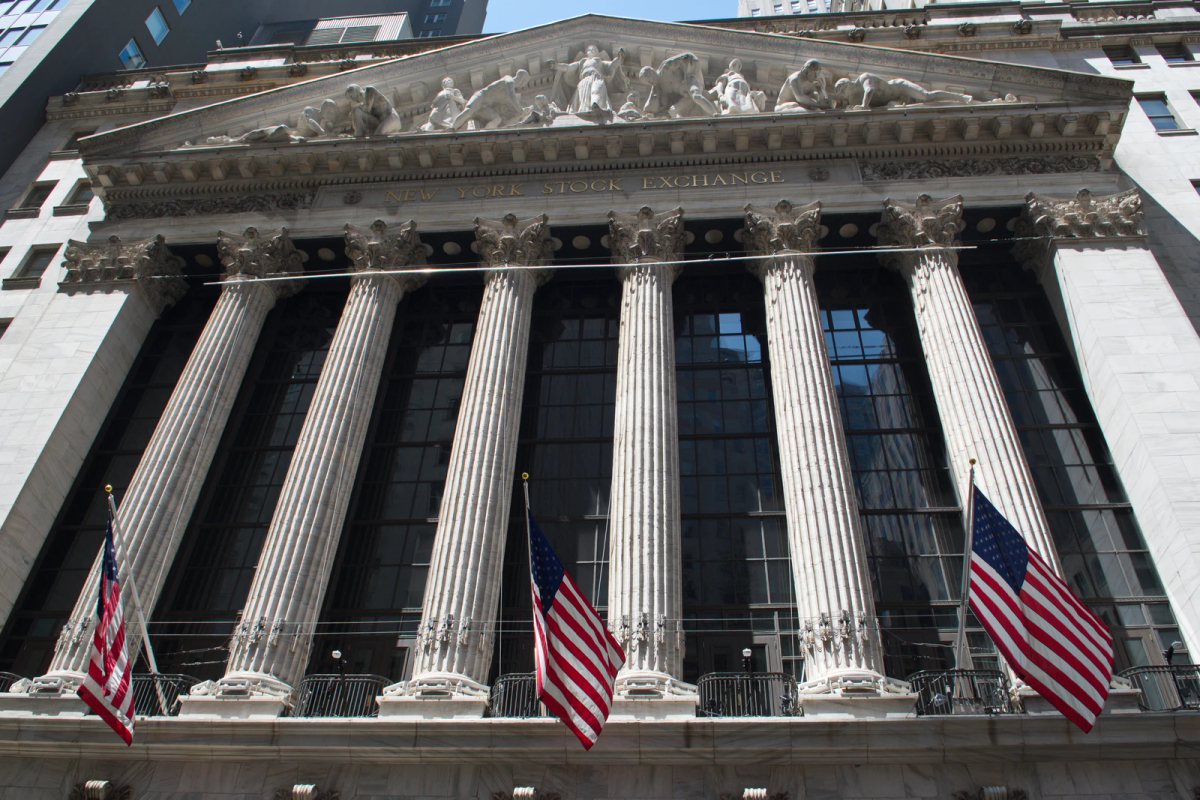
U.S. equity trading is shut down for the full session on Thursday, Nov. 26, 2026, with the New York Stock Exchange and Nasdaq both observing the Thanksgiving federal holiday. No regular-session orders for U.S.-listed stocks, exchange-traded funds or other securities on the two exchanges will be matched until Friday morning.
The closure is one of the scheduled market holidays on the exchanges' annual calendars. Under normal conditions both venues operate from 9:30 a.m. to 4 p.m. Eastern Time, Monday through Friday.
Fixed income is taking the day off as well. The Securities Industry and Financial Markets Association has recommended a complete shutdown of bond trading for the holiday, a schedule that covers Treasuries, corporate debt, municipal securities and other fixed-income instruments. The group has stressed that its recommendations are voluntary and that individual dealers set their own hours.
A Shortened Friday, Then Back to Normal
Trading resumes Friday, Nov. 27, for the abbreviated Black Friday session. Both exchanges open at the usual 9:30 a.m. ET but ring the closing bell at 1 p.m. ET, three hours ahead of the standard finish. The bond market follows a slightly different timetable, with SIFMA recommending a 2 p.m. ET close.
Note: Bond-market times reflect voluntary SIFMA recommendations; individual firms may set different schedules.
Full trading hours return Monday, Nov. 30, when both exchanges reopen at 9:30 a.m. and close at 4 p.m. ET.
Volume on the post-holiday half session is typically thin as market participants stretch the long weekend, and lighter liquidity can amplify intraday price swings. Investors placing orders during the shortened Friday window may see wider spreads and less reliable fills.
Derivatives follow their own holiday calendar. CME equity-index and interest-rate futures run on a modified schedule Thursday, halting at 1 p.m. ET and restarting at 6 p.m. ET. Single-stock options trade until 1:15 p.m. ET on Friday.
Crypto Keeps Trading, but Listed Funds Do Not
Digital assets are the exception to the holiday shutdown. Cryptocurrency exchanges generally operate around the clock, every day of the year, so bitcoin and ether can change hands straight through Thanksgiving and Black Friday.
U.S.-listed crypto ETFs are a different matter. Because they trade on the stock exchanges, their regular sessions are closed Thursday and shortened Friday, leaving holders of those funds unable to adjust positions until the market reopens.
Heading Into the Break, a Jittery Tape
The holiday arrives with volatility running hot. The Cboe Volatility Index, widely known as the market's fear gauge, held above 30 on Wednesday and had punched through 40 at one point the prior week, according to Investor's Business Daily.
Wednesday's close was mixed. The S&P 500 slipped 0.3%, the Nasdaq Composite dropped 0.6% and the Dow Jones Industrial Average added 0.3%. The corresponding trackers told the same story: the SPDR S&P 500 ETF Trust (SPY) fell 0.29% to $716.70, the Invesco QQQ Trust ETF (QQQ) lost 0.65% to $633.93, and the State Street SPDR Dow Jones Industrial Average ETF Trust (DIA) gained 0.31% to $501.27.
For the year through Wednesday, the S&P 500 was up 4.93%, the Nasdaq Composite 1.51% and the Dow 4.41%.
What It Means for Investors
The practical effect is a two-day hole in the U.S. trading week. Anyone who needs to rebalance, harvest a loss before year-end or react to overnight news has no venue on Thursday and only a three-and-a-half-hour window on Friday. Orders queued for the Friday open will compete for thinner liquidity, and the early close means after-hours activity carries more weight than usual.
International investors face an additional wrinkle. The 1 p.m. ET Friday close lands at 2 a.m. Saturday in Taipei, so Taiwanese investors holding U.S. positions through sub-brokerage accounts will need to work out their orders well before the weekend.
The calendar also offers a breather before the next cluster of holidays. Both exchanges close early on Christmas Eve, Thursday, Dec. 24, shut entirely on Christmas Day, Friday, Dec. 25, run normal hours on New Year's Eve, Thursday, Dec. 31, and close on New Year's Day, Friday, Jan. 1, 2027. SIFMA recommends a 2 p.m. ET bond close on both Dec. 24 and Dec. 31.
Once added, BigGo Finance appears first in Google Search Top Stories, so you get the broadest, most up-to-the-minute, and most comprehensive global financial news first.