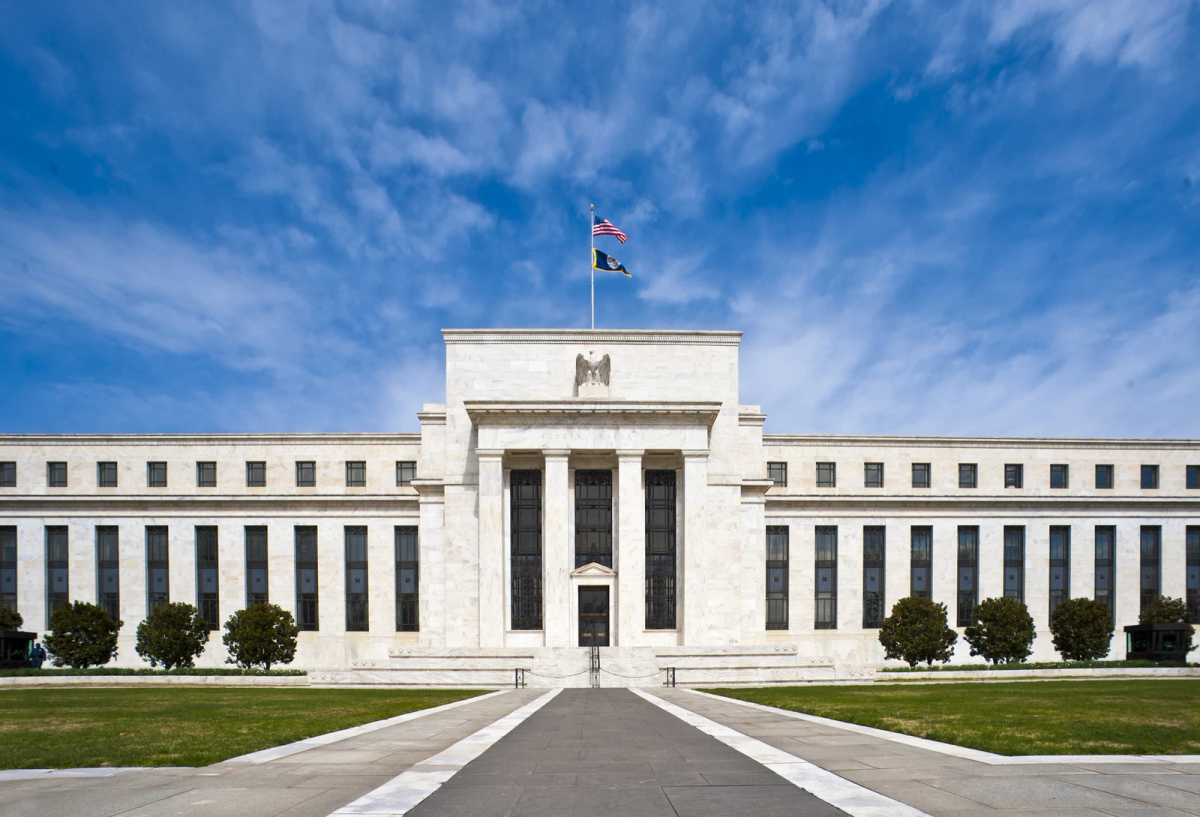
Traders have abandoned wagers that the Federal Reserve will lift interest rates by half a percentage point next month, a swift reversal driven by the sharpest equity sell-off since the early days of the pandemic.
Fed funds futures now assign essentially no probability to a 50-basis-point increase that would take the benchmark rate to 4.5% at the December meeting. About ten days ago that outcome carried roughly a 10% chance, according to CME's FedWatch tool. A quarter-point move, which would put the target range at 4% to 4.25%, is now the consensus expectation.
The shift followed a brutal week across risk assets. The tech-heavy Nasdaq fell 10.4%, its steepest weekly decline since the March 2020 COVID crash. The VIX, Wall Street's gauge of expected volatility, jumped 86%, among its four largest advances since 2004. Losses spread well beyond U.S. equities: global stock markets retreated, and gold, copper and commodity-linked currencies all sold off hard.
Bitcoin was not spared. The largest cryptocurrency by market value dropped more than 6% and at one point traded below $55,500, touching one of its weakest levels in two years, before recovering back above $60,000.
Market-implied odds have moved sharply in a matter of days. The pseudonymous macro commentator The Macro Paper noted on X that 11 days earlier investors were pricing a 15% chance of a half-point increase and no chance at all of a pause. "Now, 50 bps is completely off the table, while the probability of NO hike has jumped to 12%," the account wrote, adding that the repricing was unfolding as stocks tumbled and concerns about a deeper economic slowdown mounted.
Even so, investors are not positioning for cuts. Futures imply a nearly 60% chance of another quarter-point increase in January, to a 4.25% to 4.5% range. JPMorgan expects one more hike in March, implying a slower but still ongoing tightening path rather than a pivot.
Note: Probabilities derived from fed funds futures pricing cited in market commentary.
The next catalyst is this week's release of core personal consumption expenditures data, the inflation measure the Fed watches most closely. A hot reading could revive speculation about a larger move.
Royal Bank of Canada expects price pressures to pick up. The bank forecasts both headline and core PCE rising 0.3% month over month in October, which would push the annual headline rate to 3.8% and the core rate to 3.3%. "We expect the October PCE deflators to confirm what we've already seen this month - inflation is re-accelerating," analysts at the bank said in a weekly note.
A cooler print would offer relief. Josh Gilbert, Asia-Pacific lead analyst at eToro, said in an email that a softer number "would go some way toward cooling expectations of an outsized hike and give investors a reason to step back in." He cautioned, however, that fund flows are the real test: "if the outflows continue even with a softer read, investors are clearly stepping away, which is a much harder problem for bitcoin to fix."
The episode underscores how tightly the Fed's next move is now bound to financial conditions. A market rout that tightens borrowing costs on its own gives policymakers room to slow the pace of increases, while a reacceleration in inflation would narrow that room quickly. For crypto, the path back depends on more than a single data point: a cooler inflation reading, a stabilization in exchange-traded fund flows and renewed appetite for risk would need to line up before the recent recovery above $60,000 can be treated as durable.
Once added, BigGo Finance appears first in Google Search Top Stories, so you get the broadest, most up-to-the-minute, and most comprehensive global financial news first.


