The forex and trading industry saw a series of ownership changes, business restructurings and regulatory developments this week. FXCM's ongoing breakup continued to reshape the institutional and retail brokerage landscape, while another broker moved to expand its US futures offering through a partnership with Kraken owner Payward.
London's trading industry is coming home!
Elsewhere, eToro reportedly prepared further workforce reductions, while XTB shares suffered their steepest daily decline since 2021 after Poland's regulator signalled new restrictions on CFDs. Regulators in New Zealand and Europe also brought fresh attention to retail investor protection and the rules governing leveraged trading.
The week also brought developments in proprietary trading, cryptocurrency and the growing relationship between financial firms and professional football. Anthropic's record-breaking IPO attracted considerable interest from trading platforms, but crypto exchanges struggled to secure enough underlying shares for tokenised offerings.
FXCM Pro will terminate services to its non-UK institutional clients on 18 December, offering them the option to migrate to JT Prime, Finance Magnates reported exclusively. The arrangement will allow clients to retain the same leverage, fees and connectivity conditions after the transfer.
The move follows the sale of FXCM's retail operations, with Trade Nation acquiring its UK client book and AvaTrade purchasing most of its other businesses.
JT Prime, founded by industry veterans Raj Sitlani, Jonathan Brewer and Jeff Wilkins, provides liquidity services to brokers, funds and other professional clients.
Wilkins said the addition of FXCM Pro's institutional clients would support the company's growth. JT Prime is also seeking regulatory approval in a major Western jurisdiction, although its application remains pending.
Broker Client Books Become a Target for Acquisitions
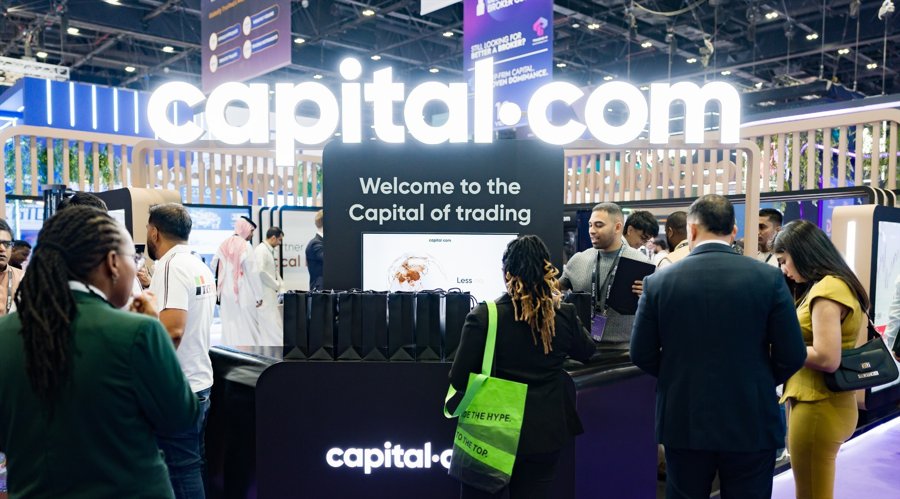
A series of brokerage acquisitions has brought renewed attention to the value of existing client books. Recent transactions include Trade Nation and AvaTrade acquiring parts of FXCM, Capital.com purchasing FxPro's European clients, and CXM Group taking over TD Markets' African business, which included around 50,000 clients.
The deals have raised questions about whether brokers could increasingly build client portfolios for resale. However, industry executives point to significant challenges, including regulatory checks, client retention and the quality of acquired accounts.
ATFX Chief Commercial Officer Siju Daniel said historical transactions were priced with attrition of around 50% in mind. Buyers must also consider the cost of KYC checks and whether clients will remain after ownership changes.
MetroTrade Relaunches US Brokerage With Payward Technology
MetroTrade has relaunched its US retail futures brokerage using technology from Payward Services Derivatives, formerly NinjaTrader Connect. The Chicago-based firm has rebuilt its trading platform, account portal and funding process through the partnership with Kraken's parent company.
The offering includes CME Group futures and cryptocurrency derivatives from Coinbase, while prediction markets are planned for a later release. The new platform has become MetroTrade's primary onboarding channel, although existing clients will continue trading through the broker's established clearing firms.
- “Traders Know What Traders Want and Need”: Will Revolut Make Retail Brokers Obsolete?
- The Hidden Cost of Prop Firms Detecting Breaches Too Late for Payouts
- Forex Has Always Outsourced Its Tech. That’s Why It’s Adopting Crypto So Fast
The move follows Payward's expansion of its brokerage technology services to outside firms after acquiring NinjaTrader in 2025. MetroTrade is backed by Andromeda Capital Partners Suisse, the investment firm associated with Tickmill co-founder Ingmar Mattus.
IG Group Plans Office Closures Across Three European Markets
IG Group is planning to close its offices in France, Spain and Italy, potentially affecting around 50 employees, Bloomberg reported, citing people familiar with the matter. The company has reportedly informed staff at the three locations about the plans.
An IG spokesperson told Bloomberg that the broker was consolidating its European operations into a smaller number of larger hubs. The closures form part of a wider organisational restructuring at the London-listed company.
In September, reports emerged that IG was preparing to cut hundreds of jobs as it combined regional consumer operations into a single division. The latest changes follow previous workforce reductions, including a 10% cut in global headcount in 2023. IG had not provided further details by publication time.
eToro Reportedly Prepares Second Round of Layoffs in 12 Months
eToro is planning another round of workforce reductions that could affect dozens of employees globally, Israeli media outlet Calcalist reported. The cuts could take place in the coming weeks, marking the company's second reported layoff exercise within 12 months.
In January, the fintech reduced its workforce by approximately 7%, or around 105 employees. The latest report comes after eToro recorded weaker third-quarter financial results in 2026, with net income falling 74% year-on-year to $15 million.
Net contribution declined 13% to $186 million. The company also reported a significant drop in cryptocurrency activity, with clients placing two million crypto trades in October, down 62% from a year earlier. eToro had not confirmed the reported cuts by publication time.
XTB Shares Suffer Worst Daily Decline Since 2021 on CFD Concerns
XTB shares plunged 17.5% on Tuesday after Poland's financial regulator signalled plans for new restrictions on contracts for difference. The decline was the broker's steepest single-day fall since July 2021, with shares closing at PLN 115.24 after reaching an intraday low of PLN 113.20.
The Polish Financial Supervision Authority's deputy chairman, Dariusz Adamski, said a new product intervention would come soon, although he provided no timetable.
He cited losses of nearly PLN 2 billion among 267,000 Polish CFD clients last year, almost seven times the 2019 figure. CFDs generated 90.5% of XTB's gross result from financial instruments in the third quarter, leaving the broker particularly exposed to potential restrictions.
New Zealand's FMA Introduces Stricter Derivatives Suitability Requirements
New Zealand's Financial Markets Authority (FMA) has introduced stricter suitability requirements for derivatives issuers serving retail clients. From 18 November 2027, firms must collect sufficient information to assess whether a product is appropriate before allowing a client to trade.
The new rules also require brokers to ensure customers understand the products and their associated risks. Firms will not be permitted to allow trading where a product is unsuitable or the investor does not understand it.
The regulator has introduced additional safeguards for providers offering highly leveraged derivatives while retaining access to higher-risk products where appropriate protections exist. The changes follow a consultation launched in June 2024, which included proposals to restrict CFD leverage to 30:1.
Topstep Restricts Access From 13 Countries Over Prop Trading Fraud
Proprietary trading firm Topstep is restricting access for users in 13 countries across Africa, Asia and Europe following what it described as a rise in coordinated fraud. The restrictions include Cambodia, Ethiopia, Serbia and Uzbekistan, and will affect fewer than 1,000 existing traders, according to the firm.
This week, we’ll be restricting access in a handful of countries. This will impact less than 1,000 current Topstep Traders but we want to be transparent with you all about why. Protecting the integrity of our program and the security of our community is our responsibility. Lately we’ve seen a rise in coordinated activity from certain regions, including attempts to bypass ID verification and payment safeguards, and coordinated trading across accounts. We’ve been shutting down the accounts involved, but the activity keeps returning through new profiles and new tactics. Topstep exists to help traders grow and prepare for live markets, and we’ve avoided country-level restrictions wherever possible. Given the recent surge in fraud rings, we’re taking a harder step. Watch our socials for more details about which countries will be impacted and next steps.
— Topstep (@Topstep) November 16, 2026
This week, we’ll be restricting access in a handful of countries. This will impact less than 1,000 current Topstep Traders but we want to be transparent with you all about why. Protecting the integrity of our program and the security of our community is our responsibility. Lately we’ve seen a rise in coordinated activity from certain regions, including attempts to bypass ID verification and payment safeguards, and coordinated trading across accounts. We’ve been shutting down the accounts involved, but the activity keeps returning through new profiles and new tactics. Topstep exists to help traders grow and prepare for live markets, and we’ve avoided country-level restrictions wherever possible. Given the recent surge in fraud rings, we’re taking a harder step. Watch our socials for more details about which countries will be impacted and next steps.
Topstep said it had identified attempts to bypass identity verification and payment safeguards, alongside coordinated trading across multiple accounts. The company had previously closed accounts involved in the activity, but said the abuse continued through newly created profiles and different tactics.
The firm announced the restrictions on social media on 16 November, describing the decision as a step to protect the integrity of its programme. Coordinated hedging groups and account manipulation have become wider concerns across the proprietary trading industry.
Anthropic Raises $81.3 Billion in Record IPO as Trading Interest Surges
Anthropic raised $81.3 billion in its initial public offering, making it the largest IPO on record. The artificial intelligence company priced its shares at $83 each and increased the offering to 980 million shares, valuing the business at approximately $1.5 trillion on a fully diluted basis.
The listing ended more than six months of trading activity involving brokers, banks and cryptocurrency platforms that offered exposure to Anthropic before its shares became publicly available.
Finance Magnates identified more than 90 firms offering related products, including CFDs, perpetual contracts and tokenised shares. Several instruments traded above the IPO price ahead of the listing. A perpetual contract on Hyperliquid's trade.xyz platform was priced at $100.70 on the morning of the debut, around 21% above the offer price.
Crypto Exchanges Struggle to Secure Anthropic Shares for Tokenised IPOs
Cryptocurrency exchanges struggled to fulfil demand for tokenised Anthropic shares, forcing major platforms to refund customers after failing to secure sufficient underlying stock. Binance Wallet returned the funds committed to its campaign after obtaining only 2,957 tokenised shares through xStocks.
Due to circumstances outside of our control, the allocation for the Anthropic xStocks IPO Campaign on Binance Wallet was not ideal. 🔸All participating users’ USDC will be fully returned from the relevant smart contract to their Binance Wallet. 🔸 An allocation totaling roughly 2,957 Anthropic tokenized stocks, will be airdropped pro rata, based on each user's share of the total subscription, to their Binance Wallet addresses at no cost. 🔸 In addition, $1,000,000 worth of bStocks Anthropic tokens (ANTB) will be airdropped to users who applied for a subscription, with a minimum of about 6 USDC worth guaranteed for each eligible participant, and the remainder distributed pro rata based on each user's share of the total subscription. Thank you for your patience and support. For more details, please refer to the announcement👇 https://t.co/kYf06cppeQ
— Binance Wallet (@BinanceWallet) November 19, 2026
Due to circumstances outside of our control, the allocation for the Anthropic xStocks IPO Campaign on Binance Wallet was not ideal. 🔸All participating users’ USDC will be fully returned from the relevant smart contract to their Binance Wallet. 🔸 An allocation totaling roughly 2,957 Anthropic tokenized stocks, will be airdropped pro rata, based on each user's share of the total subscription, to their Binance Wallet addresses at no cost. 🔸 In addition, $1,000,000 worth of bStocks Anthropic tokens (ANTB) will be airdropped to users who applied for a subscription, with a minimum of about 6 USDC worth guaranteed for each eligible participant, and the remainder distributed pro rata based on each user's share of the total subscription. Thank you for your patience and support. For more details, please refer to the announcement👇 https://t.co/kYf06cppeQ
The offering had reached its $500 million USDC subscription cap before closing early on 18 November. Binance subsequently announced that participating customers would receive refunds, with the limited allocation distributed proportionally. It also committed $1 million worth of separate Anthropic-related tokens as compensation.
Bitget took a different approach, securing 153,774 shares directly, although retail allocations remained limited. The difficulties echoed similar problems during SpaceX's IPO in June, when several crypto platforms also failed to obtain enough shares to meet demand.
EU Rejects Retail Investment Strategy but CFD Brokers Face Further Risks
The European Parliament rejected the Retail Investment Strategy (RIS) Omnibus Directive on 12 November, voting 300 to 286, with 23 abstentions. The decision halted proposed changes covering client categorisation, inducements and financial marketing, providing temporary relief for CFD brokers and their affiliate networks.
However, the Parliament approved a separate amendment to the PRIIPs regulation by 311 to 261. The rejected directive would have introduced stricter value-for-money requirements and greater responsibility for firms over marketing communications, including content distributed through financial influencers.
NAGA's Senior Regional Director Alexandru Badea warned that the rejection does not remove the regulatory risks facing CFD providers. National regulators could introduce their own restrictions, potentially creating different requirements across European markets. Poland's planned CFD intervention further illustrates that pressure on brokers remains.
Brokers and Trading Firms Expand Premier League Sponsorship Deals
Trading platforms and financial firms are increasing their presence in Premier League football as gambling companies lose access to front-of-shirt sponsorships. The change, which took effect this season, created an opening for brokers and investment firms seeking greater brand visibility among football audiences.
eToro, Trade Nation, Marex, Plus500, EC Markets and Spreadex are among the companies using football partnerships. eToro has agreements with Nottingham Forest, Crystal Palace and Leeds United, while Marex became Nottingham Forest's global markets partner earlier this year. Trade Nation also maintains a partnership with Aston Villa.
The deals offer firms access to club audiences, hospitality and marketing opportunities. However, the Financial Conduct Authority has warned clubs about sponsorship arrangements involving unauthorised financial services providers, highlighting the compliance considerations surrounding these partnerships.