Currencies such as the Japanese yen or the euro have tried and failed to loosen the U.S. dollar’s grip on world trade, unable to outweigh the U.S.’s deep and open financial markets. But now, Japanese bankers think that the rise of digital currencies could give the yen a new path to worldwide use.
“The currency competition is now a software competition,” Tomoya Hasebe, global head of digital and innovation at Sumitomo Mitsui Banking Corporation (SMBC), said at a roundtable in Singapore on Nov. 16. “Currency dominance is increasingly determined not only by central bank policy or regulatory policy, but by which currency is easiest to use as code.”
The yen is the world’s third most-used currency, after the U.S. dollar and the euro.
Japan was the first country among G7 economies to roll out a comprehensive framework to regulate stablecoins. Yet yen-pegged stablecoins have barely enjoyed much usage, with U.S. dollar-denominated stablecoins accounting for more than 97% of the market.
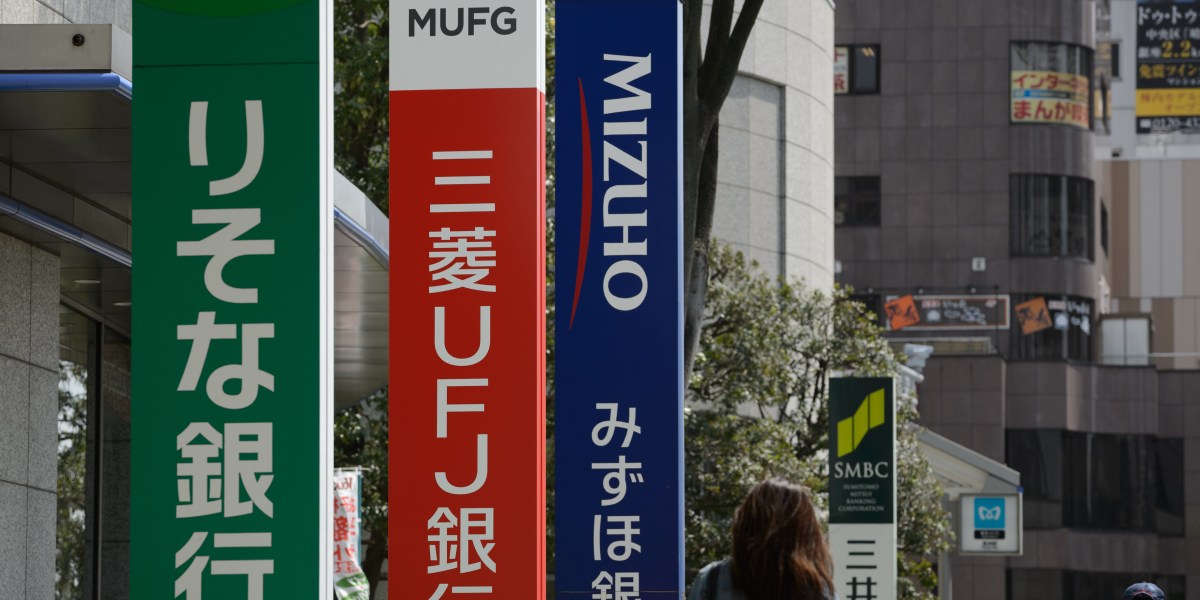
The country’s three megabanks—Mitsubishi UFJ Financial Group, Sumitomo Mitsui Financial Group, and the Mizuho Financial Group—are planning to change that with a jointly-issued yen-backed stablecoin set to begin transactions next March. The new stablecoin is meant to streamline cross-border payments and boost the appeal of the yen for global business.
Several Asian economies are rolling out their own stablecoins to cater to firms seeking alternatives to the U.S. dollar. Hong Kong, for example, issued its first two Hong Kong dollar-backed stablecoin issuer licenses in April, to HSBC and Anchorpoint Financial, a joint venture by Standard Chartered Bank, HKT, and Web3 firm Animoca Brands.
“The majority of global trade is still in USD, but there is certainly a group of firms around the world that want to not use U.S. dollars for trade,” said Tim Way, senior director of global banking at digital asset infrastructure firm Fireblocks. “It’s an opportunity for Asia to stand up and have more trade in Asia running in Asian currencies.”
Startups are entering a financial ecosystem that’s long been dominated by incumbents. JPYC, a Japanese startup, launched the country’s first yen-pegged stablecoin in October 2025. “More private enterprises and start-ups are starting to enter the stablecoin area,” Makoto Shibata, the head of Finolab, a Japanese fintech accelerator, said.
Yet, it remains to be seen if yen-backed stablecoins—whether by on-chain start-ups or trad-fi institutions—will be able to gain traction. Unlike U.S. dollar stablecoins that generate returns from high-yielding treasury bills, yen-pegged stablecoins operate on razor-thin margins. Since JPYC was founded in 2019, it has faced steep growth bottlenecks, as users frequently redeem the token for traditional fiat, rather than hold it in their digital wallets.