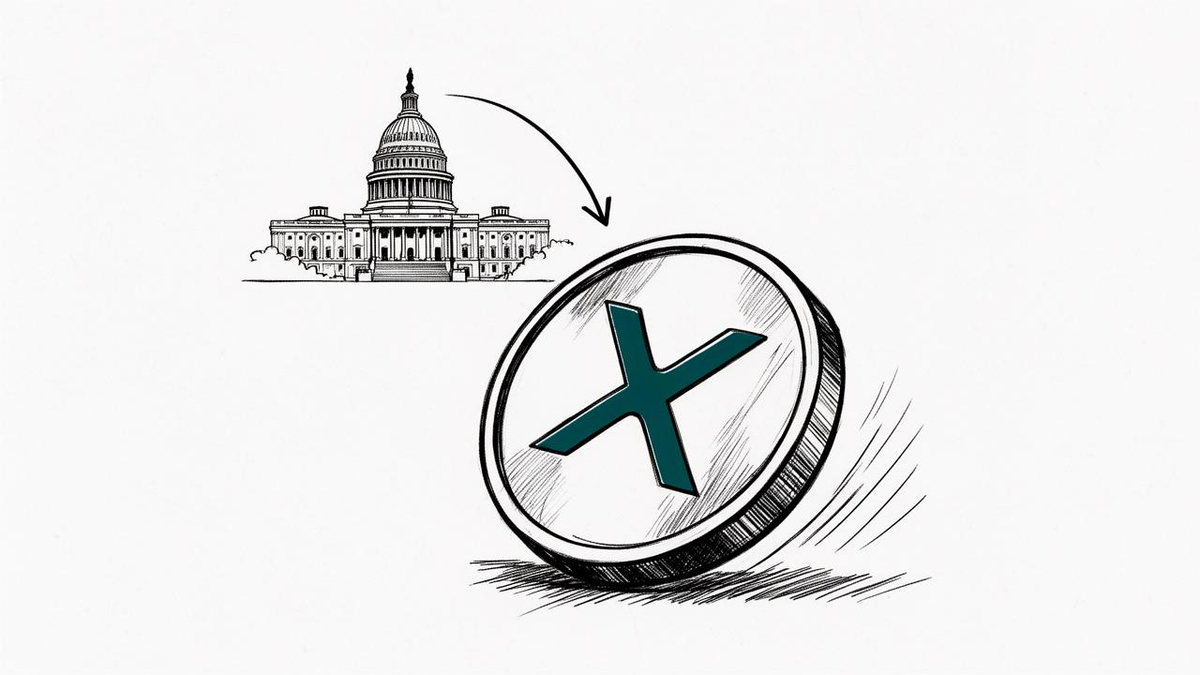
XRP changed hands at $1.20 on Friday, down 8.05% in 24 hours and 17.55% over the past month, after Democrats swept both chambers of Congress in the midterm elections and clouded the outlook for crypto-friendly legislation in Washington.
The token's slide tracked a broader digital-asset retreat. Bitcoin fell below $76,000, surrendering its post-election gains, while Ethereum lost nearly 7%. The common thread, traders said, was uncertainty over how US regulators and lawmakers will treat digital assets under divided-party rule.
The centerpiece of the selloff is the CLARITY Act, a bill meant to set a clear regulatory framework for cryptocurrencies. Democrats blocked its advance in September, and with majorities now in the House of Representatives and the Senate, the odds of moving such legislation in the near term have narrowed sharply. XRP has historically been among the most policy-sensitive tokens because of Ripple's long-running legal battles over regulatory clarity, and the loss of that legislative catalyst prompted holders to reprice the asset.
Crypto analyst Crypto Michael (@MichaelXBT) urged his followers not to panic. "Fake dump. Don't fall for it," he wrote, a post that quickly drew attention across the XRP community.
The call drew pushback. Some respondents argued the decline was genuine and pointed to $2.92 billion in 24-hour trading volume, up 5.47%, as evidence that real selling was behind the move. Others said the analyst had been bullish the day before and was now recasting the narrative after the fact.
Note: Price and volume figures reflect the 24-hour period ending at the time of reporting.
Not all the news flow has been negative. The SEC and CFTC have issued some rules governing digital assets, and Ripple recently won approval for Ripple Natural Trust Bank, a development the company has touted as a step forward. Market participants, however, appear to view those catalysts as too modest to offset the bearish turn in the political backdrop.
Background: XRP's price has long moved in tandem with shifts in the US regulatory environment. Ripple spent years contesting claims that its token sales violated securities law, and the case made XRP a bellwether for how aggressively Washington would police the industry. The CLARITY Act was intended to resolve some of that ambiguity by statute rather than through enforcement, and its stall has left the market without the clarity many investors had priced in.
Impact: For XRP holders, the election result removes one of the token's central bullish arguments, at least until the new Congress signals its intentions on digital assets. The coming months will test whether the "fake dump" thesis holds, or whether the political shift marks a more durable repricing. For now, sellers appear to have the upper hand, and traders are watching lawmakers for the next signal.