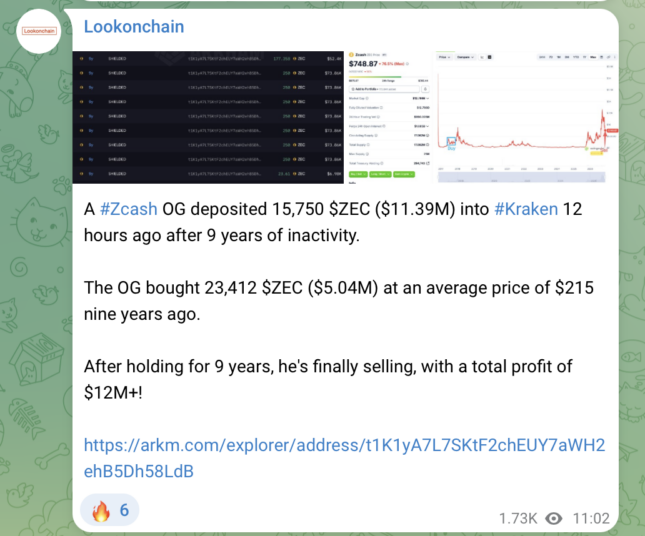
Lookonchain reports that a long-dormant Zcash whale has moved 15,750 ZEC, worth about $11.39 million, to Kraken after nine years of inactivity. The wallet dates back to 2017, when Zcash was positioning itself as a privacy-focused alternative to Bitcoin and before decentralized finance gained traction.
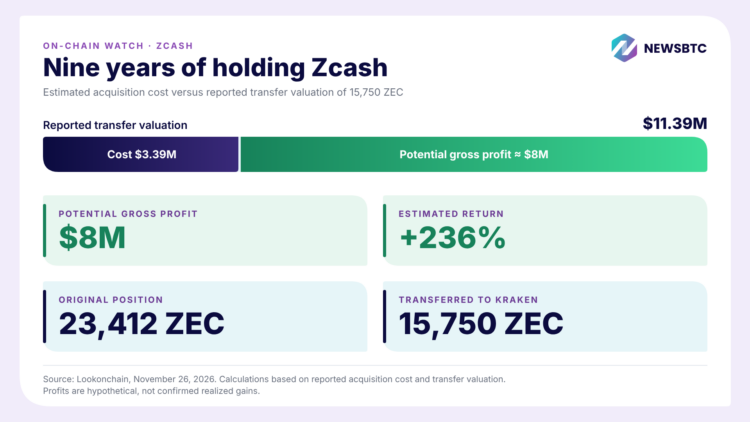
- The whale is estimated to have acquired 23,412 ZEC in 2017 at about $215 per coin, a position of just over $5 million.
- The recent transfers represent roughly two-thirds of that original position. At least 7,750 ZEC has been identified as going to a Kraken deposit address.
- At a reported transfer valuation of about $723 per ZEC, the 15,750 coins are worth around $8 million more than their estimated acquisition cost, implying a potential gain near 236% if sold at that price.
- On-chain data shows exchange deposits and approximate values but does not verify the owner’s identity, intermediate changes in ownership, or whether the coins have been sold.
- If more early holders move dormant ZEC to exchanges, newer investors may absorb supply from long-term holders who have been in substantial drawdowns during past years.
The wallet’s history spans a period when Zcash fluctuated from a multi-hundred-dollar asset to extended lows around $16–$20 in 2024 and early 2025. At $20 per ZEC, the whale’s original position would have been worth under $470,000, a paper loss above 90% if the full position remained intact.
Whale Position And Return Profile
Lookonchain attributes to the whale an estimated purchase of 23,412 ZEC at around $215 each, totaling just above $5 million. The recent outflows of 15,750 ZEC constitute about two-thirds of that position, with blockchain data showing at least one Kraken-linked deposit address among the recipients.
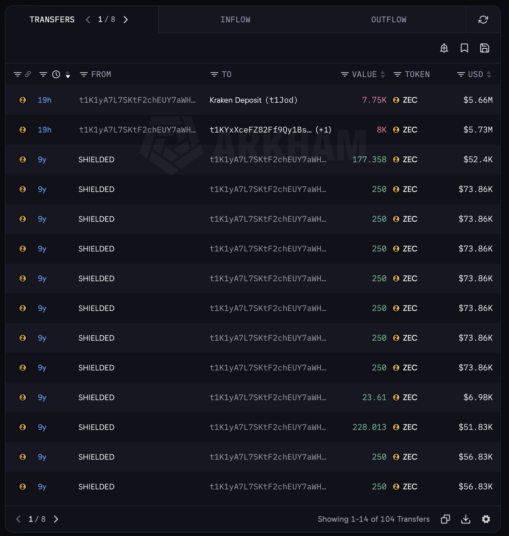
At around $723 per ZEC during the transfer, the 15,750 coins carried an implied value near $11.39 million. Compared with the pro-rata portion of the estimated original cost, this suggests approximately $8 million in potential profit and about a 236% return if the holder realized gains at that level.
During intervening years, Zcash’s market relevance declined compared with newer cryptocurrencies that attracted more developer activity and capital. Despite this, the whale’s long holding period, through both downturn and recent price recovery, currently appears profitable at recent valuations.
Transparency Versus Privacy In Zcash
Zcash supports both transparent and shielded transactions. Transparent addresses expose balances and transfers to public scrutiny, while shielded transfers rely on zero-knowledge proofs that hide transaction details from observers.
The ZEC movements identified by Lookonchain involve transparent activity, which enables on-chain monitoring platforms to track large transfers and link them to known exchange addresses. This visibility has limits: on-chain analysis can estimate values and identify destinations such as Kraken but cannot reliably determine the whale’s identity, private off-chain agreements, or whether and when coins are sold.
Even the acquisition price used in this analysis is model-based rather than a direct record from the holder, which constrains the precision of return estimates.
Market Context And Early Holder Exit Dynamics
Zcash’s recent rebound from the $16–$20 range has coincided with new investor profiles: corporate treasury strategies, institutional interest in privacy assets, and renewed focus on financial surveillance. Winklevoss Capital’s backing of a dedicated Zcash treasury company indicates expanding forms of exposure beyond retail wallets.
Price recovery creates conditions under which long-term holders who experienced extended unrealized losses can exit or realize profits. The whale’s Kraken deposit reflects this dynamic but does not independently establish a system-wide trend or guarantee that selling has occurred, since exchange deposits can serve multiple purposes including liquidity management or collateralization.
If more historic ZEC holdings begin to flow to exchanges, the current wave of buyers could be absorbing supply released by an earlier generation of investors. On-chain data records the movement of private digital money at scale, but the holder’s ultimate intentions remain uncertain until further activity clarifies whether this nine-year position is being reduced or reallocated.
Authors credited by the source: Tomás Rivas
Published by Holder based on an external source.