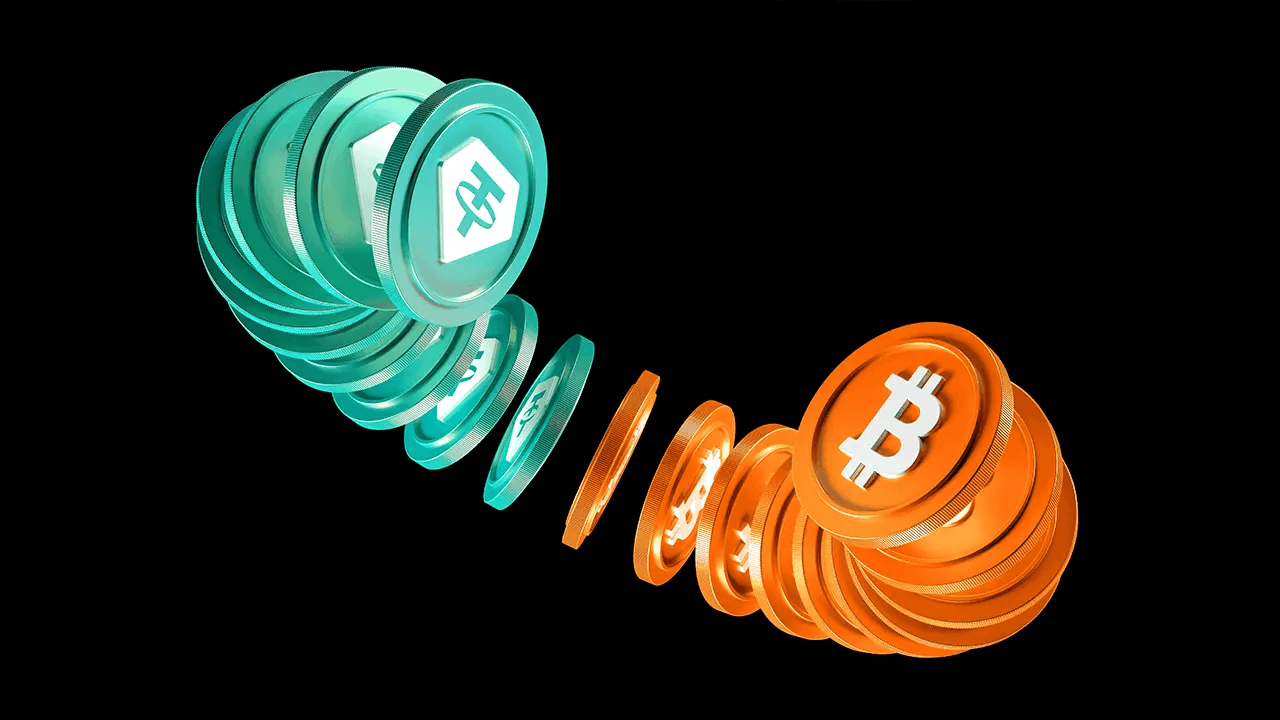
Bitcoin Bonds pair U.S. Treasuries with spot Bitcoin. The structure is bespoke, based on interest rates at the time of issuance. Get both principal protection from U.S. Treasuries and uncapped upside from BTC. Here’s how they work, where the return comes from, and what you give up.
Traditional bonds offer stability and predictable income, but limited upside. Bitcoin offers extraordinary growth potential, but with volatility that can test even the strongest conviction.
The financial system has always treated these as two separate worlds.
Safety on one side. Growth on the other.
But what if you didn’t have to choose?
Peoples Reserve is introducing Bitcoin Bonds, a new approach to fixed-income investing that combines U.S. Treasury-backed principal protection with Bitcoin’s long-term growth potential.
The idea is simple: split the bond into two jobs and give each job to the asset built for it.
Two Assets. One Bond.
The idea is simple: split the bond into two jobs and give each job to the asset built for it.
The floor. Most of the money goes into U.S. Treasuries, sized so the interest and maturity proceeds bring the original principal back by the end of the term.
The ceiling. The rest goes into spot Bitcoin and sits there for the full term. It isn’t lent out, staked, or leveraged, and there’s no stated cap on the upside.
The split is set at issuance. Treasury yields, the bond’s term, and issuance costs decide how much goes to Treasuries. The remaining capital is allocated to Bitcoin. Higher treasury yields mean fewer dollars are needed to rebuild principal, which leaves a larger allocation for Bitcoin.
If Bitcoin has a great five years, the bond participates. If Bitcoin has a terrible five years, the Treasury leg keeps doing its job to provide principal protection at maturity. As long as the BTC leg is worth more than zero, the bond delivers a positive nominal rate of return.
Run the Numbers
Here’s a hypothetical 5-year Bitcoin Bond from Peoples Reserve’s illustrative model, assuming a 5-year Treasury pays a 5% coupon:
- $100,000 invested (2% cost of issuance)
- $78,400 into Treasuries sized to return the full principal
- $19,600 into spot Bitcoin
If Bitcoin growth compounds at:
- 0% a year: ~3.5% APY
- 15% a year: ~7.5% APY
- 30% a year: ~14.2% APY
- 60% a year: ~40.7% APY
Compare that to ~4% on a Treasury bill.
Now look at what doesn’t change. Whether Bitcoin does 0% or 60% growth, the Treasury leg does the same job on the same schedule. The floor doesn’t move. The downside is known before you commit. The ceiling is the only variable.
Bounded on one side, open on the other. Serious allocators spend entire careers hunting for that shape, and it almost never shows up in fixed income.
Bond-like risk. Equity-like return potential.
Hypothetical illustration only. Not a forecast or guarantee. Actual results depend on allocation, market conditions, fees, and terms.
Where the Return Comes From
Every yield product should answer one question: who is paying you, and what are they risking?
A Bitcoin Bond has two sources of return: the interest the U.S. Treasury pays on its debt, and Bitcoin’s price performance over the term. There’s no borrower who can default (unless you believe the U.S. government will default on its debts), no fund taking the other side of the trade, and no option premium being sold to speculators.
The Bitcoin is held with a qualified custodian, BitGo, bankruptcy-remote with no rehypothecation or other yield-earning gimmicks adding risk in the background.
The U.S. Treasury provides cash flow payments that protect principal.
Bitcoin price performance is the yield.
Liquidity Without Selling: BBLOC
Peoples Reserve is also developing a Bitcoin Bond Line of Credit (BBLOC). It will treat the Bitcoin Bond as pristine collateral and let investors borrow up to the full par value of the bond’s Treasury allocation while the Bitcoin position stays intact.
Because it will be marked-to-maturity rather than marked-to-market, the BBLOC is designed to carry no price-based margin calls or liquidation risk. If Bitcoin drops 50% or rates spike, the borrowing base would stay the same.
For businesses and individual investors, that’s a way to fund the next opportunity without unwinding a position meant to compound.
Distributions on schedule. Bitcoin upside intact. Liquidity when it’s needed.
What to Weigh Before Investing
Principal protected does not mean risk-free. Before committing capital, investors should understand the following.
How principal comes back. Semiannual distributions and the payment at maturity work together to recover capital. They’re separate payments within the same investment. The total outcome should reflect both, after applicable fees, along with the Bitcoin allocation’s performance.
What “principal protection” means. It describes the bond’s contractual protection mechanism. Holding Treasury assets doesn’t make the investment a U.S. government obligation, and it doesn’t eliminate issuer, custody, operational or other investment risks.
Opportunity cost. Treasury interest funds the Bitcoin allocation. If Bitcoin underperforms, investors may get their principal back and earn little or nothing on it, while a plain Treasury holder collected the full coupon.
Purchasing power. Repayment in dollars doesn’t guarantee those dollars will buy what they buy today.
Duration. Capital is committed for the selected term. Investors should review the bond’s transfer restrictions and early-access provisions. BBLOC is a planned feature, would carry its own interest and repayment obligations under final lending terms, and should not be treated as redemption access.
Total cost. Consider the full cost of participation: the issuance charge, the applicable performance fee, and what it takes to qualify for and keep a loyalty tier. Acquiring or holding PRN carries its own cost and price exposure. Compare outcomes net of all of it, using the fee definitions in the bond documents.
Bitcoin Bonds are intended for accredited investors who can commit capital for the full term.
Don’t Speculate. Calculate.
Peoples Reserve’s Bitcoin Bond calculator lets investors model investment size, term, Treasury assumptions and Bitcoin performance.
Use a range of assumptions. Model a flat Bitcoin market and a decline, not just growth. Compare interim cash flow, maturity proceeds and results after fees. The goal is to understand what each asset contributes and how the investment behaves when expectations change.
One Stack, Built on Bitcoin
Bitcoin Bonds are one piece of a larger system Peoples Reserve is building around Bitcoin as pristine collateral.
The Self-Repaying Mortgage lets Bitcoiners post Bitcoin as collateral to buy a home without selling it. The Bitcoin Mortgage Reserve turns a Bitcoin contribution into an equity engine designed to pay a mortgage down faster. Bitcoin Bonds generate income from a Treasury floor with Bitcoin upside on top. PRN improves terms across all of it.
Bitcoin acquires the home. Bitcoin pays down the debt. Bitcoin generates the income.
This isn’t adding Bitcoin to old finance. It’s rebuilding finance on Bitcoin.
Get Started
The first Bitcoin Bond auction goes live November 16, open to eligible accredited investors under the applicable terms.
Register for the free live Bitcoin Bond webinar hosted by Peoples Reserve founder CJ Konstantinos (CJK): peoplesreserve.com/bitcoin-bond-webinar
Build Wealth Smarter.
Peoples Reserve is a Bitcoin-native finance platform. Bitcoin Bonds are structured investments with risks, including possible loss of principal, and projected returns are not guaranteed. This article is not financial advice.
Calculator results and examples are hypothetical, not forecasts or guarantees. Capital recovery and returns depend on the offering terms, fees, Treasury purchases, Bitcoin performance, and investment risks. Future BBLOC availability and terms are subject to final product documentation.
Disclaimer: This article is sponsored content and does not necessarily reflect the views or opinions of Bitcoin Magazine. The information provided is for promotional purposes and should not be considered financial advice. Readers are encouraged to conduct their own research before making any investment decisions related to Bitcoin or other financial products mentioned herein.