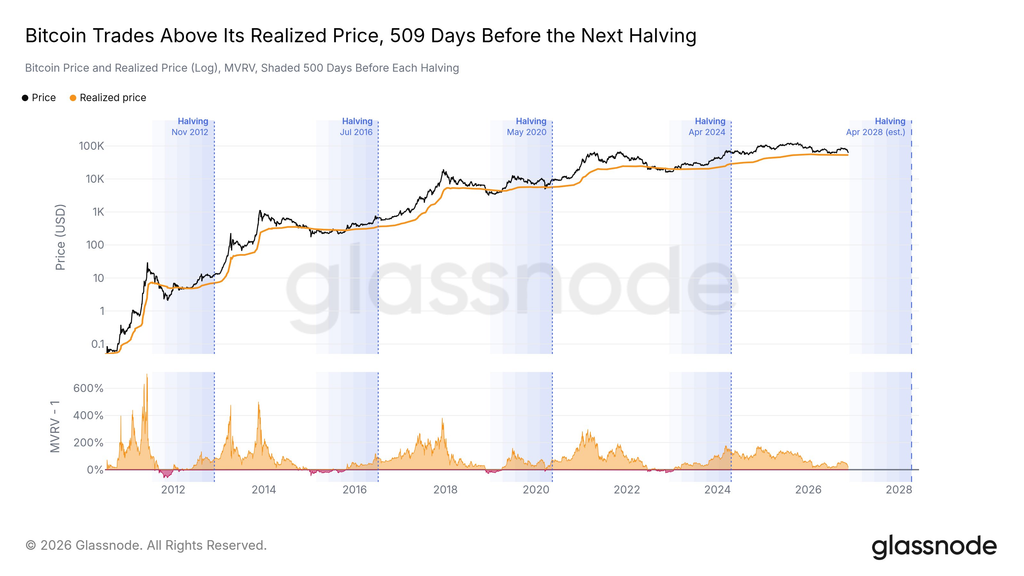
Bitcoin was changing hands near $63,426 on Thursday, down more than 20% from roughly $81,000 at the start of November, as technical signals, institutional outflows and a collapse in sentiment combined to keep buyers on the sidelines.
Trading volume climbed 13.6% over 24 hours to about $33 billion, according to market data, a sign that activity picked up even as prices slid. The Crypto Fear & Greed Index fell to 10 from 28 a week earlier, a reading that places sentiment deep in "extreme fear" territory.
The token has been locked in a $62,000 to $65,000 band since a sharp drop on November 14, unable to mount a meaningful rebound. Three major moving averages have converged near $75,500, well above the current price and forming a thick ceiling of resistance.
That configuration has traders watching for a so-called death cross, the point at which a shorter-term moving average slips below a longer-term one. Such a pattern is widely read as confirmation that momentum has turned negative.
Citigroup cut its 12-month Bitcoin price target by 12% to $99,532, pointing to the cryptocurrency's slide below its 200-day moving average and softening momentum. The revision from the bank, a major provider of institutional research, underscores how technical breakdowns are reshaping forward-looking forecasts.
Note: Figures reflect the most recent readings cited in market data.
Derivatives markets show the cost of the downturn for leveraged bulls. More than $391 million in positions were liquidated over the preceding 24 hours, with long positions accounting for about $288 million of the total. The concentration of losses on the long side suggests buyers were caught off guard by the extension of the decline rather than by a sudden short squeeze.
Institutional demand has also thinned. U.S. spot Bitcoin ETFs recorded net outflows of roughly $240 million on November 17, a signal that some investors are trimming exposure rather than adding to it at current levels.
The macro backdrop has done little to help. Federal Reserve Governor Christopher Waller has publicly backed a 25-basis-point rate increase for December, and October inflation came in at 0.4%, above the 0.3% consensus. Markets have begun pricing in tighter policy through Chicago Mercantile Exchange instruments, and higher rates tend to drain appetite for risk assets such as cryptocurrencies.
The combination leaves Bitcoin's near-term path dependent on two levels. Support sits around $62,000; resistance is clustered near $65,000. A decisive break below support could accelerate losses, particularly if ETF withdrawals continue and leveraged positions keep unwinding. A reclaim of the upper end of the range, by contrast, would be the first evidence that the selling pressure has run its course.
For now, the data describe a market that has already absorbed heavy damage but has yet to find a catalyst for recovery. Extreme fear readings are sometimes treated as contrarian signals, yet sentiment alone has not been enough to spark a reversal, and the technical picture remains tilted to the downside while price stays beneath every major average.
Once added, BigGo Finance appears first in Google Search Top Stories, so you get the broadest, most up-to-the-minute, and most comprehensive global financial news first.