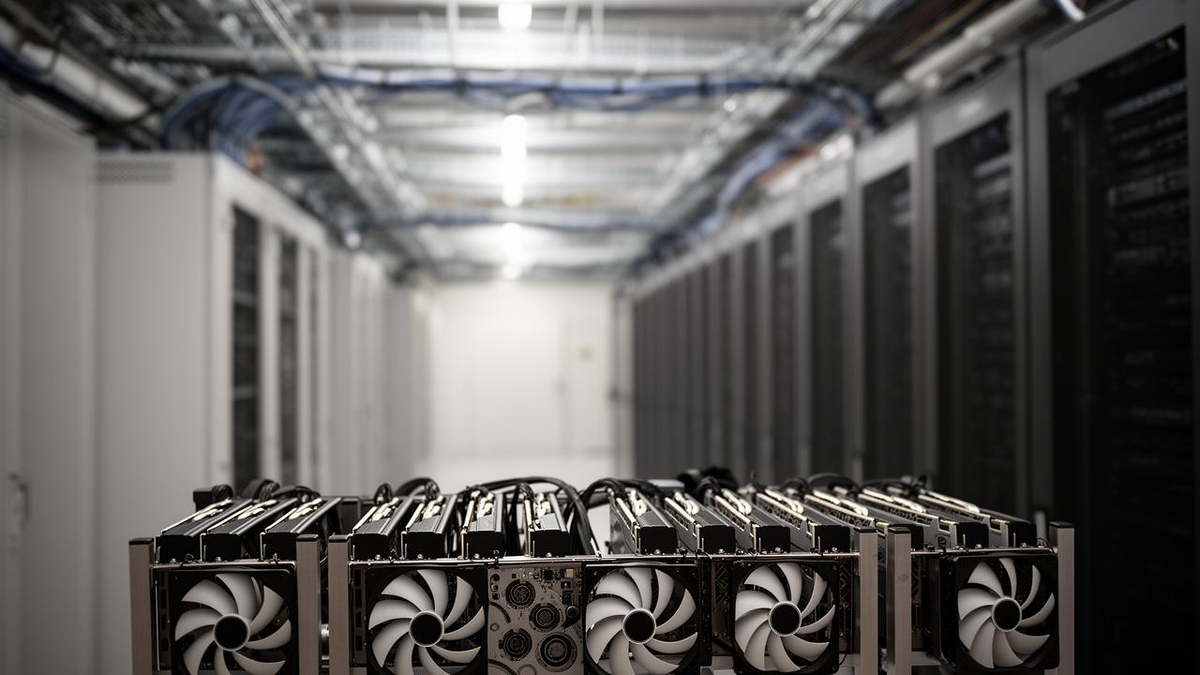
Publicly listed Bitcoin miners have offloaded close to half of the coins they were holding at the start of the year, redirecting the proceeds into artificial intelligence data centers, according to blockchain analytics firm Glassnode.
The firm's tally of six listed miners -- MARA Holdings, Riot Platforms, CleanSpark, Hut 8, American Bitcoin and Cango -- shows their combined disclosed holdings have fallen from roughly 110,000 BTC in early 2026. November registered the largest monthly net decline on record since 2021, a figure that reflects sales made across the first nine months of the year being reported in November.
For years these companies stockpiled what they mined and in some cases added to their positions, making them a steady source of demand in the Bitcoin market. That posture has reversed as mining margins compress and AI landlordship offers steadier revenue.
MARA and Riot Lead the Selling
MARA, the largest holder among the group, sold 13,597 BTC after the end of September at an average price of about $81,039, raising roughly $1.1 billion, according to its third-quarter shareholder letter filed with the SEC. That represents about 40% of the 34,012 BTC it held at the close of September. Together with 26,984 BTC sold in the first nine months of 2026, the company has parted with more than 40,000 BTC this year, worth about $2.5 billion at current prices.
About $750 million of the proceeds went to fully repay Bitcoin-backed loans the company took out to finance its acquisition of the Long Ridge power plant. MARA said it intends to keep using Bitcoin to raise cash for AI infrastructure, convertible note puts that become exercisable next year and possible share buybacks. Its board has authorized a repurchase program of up to $500 million.
The company pushed back on the idea that it is abandoning its core business, describing mining as its operating foundation while it builds out AI and high-performance computing capacity.
Riot sold 20,264 BTC in the first nine months of the year for about $1.5 billion, mainly to fund data center development, and ended September with just 2,418 BTC, according to results published Nov. 4. The miner also signed a 15-year lease covering its entire Corsicana, Texas, campus -- 910 megawatts of capacity worth roughly $28 billion over the initial term. CEO Jason Les called it "the largest lease in Riot's history." The quarterly filing identifies the tenant as Anthropic.
Mining Economics Drive the Shift
Riot's Bitcoin mining revenue fell to $116 million in the third quarter from $160.8 million a year earlier, as the average value of each coin it mined dropped to $70,855 from $114,361. Including equipment depreciation, Riot said it cost $78,805 to mine each Bitcoin -- more than the coin was worth on average during the quarter. MARA's revenue declined 35% to $164.2 million.
The economics have been squeezed since the April 2024 halving cut per-block rewards in half, while the token's price has retreated from its peak. Renting power and buildings to AI companies generates more predictable income, and the coins on miners' balance sheets are the quickest way to finance the transition.
Note: Figures are based on company disclosures compiled by Glassnode and SEC filings.
Market Impact
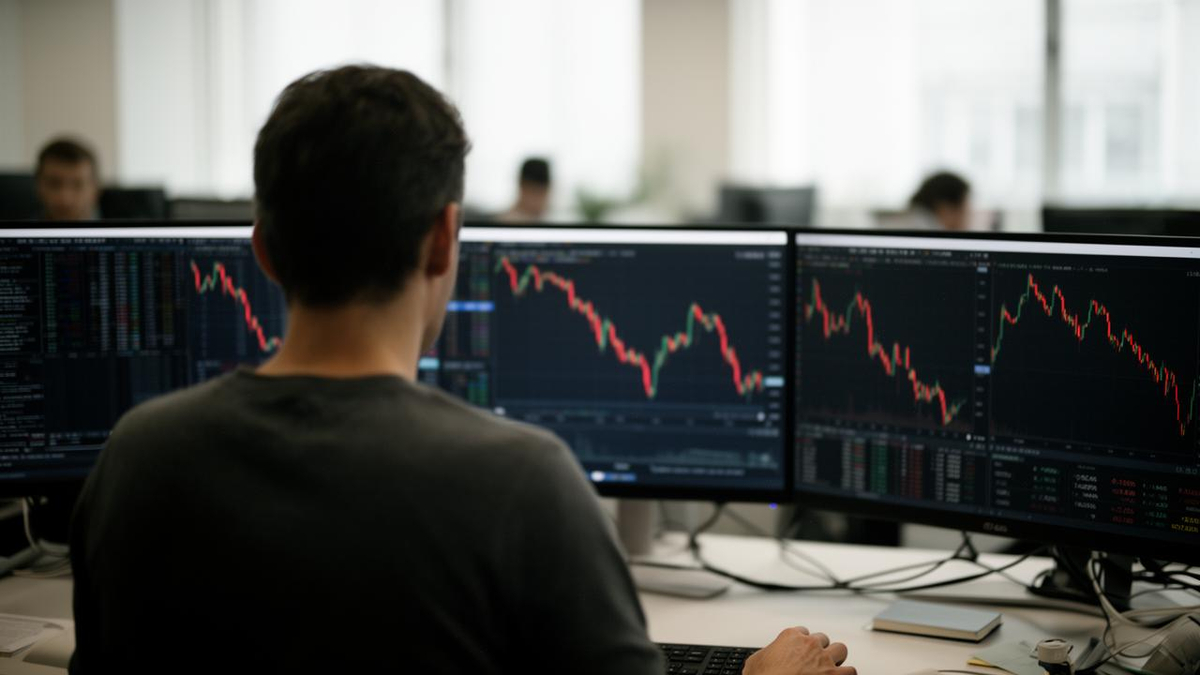
The sales are adding supply to a market that is already under strain. Bitcoin has lost 28% this year and traded at $63,947 on Wednesday, with a daily sentiment gauge tracked by CoinMarketCap sitting at 11 out of 100 -- the "extreme fear" zone. On the daily chart, the 50-day exponential moving average has slipped below its 200-day counterpart at about $75,750, a formation traders call a "death cross."
Glassnode said the two largest miners drove the recent selling by Bitcoin treasury companies, while treasury firms outside those two were net buyers in November. Strategy, the biggest corporate holder, kept accumulating, adding 485 BTC last week to reach 850,849 BTC, worth around $54 billion.
The scale of the disposals is modest relative to a market valued at about $1.3 trillion -- MARA's $1.1 billion over six weeks is a fraction of that -- but the shift in behavior matters when demand is thin. A cohort that once absorbed coins is now releasing them.
Shareholders have not been uniformly rewarded for the strategy. Four of the six miners have fallen more than Bitcoin this year, with a median loss of 41%, according to CoinMarketCap's comparison of daily closes from Jan. 2 to Nov. 17. Riot is up 20% and Hut 8 has gained 5%, both having pushed into AI data centers. MARA is down 35%, CleanSpark 47%, American Bitcoin 84% and Cango 89%.
MARA's execution has at least outperformed its stock: the average sale price of about $81,000 was roughly 27% above Bitcoin's current level. Whether November marks a one-off or a new baseline should become clearer when December holdings data are published, with the AI build-out expected to require cash for years.
Once added, BigGo Finance appears first in Google Search Top Stories, so you get the broadest, most up-to-the-minute, and most comprehensive global financial news first.