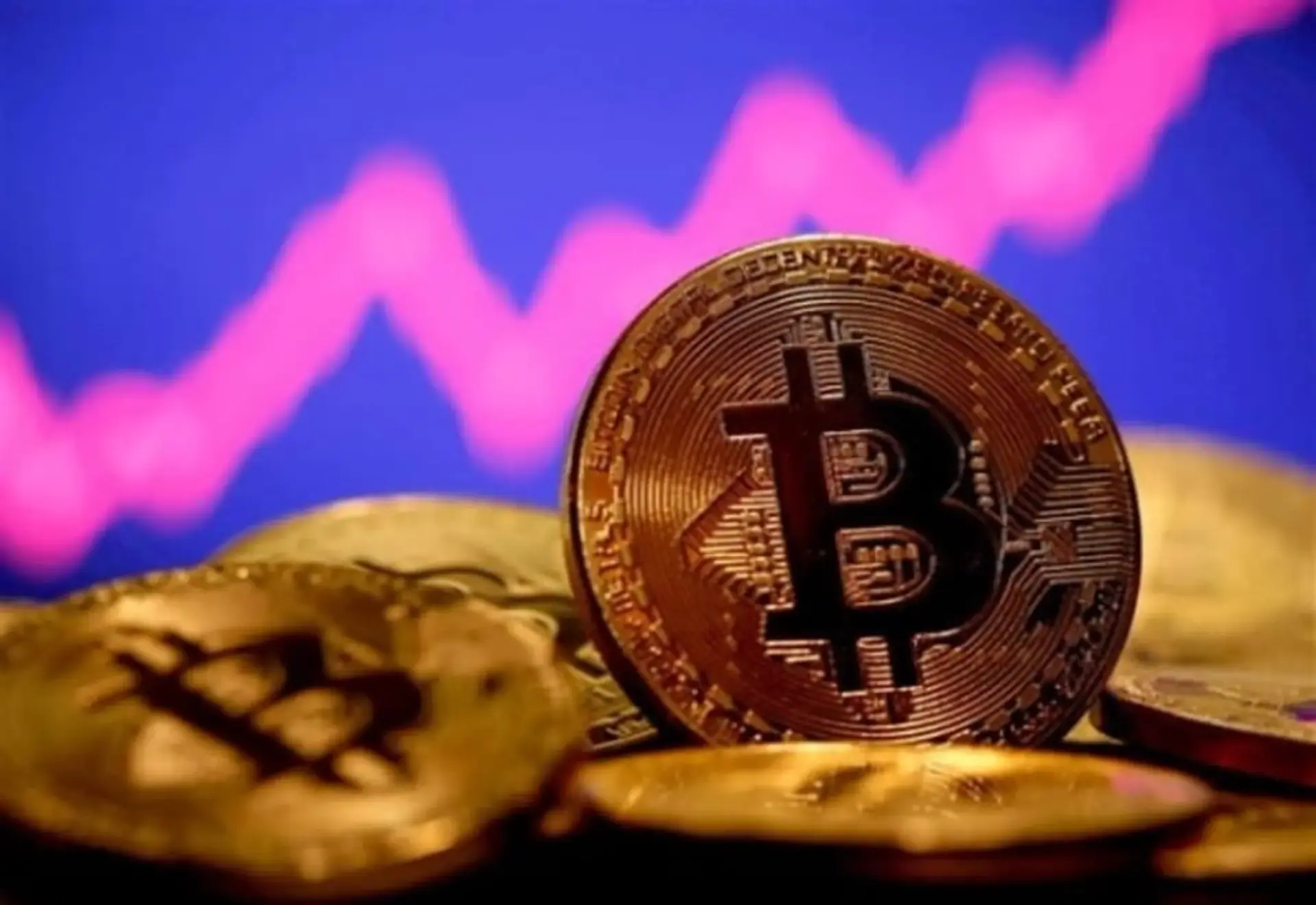
Bitcoin has reclaimed the $80,000 level. The recovery is attributed to the easing of political uncertainty after the Democratic Party's landslide victory in the U.S. midterm elections, combined with expectations that the U.S.-Iran Middle East war could end early.
As of around 8 a.m. on the 5th, Bitcoin was trading at around $80,600 on CoinMarketCap, a global cryptocurrency market data site, up in the mid-3% range from 24 hours earlier. The price, which had hovered in the $77,000 range the previous day, rebounded sharply as the election results became known. In the South Korean won market, Bitcoin was trading at 108.32 million won (approximately $81,000) on Bithumb at 8:10 a.m., up 1.76% from 24 hours earlier.
Major altcoins largely joined the upward trend. Ethereum rose 2-6% from 24 hours earlier, showing more momentum than Bitcoin, while Solana and Ripple were mixed. The Fear and Greed Index, a gauge of market sentiment, stood in the mid-30s to early 40s depending on the data provider, straddling the boundary between "fear" and "neutral." That is one step out of the previous day's fear phase.
The most direct trigger for this rebound is the shift in the U.S. political landscape. With the Democratic Party winning control of both the Senate and the House, and President Trump signaling he would accept the election results, the uncertainty that the market had been wary of quickly diminished. Alex Kuptsikevich, chief analyst at global financial investment firm FxPro, told Bloomberg that "the recent reversal in the cryptocurrency market is similar to the moves seen after the past two U.S. presidential elections," adding that "the recent surge shows that the market is not particularly afraid of the Democratic Party but is afraid of uncertainty."
Expectations for an end to the Middle East war also boosted risk appetite. As the Democratic Party took control of both chambers of Congress, expectations spread that checks on the Trump administration's involvement in the Iran War would strengthen, which sent international oil prices plunging. On the 4th (local time) at the New York Mercantile Exchange, December-delivery West Texas Intermediate (WTI) crude futures closed at $88.12 a barrel, down 8.29% from the previous session, while January Brent crude closed at $94.62 a barrel, down 8.67%. Analysts say the drop in oil prices eased inflation pressure, which worked favorably for risk assets.
New York stocks also rose across the board. The Dow Jones Industrial Average closed at 53,356.12, up 3.03%, marking its biggest gain in about 19 months, while the S&P 500 and the Nasdaq Composite rose 1.58% and 1.44%, respectively. The recovery in risk appetite in traditional financial markets appears to have spread to cryptocurrencies.
Note: Cryptocurrency prices are as of around 8 a.m. on the 5th; oil prices and New York stock prices are based on closing levels on the 4th (local time).
The legislative environment, however, is somewhat mixed. Some observers say the Democratic Party's control of Congress could slow the pace of processing digital-asset-related bills such as the Clarity Act. On the other hand, the prevailing view is that the integration of traditional finance and the cryptocurrency market will continue. Online analytics firm Glassnode said that "Bitcoin is far more deeply embedded in the traditional financial system than in past market cycles," adding that "because banks, asset managers and exchange-traded funds (ETFs) are investing in Bitcoin, changes in Washington, D.C. are less of a threat than they were a few years ago."
In the South Korean market, a small premium over overseas prices is being maintained. According to CryptoPrice, a cryptocurrency market comparison platform, the Bitcoin Kimchi Premium stood at 0.22% on this day. A positive (+) premium means South Korean trading prices are more expensive than overseas prices, suggesting that the recent rebound is being reflected relatively evenly among South Korean investors. The Upbit Composite Index also recorded 10,869.82, up 3.68% from 24 hours earlier, while Upbit's total market trading value rose more than 60% to 1.27 trillion won (approximately $947.1 million), indicating an inflow of short-term buying.
Market participants are divided over whether this rally is a rebound driven by a short-term event or the starting point of a trend reversal. Some observers say that with two favorable factors—the resolution of political uncertainty and the sharp drop in oil prices—combined, a favorable environment for risk assets overall could continue for the time being. Others point out that, given that the Fear and Greed Index still has not risen far above neutral, it is too early to say that investor sentiment has fully recovered.