PiCK
Summary
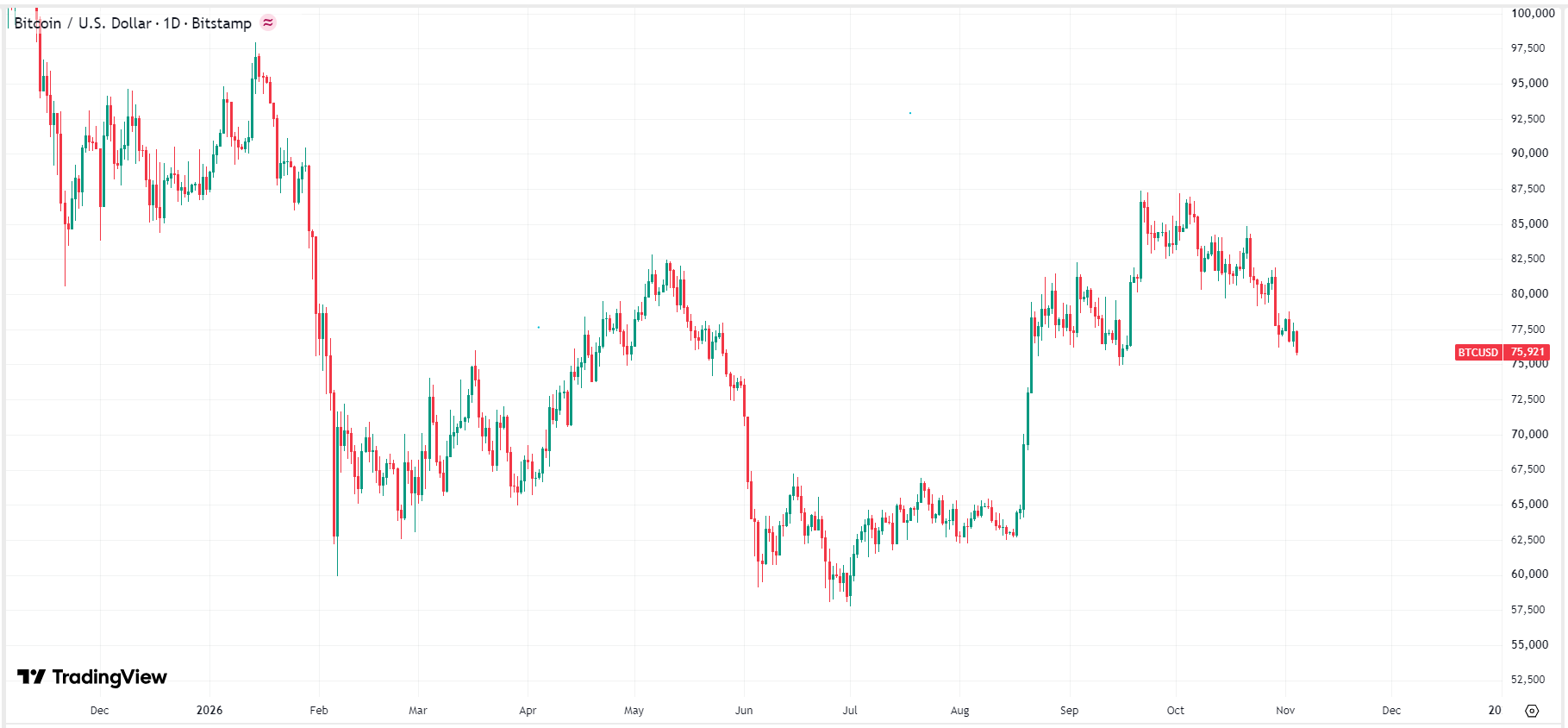
- Bitcoin (BTC) weakened to $76,709.50 as the likelihood grew that Democrats could take control of both chambers of Congress in the U.S. midterm elections.
- The market said a Democratic sweep of Congress could weigh on sentiment by delaying digital-asset legislation and increasing oversight of digital-asset companies.
- A $6.3 billion Binance hack and more than $1 billion in net outflows from spot Bitcoin ETFs have left the market facing both short-term fear and long-term uncertainty.
Forecast Trend Report by Period
Bitcoin fell as the likelihood increased that Democrats could control both chambers of Congress after the U.S. midterm elections.
As of 11:40 a.m. Korea time on November 4, Bitcoin was trading at $76,709.50 on Binance's USDT market, down 0.28% from a day earlier. It briefly reclaimed the $78,000 level earlier in the session, but later surrendered most of those gains after falling as much as 1.6% intraday.
Markets are concerned that if Democrats secure the Senate after holding the House, the Trump administration's crypto-friendly policy agenda could face obstacles. Potential delays to crypto legislation sought by the industry, along with tighter oversight of digital-asset companies, are also seen as headwinds.
Rachel Lucas, an analyst at BTC Markets, said investor sentiment has weakened but the market is not in a broad liquidation phase. In the options market, investors are focused on hedging downside risk in existing holdings. She added that election-driven volatility should be short-lived.
Crypto-specific pressures are also adding to the decline. They include last week's $6.3 billion Binance hack and weaker retail demand as investor attention shifts toward the artificial intelligence industry. Bitcoin is now down about 6% from its peak last Thursday, before the hacking incident.
Damien Lo, chief investment officer at Eriksen Capital, said short-term fear and long-term uncertainty are coexisting in the crypto market. Selling in technology stocks and the possibility of renewed military tensions in the Middle East are also weighing on risk assets more broadly.
The outlook for the CLARITY Act, a U.S. crypto market structure bill, is also in focus. Lucas said the bill is already stalled in the Senate, and if Democrats take control of key committees, renegotiation of the legislation is more likely than a swift restart of the legislative process.
Institutional flows have also been weak. More than $1 billion was pulled from U.S.-listed spot Bitcoin exchange-traded funds over two days on Friday and Monday. Investors also stepped up options positioning to guard against further declines ahead of the election results.
Suehyeon Lee