TradingKey - As political uncertainty clears, capital inflows trigger a Bitcoin rebound back to $80,000, with technicals signaling over 8% upside potential.
On November 4, as vote counting for the U.S. midterm elections concluded, Bitcoin (BTC) shook off panic selling triggered by pre-election deleveraging and a hacking incident, executing a strong V-shaped recovery from an intraday low of $75,600 to swiftly reclaim the key $80,000 mark and touching an intraday high of $81,105, demonstrating robust short-squeeze and short-covering recovery momentum.
Prior to the election, concerns over a congressional reshuffle and the Clarity Act being stalled in the Senate pushed BTC down short-term to a low near $75,000. As election results streamed in, sidelined capital returned and short-term shorts covered en masse, triggering $975 million in crypto derivative contract liquidations across the network—with shorts accounting for 60%—and driving BTC up by more than $3,000 within a few hours.
Although Democratic control of Congress triggered short-term anxiety over regulatory tightening in Washington, industry leaders such as Michael Saylor, Executive Chairman of MicroStrategy (MSTR), pointed out that support for crypto at the local level remains solid. In addition, bipartisan support from the new governor of Florida and candidates in Texas for state-level strategic Bitcoin reserves alleviated extreme market panic over stalled legislation.
From the perspective of chip structure and technical patterns, BTC is currently in a critical window driven by short covering and phased spot break-even selling, while facing resistance at the middle band of $81,000. If Bitcoin can hold firmly above $80,000 this week alongside a shift to net inflows into spot ETFs, bulls will ride the short-squeeze momentum to challenge the previous high near $87,000, representing an upside of approximately 8% from current price levels.
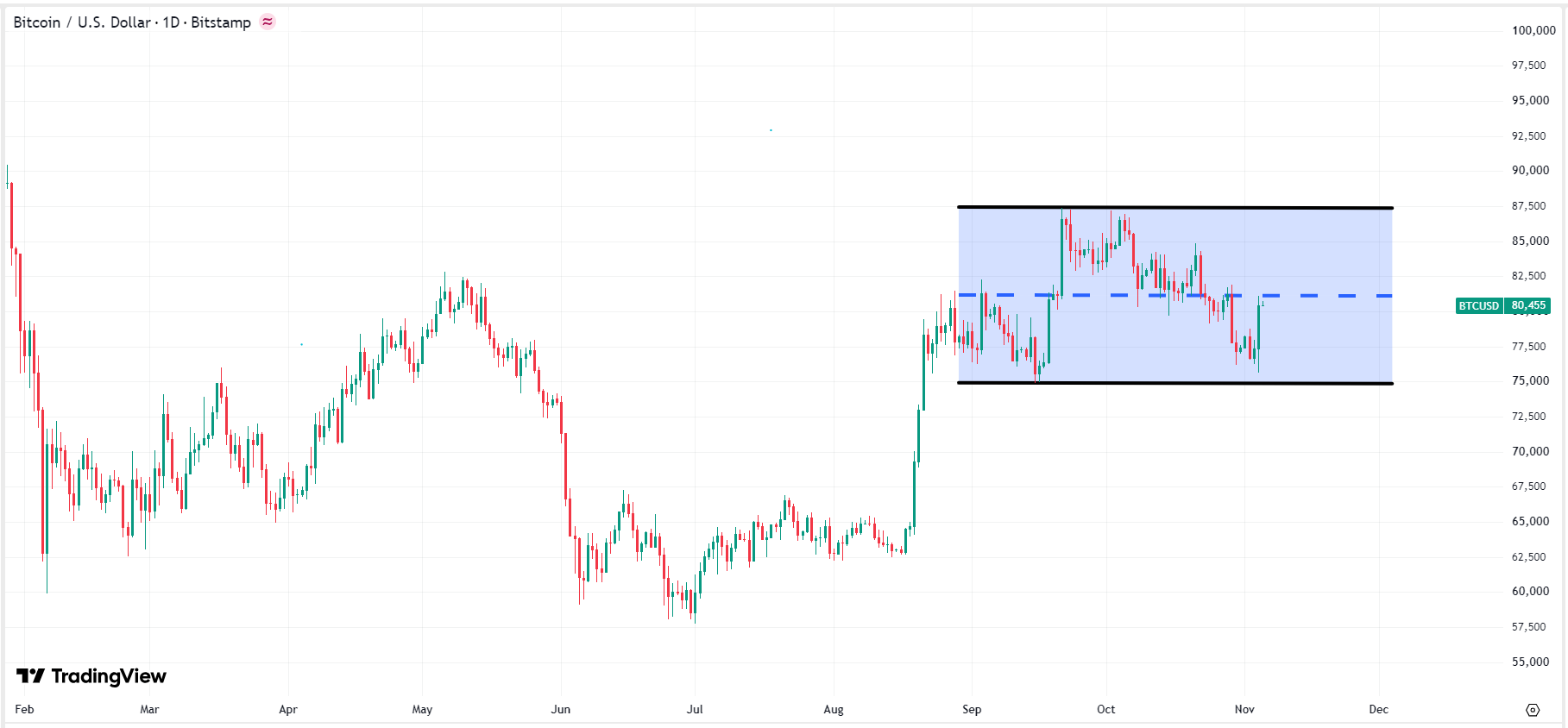 Bitcoin price chart, source: TradingView
Although the conclusion of the midterm elections marks the resolution of the primary macroeconomic uncertainty, whether Bitcoin's rally can continue to push above $77,500–$80,000 to confirm a resistance-to-support flip depends on the outcome of the Federal Reserve's next interest rate decision. If a dovish signal is delivered, it will provide momentum to challenge the $90,000 mark by the end of 2026.